Graham Norton: ‘If it was hard work I couldn’t do it’
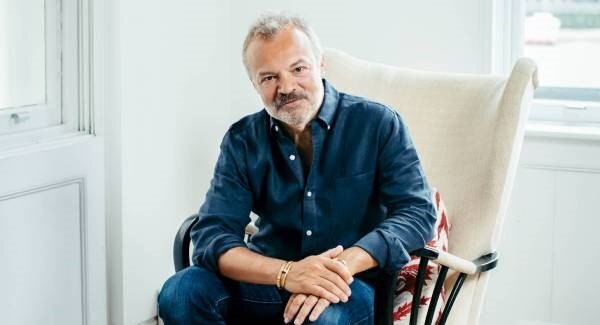
Chat show king, radio host, agony uncle and now an accomplished author – how does Graham Norton juggle it all? It’s easy, he tells , he just rocks up and does the job.
Before we even make our introductions I’m thanking Graham Norton. Does he have a friend in the Irish Examiner, I ask him?
He’s momentarily puzzled, until I remind him of the prime product placement he’s given the paper in his latest acclaimed novel A Keeper.
There’s not one, but two mentions of the Examiner.
Two of his central characters, in the ‘then’ part of the book, set in dark, inhibited 1970s rural Ireland, arrange to meet at the Cork Examiner stand outside the train station.
“I’d forgotten I did that,” he laughs, with that trademark shake of the chest, hand covering his mouth as he chortles. There were no bribes, he confirms. “There used to be a stand by the train station wasn’t there? I was trying to think, where would you have to go to meet someone?
“It’s funny the accuracies you look for, and then the ones you don’t pick up because they don’t work for your book.” To demonstrate his point, he outlines a journey one of his characters makes in his book, and how implausible it would be for her to reach her destination in the time allowed. He details the cities she should have passed through and marvels that none of his readers, not even his mum, picked up on it.
And this is what encapsulates Graham Norton.
Everyone who meets him comments on his humour, his kindness, his thoughtfulness.
And yes, he is all those things.
But Graham Norton is above all else a highly intelligent man, sharp as a tack.
He’s self effacing, talks himself and his mammoth success down, in the most Irish of ways. There’s absolutely no ego.
But he remembers everything. We run off into tangents, and ten minutes into a conversation that has meandered off into at least five different directions, with multiple interruptions from attentive wait staff, he is able to repeat my question, always clear, always focused.
He talks from the heart about the changed Ireland he fled as a gay teen - the significance of The Marriage Referendum, The Eighth Amendment. But what he has to say is considered, developed. He is well-read, his opinions informed.
“It feels better in Ireland,” he says of the country he spends three months a year in.
“It was incredible,” he adds, speaking about the referendums.
“People were knocked off their moral high ground, and the bravery of the people coming forward....” He talks of Hear Me Out, the campaign launched close to the referendum where women were urged to tell their story of abortion to one undecided or no voter. Norton had posted a comment about it Twitter, giving the initiative huge momentum.
“It was such a lovely way of campaigning,” he says, “people were not on a soapbox. I read this quote once, that opinions are the lowest form of human response, empathy is the most valuable human response. It’s not someone banging on a table, it’s their story - and you can’t argue with that.”
Storytelling is Norton’s USP.
It’s what he does on his show, he says. He takes a back seat to let his guests shine, to let them tell their stories.
And now he’s giving us his own yarns, as he calls them, first with his debut novel, the beautiful Holding, and now in his follow up, the equally moving A Keeper.
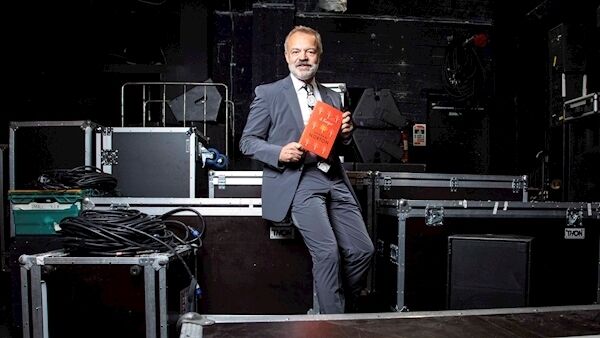
Both are firmly rooted in Ireland, both centred on ripping apart secrets and lies. The crime genre he successfully tapped into in his debut was abandoned for his assured follow up. A Keeper is very much a family drama.
“I was nervous about setting it in Ireland,” he admits. “I left 30 years ago but this is what I know - I grew up in 70s Ireland.
“There’s universality in a small town, you know, people is people.” A Keeper centres on Elizabeth, an Irish woman living in New York who returns home after her mother’s death. She discovers a stash of hidden letters that reveal a dark family tragedy. The story is based on a true story his mother told him as a child.
“Irish people love telling stories,” as he explains of his decision to set his book in Ireland. “But it always a great place to set stories too - if you set it in UK, you’d say that’s not possible. That couldn’t happen.” The recent revelations about forged adoption certs is a case in point, he says. “We are still finding out things out. It’s really sad - people were given birth certs with their adoptive names on it, they don’t know their real parents. But that came from a good place, they were trying to make people’s lives easier.
“They weren’t to know DNA would come along. Now there are people my age, and their parents are very old and this is the last thing they have to deal with on planet earth.
“It’s a huge can of worms, yes it’s awful people didn’t know they were adopted, but I do get what they were thinking.” Ireland had dark days, he acknowledges, adding that the three spinster sisters in Holding were also reimagined from a true story.
There’s a sadness to it,” he says, “but with distance there’s a romance to it.” And, as he has discovered, they are storylines there for the taking.
Holding, his debut, was set solely in his birthplace - no jokes, no reference to London or the big city life we associate him with, no gay characters. There’s more of a departure in A Keeper, a book he spent a year writing.
“I look forward to the ‘book days’ [when he writes] but I’ll always do something in the evenings. It’s very solitary and you don’t know when to stop.
“If it was written day after day it would been a different book. Stuff percolates, you know. Clearly it didn’t take a year; you’d be out with the dogs and you think, that might happen to her...” His plot was timelined thanks to advice from One Day author David Nichols.
“He told me to map it out, it might seem really dry, uncreative, but if you are having a bad day you know you just need to get your character from there to there. On those days you are glad of the map.
“You might throw it all away but you have to write something.” His schedule must be intense, a TV show watched by millions, a weekly radio show, an agony uncle column - and now an author.
He breaks into laughter.
“I don’t work that hard. Honestly, on the radio I just rock up. I get on my bike at half 9, I’m on air at 10 and I’m home after 1. I read about the guests as they walk into the studio.
“If it was hard work I couldn’t do it.
“And what else would you be doing on a Saturday morning? I have a cleaner,” he laughs.
The TV show he admits is more work, but there’s a slick team behind him. He touches base with producers on Tuesday, with Wednesday and Thursday - it’s filmed on a Thursday evening - the busy days.
“We want it to look like fun. Wednesday is one long meeting, where we kick it around, trying to find common areas where the guests will interact.
“Thursday we do an afternoon dress rehearsal. The researcher pretends to be the guest and we do the show in a straight run, with me asking, ‘you know, didn’t you have an odd experience once’ or whatever. And what you’ll find is that Whoopi didn’t talk for half an hour there, or I don’t need that many questions about the movie. We’ll have another meeting after that and it reshapes the show a lot.
“We go off script a lot - those are the nights I enjoy, when it takes on a life of its own.”
And how about that seating plan? How do the celebs react if they aren’t seated at the head of the couch?
“The actual guests I don’t think ever say anything - it’s their people. Matt LeBlanc put it on his show Episodes once - he was next to me the first time and then next to Zac Effron after that.”
And as for that winning shared couch format? Incredibly it began as a way to save time.
“The format evolved because we did a show called The Bigger Picture. We didn’t want to waste time stopping to introduce the next guest. It seemed like such a waste of time. James Corden is doing now too but it’s not like he nicked the idea - it’s just some people on a couch chatting. Like, hello!
“We didn’t think long and hard because if it didn’t work you’d just stop.”
He says he isn’t at all nervous anymore as he runs on to the stage.
“Only if there’s a big guest I want to get right - definitely Madonna, or Tom Cruise the first time (he’s exciting now), or Hillary Clinton.
“When you see me meet them that’s pretty much it. They are with their people.
“Backstage is one big long stretch so you see a big crowd and then as they walk towards you you see the shiny celeb in the middle.”
And his favourite couch?
“On a good night the couch talks to itself.
“The best night is when I sit back - as a viewer I’m far more interested in seeing Whoopi Goldberg talking to Jamie Dornan. That couch really liked each other,” he says of the show that aired the night before we meet.
“We didn’t have the best stories but we went to places we weren’t expecting to. These were nice people.
“But people always talk about Monuments Men - Bill Murray, Matt Damon and Hugh Bonneville. They loved each other. That show would have happened whether I was there I was not.
“Tom Cruise and Tom Hanks - they are really good at it,” he adds.
But are they really like that?
“I don’t know, I don’t meet them,” he admits.
“Cruise has a trick; when he’s brought into studio he shakes the person’s hand, ‘Hi Catherine it’s lovely to meet you’, and she says, ‘This is Pete you spoke him on the phone’ and ‘This is da da da’... He’s friendly - we can all do that.
“But on the way out he’s going, ‘Catherine thank you for that, now where’s Pete?’
“Then they love him and would do anything to get him on the show. It’s an act but I’ve never
heard anyone say a bad word against him, given that he gets all this weird press - I don’t know where it’s coming from.
“People say he’s a team leader, he never complains - those guys are real movie stars, there aren’t many left. There are just actors now.”
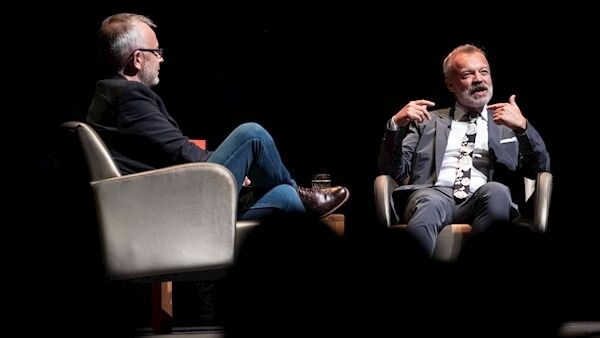
The show is purposefully light he says, relaying a story about Richard and Judy’s TV show. They paid for OJ to appear on the show.
“He’s hardly going to be cracking on daytime tele and say I did kill her,” says Norton matter of factly.
He watches the show back if he’s home, the night before we meet Whoopi Goldberg, Harry Connick Jnr and Jamie Dornan were on the couch. And yes, he tuned in. Was he critical?
“It all depends on the show,” he says. “It’s not like I’m saying, ‘I’d like to do that again’ - I really couldn’t care less. But there’s odd bits, like why did it take me so long to ask that question. I hear it in other people, it’s like shut up and put a question mark in there.
“There’s no learning how to do this - there’s no discernible skill at all. But I must be better than other people to be doing this for so long.
“I feel sorry for people post jungle or whatever offered a chat show. On paper, it’s the least skilled job in world - no singing, no dancing...
“It says my name in title but when you introduce guests you’ve got to make them appear more important, more famous. The guest has to be funny - I’m here next week and next week I might have to be funny.”
Thankfully, for those of us who love our Friday night on the couch with Graham Norton, he isn’t going anywhere.
“The show isn’t going anywhere I hope. I’d like to do a few fewer shows - it goes from September to June with little breaks. It’s fine because it’s a lovely job, a fun job, but I’m aware I might regret it when I’m 65, thinking, ‘gee what was I thinking going to that studio 40 weeks a year’.”
He might be relaxed about his broadcasting career, but he admits to feeling exposed when his debut novel was published.
“The show - that’s my job, I better be able to do that.
“With the book, the worst case scenario was everyone hated it and I was humiliated and my friends enjoyed it and I never did it again.
“What’s interesting is I try to make things look effortless, but with this, even if it’s me just typing random words that make no sense, it would still take time. So you have to stand by it, you have to own it. With everything else there’s a team - so you blame other people,” he laughs.
Now, in the midst of a publicity tour, he is interviewee instead of interviewer. How does that feel?
“It’s odd, but the good thing is I’ve got something to talk about. It’s always best on the show if someone has something to talk about.
“I enjoy book tours,” he elaborates. If it was a night of stand up I’d be looking for the fire alarm backstage. But at book events the interviewer is there to hold your hand. If you’re not funny, well, it was a book event. A few funny stories always get away.”
Does he feel pressure to be funny, when he sits into a cab for example?
“Oh I’m the opposite feeling. I don’t want to be ‘that guy’. When my mother met Robin Williams, it was though he thought she wouldn’t want to meet him if he wasn’t funny...
“I met him a couple of times and he wasn’t like that.”
Fame has undeniably impacted on his life, but he understands it’s just part and parcel of the gig.
“I was out with my friend for dinner, my father had just died of Parkinsons and her dad was very sick and this guy came up and said, ‘Will you sign my wife’s tits?’ We were in such a posh restaurant and we had tears in our eyes. It was easier to just do it.
“Sometimes I should say no because I’m so grumpy and mean. Most of the time it’s fine but there’s a poor person who doesn’t know they are the umpteenth person and it’s not their fault, but then they get really grumpy Graham.
“You hear your name a lot. The worst one is first thing in the morning, half 8 or 9, you’re walking your dogs for their first wee and poop of the day and a guy is shouting out of truck.
“But you can’t complain about that stuff. The people I feel sorry for the ones that find fame by accident, like a court case that taps into a tabloid thing. There’s no perk there, but my life is one big perk.”
The questions about his personal life must be intrusive, I wonder. Over and over again he is quizzed about his relationship status, questions he never asks of his own guests on the TV.
Does it bother him? And here’s Graham Norton’s wisdom again, a man who knows how to play the fame game.
“No, because I’m not under oath, it’s not like I’m giving evidence. You say what you want to say, you give whatever information is simpler to explain your life. At the end of this interview if there was a lie detector I probably wouldn’t have passed.”
Eyebrows raised, he laughs mischievously.
And with that the nicest, and savviest man, in showbiz takes his leave.
'A Keeper' by @grahnort is our @easons Number 1 Bestseller! Pick up a copy of this fantastic read in you local @easons or online https://t.co/0Nzn9giJNU pic.twitter.com/ie5xl8b6Lk
— Eason (@easons) October 8, 2018
- A Keeper by Graham Norton is published by Hodder & Stoughton
CONNECT WITH US TODAY



Be the first to know the latest news and updates









