Birth of a new openness for mothers
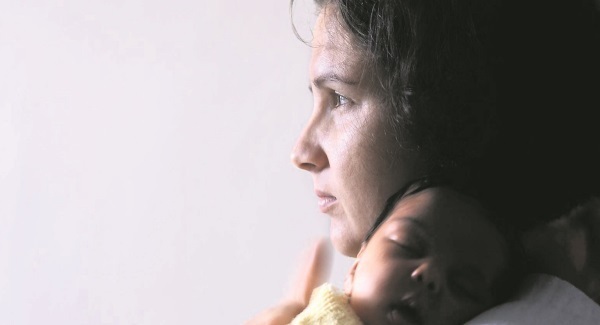
From podcasts to TV programmes and forums, mums are breaking with tradition and freely talking about the trials of labour. But is this always a good thing, asks
Úna O’Sullivan, a new mum to six-week-old Donnacha, thought she was prepared for labour.“My three sisters had babies before me and I’d heard about natural births, C-sections and stitches but my labour was nothing like what I thought it would be,” says the 30-year-old from Dingle.
“It was much worse.”
She attended antenatal classes in Cork University Maternity Hospital.
“They gave lots of tips, from breathing techniques to different birthing ball positions,” she says.
“But they also said that what we were doing was like learning to drive without a car.”
Úna’s car turned out to be a wayward one.Due on August 20, Donnacha still hadn’t arrived by August 30. “I was induced and as soon as they hooked me up to the monitor, they said it should be an easy case as I was already contracting,” she says.
Some 26 hours later, her contractions were extreme but she was only 3cm dilated. “The contractions were viciously painful and with every one, I’d fall to the floor or bury my head in the pillow,” she says.
The baby’s heartbeat would drop or even stop. I was upset and frightened because I didn’t know what was happening or why things were going so wrong.
She eventually had a C-section and her 7lb 6oz baby boy was born at 8.21pm on August 31, 27 hours after her labour began.
Until recently, only mothers and medical staff knew what happened behind the doors of the delivery room.
Now, thanks to online forums such as MummyPages.ie, blogs like badmammy.com, podcasts including The Mother of Pod, and the likes of The Rotunda series on RTÉ, even people who have never set foot in a maternity ward can get up close and personal with the messy business of labour.
On The Mother of Pod, Jen O’Dwyer and Sophie White discuss their birthing experiences in graphic detail and with bawdy humour.
For example, White makes frequent references to what she calls ‘vadge-mageddon’ — when her episiotomy scar became infected after the birth of her second baby.
Some argue that hearing stories such as White’s or O’Sullivan’s gives pregnant women a more realistic view of the challenges that lie ahead.
But do they share the information they need to meet those challenges or do they risk adding to the anxiety of first-time mothers?
A 2014 study of young Canadian students suggests the latter. Those who reported that the media had shaped their attitudes towards pregnancy and birth were more fearful than others and more likely to opt for epidurals and caesareans.

Krysia Lynch is chairwoman of the Association for Improvement in Maternity Services (AIMS), a group that provides information and support to couples during and after the birth of their baby.
She is happy that women are finally speaking out about their birth experiences. “Historically, everything to do with the vagina was a taboo topic,” she says.
“Subjects like menstruation and birth simply weren’t discussed.”
There was also the unspoken implication that women should be grateful their baby was born alive and healthy. “If you had a baby to hold in your arms, you couldn’t complain,” says Lynch. “You just got on with it.”
A lot has changed, according to Professor Cecily Begley, chair of Nursing and Midwifery at Trinity College Dublin, who says that social media has played its part.
“In this age where people share what they ate for breakfast, it’s not surprising women are talking about what’s involved in having babies,” she says.
However, she is concerned that some voices are heard more than others.
“Women who have had traumatic experiences may be louder and their stories could frighten others,” says Begley. “We need to hear more from women who have had manageable births that involved pain and hard work but were also worthwhile.”
One of the best places to prepare women for bloody and painful labour is an antenatal class.
“This is where different stories should be heard so that women are given a clearer idea of what’s ahead of them,” says Lynch.
These stories should also demonstrate that as long as they have practical knowledge and coping strategies, they will be able to get through it.
Begley believes that most women aren’t prepared for this, which leads to a high rate of labour interventions.
“Take the example of a woman left with her partner while labour progresses,” she says.
“She is frightened so her oxytocin (the hormone responsible for signalling contractions of the womb during labour) level drops, causing her contractions to weaken. She is put on a drip to encourage the contractions again but they become too painful so she needs an epidural. Then the baby’s heartbeat becomes erratic and a C-section is required.
“If this woman had been taught to help herself, she could have had a nap or got up and walked around and it might have started her contractions again.”
Niamh Healy, an antenatal educator with Cuidiú, the Irish Childcare Trust, and author of Bump2Babe, agrees. “Pain is not the enemy in labour — fear is,” she says. “And antenatal classes should teach women and their partners how to keep it at bay.”

Julianne Booth, 33 and from Parteen in Clare, is another woman who doesn’t believe in keeping mum about labour. She saw a doula before the birth of her son Alex, who is now two years old, and thinks this helped her to feel confident during labour.
Her labour lasted two days and she followed her doula’s tips throughout. She took lots of walks outside the hospital and repeated affirmations and visualisations.
“During my contractions, I told myself I could do anything for two minutes,” she says. “I also kept the image of my 3D scan in my mind.”
Booth did have moments of doubt.
“There were times I thought I was dying because of the pain,” she says. “But I did take pethidine at one point and that helped. I needed an episiotomy and Alex required a suction cap but when he was born at 3am, it was suddenly all worth it.”
A significant proportion of Irish mothers have complicated birth stories to tell. The World Health Organisation maintains that only 10%-15% of births require a caesarean section but in Ireland, more than 30% of births are caesareans.
Begley suggests this may be because our maternity system is led by obstetricians. “This means it’s safe but it’s very medicalised and there is more intervention than there would be in a system that was led by midwives,” she says.
Up to 36% of first-time mothers require the use of forceps or a suction cap to deliver their baby. Induction rates are even higher. Last year, CUMH recorded the highest induction rates in the country with 44.6% of new mothers induced last year.
Inductions are associated with stronger contractions and faster labours and the induction rate for NHS hospitals in England last year was a comparatively low 29.4%.
"Because these interventions are so common, on paper it can look as if a woman had a relatively normal birth,” says Healy. “Yet she might feel as if it was anything but.”
A traumatic birth can lead to psychological trauma ranging from postnatal depression to post-traumatic stress disorder.
Approximately 15% of new mothers in Ireland suffer from postnatal depression and PTSD is thought to affect 4% of new mothers internationally.
Tocophobia is even more severe. Only recognised in 2000, this disabling fear of childbirth is estimated to affect 10% of women.

Professor Catriona Jones is an expert in perinatal care at the University of Hull. One of her studies published in 2014 found that speaking out and sharing birth stories can improve women’s mental health.
She recently caused controversy when she spoke at the British Science Festival in Hull and called on women to be careful when and where they share their birthing horror stories.
“If you go online, there are women saying that their experiences were terrible and that it was a bloodbath,” she tells Feelgood.
We need a balance where we meet the needs of women who have had babies and who find it cathartic to share their stories as well as the needs of women who are about to have babies and might become fearful if they heard those stories.
This is where improved maternity services can help. “Women who feel heard throughout labour will report more satisfaction with their experience than a woman who had the same experience but didn’t feel involved in the decision making,” says Healy.
This might explain why Booth felt positive about her birth.
“Even though I had an episiotomy and Alex needed a suction cap, I felt part of it all,” she says. “The midwives helped me to have the experience I wanted and my mother, who was my birth partner, stood by me. I felt listened to and supported.”
After birth, most mothers will need to talk about the experience. “Often, even a traumatised woman will feel better if she can ask questions and hear the reasons for the interventions,” says Begley.
This was true for O’Sullivan. “I felt like I had been through hell on earth and had so many questions,” she says. “My husband ran into the surgeon who carried out the C-section and asked her to come to see me. She explained why everything happened as it did and at least now I know... why I couldn’t deliver him no matter how hard I pushed or how painful the contractions.”
Laura Erskine, head of community for MummyPages.ie, is expecting her third child and is looking forward to the labour, having previously had what she calls “two very positive birth experiences”.
She is sure that mothers benefit from hearing other birth stories.
“The C4 series One Born Every Minute had just started when I was pregnant with my first and was probably the best education I could have had,” she says.
“It showed real mums engaging in different techniques to relieve pain and progress labour. The new Irish series, The Rotunda, gives mums a real-life look at the Irish maternity system in the same way.”
There is great interest in birth stories on MummyPages.ie.
“They receive huge engagement so we know they strike a chord with other mums,” says Erskine.
“That’s why we launched a mum blogging platform called MummyPages Voices and the MumsTruths podcast. Both allow women to share pregnancy, birth, and parenting stories in order to empower other women to be more prepared and confident on their journey.”
Úna O’Sullivan, Julianne Booth and many of today’s mothers are breaking the silence of the past by speaking out about their birth experiences.
Sharing their stories allows them to process the many complicated feelings that surround birth and may also help other women be better prepared for the challenges of their own labours.
“Information is power and the more information you have, the better placed you are to make decisions and ask for things,” says Lynch.
Women can learn what they want and need by hearing other women’s birth stories.















