Live and let libh with Bláthnaid Ní Chofaigh
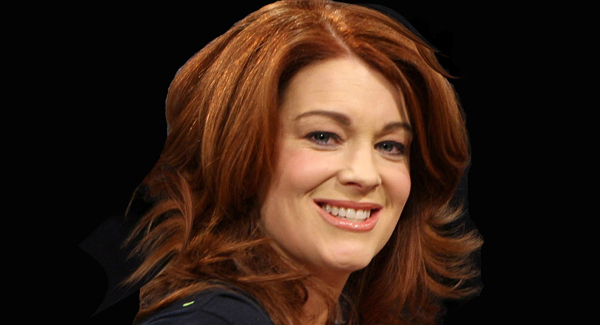
Bláthnaid Ní Chofaigh has never shied away from uncomfortable topics but she tells that as a woman in her 40s, it’s an uphill battle to get the right platforms.
It’s Monday morning and Bláthnaid Ní Chofaigh is keeping all the balls in the air. On the way home from yoga class, she remembered to buy fish for her daughter who’s turned vegetarian. She got her 18-year-old son — just started in UCD — out of bed. “I mean at what stage do you not have to be motivating them? Nobody warned me about having to get older kids out,” says the TV and radio personality who was up at 6am to do her workout, something she says she has to do to avoid the blues.

“I do a circuit of underground fitness. I don’t talk to anyone — I just do my thing. I’ll do it again on Wednesday and Friday. Last week I didn’t and I was very down,” says the 47-year-old, who wonders if feeling blue might mean she’s pre-menopausal.
“My daughter teases me that I’m pre-menopausal. I don’t know — maybe I am.”
The mum of four has never been afraid to speak openly and unapologetically about subjects many others shy away from — her sister’s breast cancer, her grief at her dad’s passing, and that she has for years suffered from psoriasis. Adult incontinence is on her mind the morning I talk to her — or rather the fact that she sorted it. “I’m one of those women who had very bad incontinence and for 10 years I thought I had to live with it because of having had big babies.”
For Bláthnaid, being told she had ‘big babies and this is what happens’ is part of that patriarchal backdrop that did women’s health no favours in this country. “Eventually, I found a gynaecologist who said ‘absolutely, you shouldn’t have to suffer’, so I had a rubber band put around my bladder. It was done through keyhole surgery — I could have gone out that night. Now I don’t know myself. I can walk from home to Monkstown Village without wetting myself.”
Bláthnaid will be talking up a storm as Gaeilge from this weekend — her Raidió na Gaeltachta (RnaG) show, Bláthnaid Libh, which has been extended to one and a half hours, returns for the autumn season tomorrow, Saturday. In May, the feisty broadcaster ran for election to serve on the board of RTÉ.
It was daunting and I didn’t get it but I found it absolutely energising. I definitely learned from it. I really got a sense of what’s going on regionally. If you take RnaG there’s a lot of women on air, opinionated, strong women. But there aren’t that many women in management, whereas in Dublin, in management there are a good few women — I wonder why that is?
Bláthnaid believes there isn’t a woman anywhere who hasn’t experienced some sort of “sexual innuendo, some comment here and there” that wasn’t appropriate. She recalls being asked by someone in management after the birth of one of her children ‘I hope you’re not doing this again’. “People aren’t allowed to say that anymore but, if they’re not allowed to say it, is it being pushed under the carpet so that [biased] decisions are being made without saying it?”
She believes “we’re all hungry to progress” and says she wants to progress in her career. “But I’m finding it very difficult to do in my 40s. It’s an uphill battle, just getting these platforms to work in, getting an area of TV/radio that suits where I am at 47. I’ve lost interest in lifestyle subjects. I’m thinking very differently now — I’m much more contemplative of subjects — but on RnaG I’m not hitting a big audience.”
One of the interviews Bláthnaid did on her RnaG show earlier this year was with a woman who’d been raped while on a date — the woman didn’t report the rape.
“If I had broadcast this in English, it would have hit a bigger audience and more women who’d been raped on dates would feel less alone.”
On why the woman felt she couldn’t speak out, Bláthnaid says: “She decided to go on the date. She was happy to spend the night with him but that didn’t mean she wanted to be raped. We’re still stuck in that ‘what was she thinking, why did she stay’ mentality.”
Bláthnaid can identify with the woman who stays silent, moreover because of something she herself experienced last year.
I was home [in Ráth Cairn, Co Meath] with my mum in the local pub. Someone touched my bum and two men my age, maybe a bit older, passed by laughing. I was with my mother. It was my local area. It was an Irish language scene, a festival night, and I was with my 79-year-old mother and I didn’t make a scene
“It made me feel horrible about myself. Why do I feel bad when I’m touched up and they go off laughing? I should have challenged them — and not for me, the 47-year-old, but for the 37, 27, the seven-year-old!” Her interviews on Bláthnaid Libh with women like Cúnla Morris, who’s non-binary (doesn’t identify with either gender), and with Ola (Wuraola Majekodunmi), a young Irish woman of Nigerian origin, have taught Bláthnaid the value of not making assumptions.
“I would presume less after meeting these women,” she says. In particular, she learned from Ola — a bit of a viral hit this summer with the ‘What does Irishness Look Like’ video — that the question ‘where are you from’ could come across negatively.
“I think ‘where are you from’ is friendly, but not everybody thinks it’s friendly. Someone might think I’m questioning their Irishness, so I don’t ask that question now.”
Describing her show as “very personable”, she’s delighted it’s had a social media impact, with a younger mostly female audience interacting with it. “My producer, Sinéad Ní Uannacháin, and I have been on a journey with it. We go ‘oh that got a reaction Wow!’”
Nominated for three awards — the one Bláthnaid’s most excited about is Social Media Campaign of the Year for #gaeilgechliste: as part of her weekly show, she invited the audience to come up with a Clever Irish version of slang in English.
The show has tapped into the urban Gaeilgeoir phenomenon, a growing demographic of young, educated, confident Gaeilgeoirí living outside the Gaeltacht. “I can’t presume anymore who speaks Irish. Ten years ago, I’d presume by accent. Most Irish speakers now are learned Irish speakers. They’ve been to Gaelscoil, went to secondary school as Gaeilge — though there are few enough of them — and because of their love of Irish continued and got involved in the likes of Coláiste Lurgan.”
An exciting development on the urban Gaeilgeoir scene is the pop-up Gaeltacht — the brainchild two years ago of Dubliners Oscar and Peadar, who basically just named a pub a pop-up Gaeltacht and sent out word (“it’s like the bat signal”) and Gaeilgeoirí come from all over.
“It was about ‘where can I go to have a pint and I know everyone’s going to have Irish or try to speak it’. It came out of a simple need to socialise in their first language or in their preferred language,” says Bláthnaid.
Open to everyone from beginner to fluent — with “no language police at the door” — the idea has gone global with pop-ups in New York and Japan. “I told the lads they should have copyrighted it but it wasn’t about that — they weren’t taking grants or looking for subsidies.
“So now, once a month, we all wait, excited, on Facebook, to hear where it’s happening. In Dublin, they’ll pick a pub, tell the pub and the pub makes an effort to ensure the barman on the night has a bit of Irish, which is lovely.”












