Breast aware: New programme reaches out to teenage girls at school
A new school programme aims to teach teenage girls how to recognise the signs of breast cancer, says
AN education programme launched at the start of this school year aims to ensure every Transition Year girl knows exactly what a breast cancer lump feels like.
In 2017, two outreach nurse coordinators with Breast Cancer Ireland (BCI) brought the charity’s Breast Health Education and Awareness programme to 3,700 pupils across 70 schools in Leinster and Connacht.
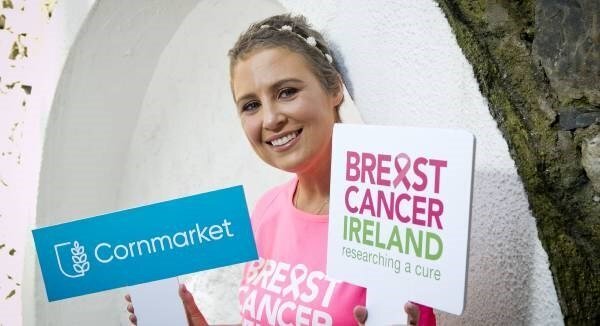
Now, insurance brokers Cornmarket have announced sponsorship of the programme for both teachers and TY students nationwide – thereby allowing BCI to extend the programme’s reach and to fund an outreach nurse coordinator tasked with bringing the awareness-raising initiative to Munster.
“We want to educate women at a younger age to know the signs and symptoms of breast cancer so if an abnormality arises, they’ll detect it a lot quicker – ultimately lives will be saved,” says Breast Cancer Ireland CEO Aisling Hurley, adding that TY students have been targeted because the Transition Year programme already addresses components of health such as nutrition and mental health awareness.
“Breast health is just one more element.”
Using a medically induced mannequin showing the eight symptoms of breast cancer, the nurses educate young female students and teachers on how to recognise the symptoms and on how to perform a self-breast examination. When BCI outreach nurse coordinator Adrienne McCleery visits a secondary school, the largest number of TY students she’ll see at a time is 40. She tells the girls their breast health is their wealth and she invites them up in groups of five to examine the mannequin.
The girls are helped to identify the eight signs/symptoms that should raise a red flag: puckering of the skin of the breast; lump in breast or armpit; change in skin around nipple or nipple discharge; dimpling of the nipple or nipple retraction; unusual increase in the size of one breast; one breast unusually lower than the other – nipples at different levels; enlargement of the glands; unusual swelling in the armpit.
“They’re surprised at some of the symptoms – the only symptom most young girls think about is a lump.”
McCleery says the most important part of the presentation is tactile examination of the mannequin. She shows the girls how to do a breast check on the mannequin: to see the symptoms, to feel the lumps and the right amount of pressure to apply in order to feel a cancerous lump. “At the end of the presentation, every girl will know what a breast cancer lump feels like. The majority of women countrywide don’t – they say ‘I don’t know what I’m meant to be looking for’.”
McCleery demonstrates how to do a self breast check and she explains how important it is for each girl to know her own ‘normal’. “I advise them to strip to the waist now and again and stand in front of a mirror in good light and get to know their own normal. That way, if there’s a change, they’ll spot it.”
The intention, says McCleery, is not to scare 16-year-old girls but to empower them with information. “We make sure they’re not all going away thinking they’re going to get breast cancer. Before we start, we tell them the idea of the presentation is to arm them with information for their later life – information they can take with them into their 20s, 30s and 40s.”
When BCI first started the programme, schools were initially surprised, says Aisling Hurley.“One male principal of a girls’ school didn’t feel it was appropriate, which was shocking. Now, more and more schools are ringing, asking us if they can come on board.” The importance of checking from a young age is driven home by a sobering statistic – among all women diagnosed with breast cancer, 30% are aged between 20 and 50. “We know a lady with no family history who was diagnosed when she was 26,” says Hurley, adding that a vital aspect of the programme is that girls become social ambassadors for breast health, spreading the word to their mums, sisters, aunts and grannies.
While Ireland’s breast cancer survival rates have improved in the last five years, going from 75% to 85%, we still lag behind Northern European countries, where survival rates are 98%. “They’ve been educating from a young age about breast health – that’s what spurred us to activate this awareness programme,” says Hurley. But something else is also feeding into the survival picture – Hurley points to the fact that our baseline mammography is 2D rather than 3D. This impacts detection rates. “2D is archaic. In the US, baseline mammography is 3D – this gets the complete circumference of the breast. We need to invest in 3D mammography.”
Back in the schools, McCleery encourages the girls to download Breast Aware, a simple, free app from Breast Cancer Ireland. This sends them a discreet monthly reminder to be breast aware. “The app offers a calendar and a clock. They set the calendar for the week after they’ve had their period and the clock for 10-15 minutes before their normal shower time. They’re so much into their phones, so this is a little reminder to check that we hope will click into their heads – they know they should be doing it and they’ll start doing it.” It’s all about making self-breast check a normal part of a young woman’s routine.
- For more about the Breast Health Education & Awareness programmesee www.breastcancerireland.com.
CONNECT WITH US TODAY



Be the first to know the latest news and updates

















