Gearing up for the challenges ahead as new Dáil term set to commence
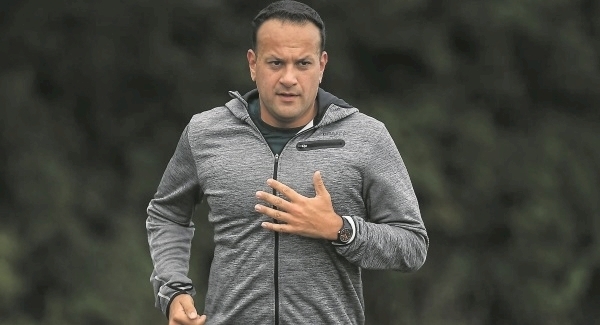
As the Dáil returns, the Irish Examiner political team examines the issues that will dominate the headlines inside and outside of Leinster House

Gearing up for the challenges ahead as new Dáil term set to commence

As the Dáil returns, the Irish Examiner political team examines the issues that will dominate the headlines inside and outside of Leinster House.

By Juno McEnroe, Political Correspondent

Rested TDs return to the Dáil this week and will be flung headlong into a chaotic political period, both inside and outside Leinster House.

Health, housing, elections, and, of course, Brexit will dominate their agenda for months to come.

We are entering a turbulent stretch where, in the next six months, we may have a new president, possibly even a race for a new Taoiseach, and even the prospect of a new border if the worst misfortunes hit Ireland. Politics is never dull.

Brexit is hurtling towards Ireland like a “cataclysmic meteor”, as Arts Minister Josepha Madigan warned last week.

Any form of Brexit will hurt Ireland. And right now, there is even the fear of Britain crashing out of the EU, a scenario which could plunge Ireland’s economy right back into a dark recessionary hole.

TDs know business concerns in their areas. And the Government will have to play their best hand at EU talks in the weeks and months ahead with the Brexit deadline next March looming large.

A more immediate headache will be the effort to deal with the critical findings of the CervicalCheck report. Decisions must still be made about a potentially larger inquiry and responsibility taken for the misread tests.

An audit of smear tests is ongoing and a judge has been asked to help settle legal cases away from the cold reality of courtrooms. There will also be efforts made to introduce new laws for clinicians and institutions on the open disclosure of patients’ health data.

Back inside Leinster House, TDs will be occupied with budget talks. Finance Minister Paschal Donohoe is weighing up spending for next year, amid pressures for tax cuts and the need to restore recession-hit services.

Expect a lot of kite-flying, mind-boggling back-of-the-envelope ideas, and a fair bit of theatre.

In fact, there has been plenty already, with the Independent Alliance’s idea to pay off relatives to mind children receiving the most derision.

Again, the troubles at the Department of Health look set to dominate the debate, with a €600m deficit for this year. Taoiseach Leo Varadkar was even forced to deny money going into the embattled department was ending up in a “black hole”.

All this against the backdrop of a confidence and supply deal that is running out of road as tensions mount between Fine Gael and Fianna Fáil.

This will be the third and final budget under the government support pact between the two parties. Varadkar wants talks, to renew a deal, to start sooner rather than later. Fianna Fáil wants to wait.

Fine Gael is riding high in the polls, but this ‘Leo bounce’ could change come the dark days of winter, with Brexit looming, over-crowded hospitals, and a worsening housing crisis.

Fine Gael wants a new deal now. Many in the party, though, are talking up a November snap election if that does not work.

It is a big gamble, with the stakes even higher for Fianna Fáil, whose standings in the polls continue to drop.

If there is a snap election, it would be at a very risky time for the country, with our future unfortunately linked with the outcome of the Brexit talks in London and Brussels.

And a lot of attention will be there in the months ahead.

Returning TDs will also face the prospect of debating legislation to remove the Eighth Amendment restrictions for abortion, approved by voters in May’s referendum.

Most parties, TDs, and senators look certain to agree to the legislation. But it will not be an easy passage for the legislation, with some opposition or amendments expected.

And, of course, as rows and budget battles play out in Leinster House and Government Buildings, an equally bitter competition is fast coming down the line: The presidential election. It now looks like at least four candidates will challenge President Michael D Higgins’ re-election campaign.

The race will begin in earnest on September 26, when nominations close and campaigning begin. As with previous races for the Park, it could be a bloodbath.

And while most parties are not fielding a candidate, the race will dominate politics, at least in the final stretches as the nation chooses its first citizen.

Housing and homelessness

Eoghan Murphy returns to the Dáil facing a vote of no confidence. The housing minister is almost certain to escape the chop this time as the motion, being tabled by Sinn Féin, does not have the backing of Fianna Fáil.

But it is likely to be the first

of many tough days in the Dáil for the Government, which is struggling to deliver on housing and homelessness.

As the number of people in emergency accommodation teetered just below 10,000 over the entire summer, Murphy was accused of massaging the figures and not caring about those who are homeless.

As the winter nights draw in, the numbers are expected to continue to climb.

The Government has stressed there is no silver bullet and no quick-fix solution to address the growing number of families who find themselves in hotels and B&Bs; likewise it will take time to build the number of social houses required and for rent prices to decrease.

Housing has become such a toxic issue for the Government that it would be very easy for Fianna Fáil to pull the plug on the confidence and supply agreement at any time over it.

Fortunately for Fine Gael, Micheál Martin is not a leader who sees a benefit in going to the polls, at least not now.

However, as the months go on, Murphy will come under mounting pressure to deliver.

Public impatience is growing as seen last week when the Take Back the City movement held protests in Dublin.

Gardaí were harshly criticised for wearing balaclavas as they attended the eviction of a number of people occupying a house in Dublin’s inner city, while six people taking part in the protest were arrested.

Another major protest has been organised for October 3 — the Government cannot afford to have similar flare-ups.

The Irish Congress of Trade Unions, the Union of Students in Ireland, the National Women’s Council, Inner City Helping Homeless, and the Peter McVerry Trust, as well as opposition parties, have come together to arrange the lunchtime Raise the Roof rally.

With the protest set to take place ahead of the budget, the Government has been eager to stress the issue cannot be solved in one year and that the Rebuilding Ireland plan, as well as the more long-term Project Ireland 2040, sets outs funding and solutions.

Murphy, since entering office last year, has announced a number of measures, including the establishment of the Land Development Agency last week. He has also given three of Dublin’s local authorities an ultimatum to immediately provide significantly more homeless hubs or have some powers taken away from them.

While strong words are welcome, what is required now from Government is action.

Confidence and supply deal

If a week is a long time in politics, then three years must be an eternity.

At least, that is how a growing number of Fine Gael and Fianna Fáil TDs feel as they wait with ever-decreasing patience to finally end the uneasy ‘new politics’ truce between the parties and return to their far more natural bare-knuckle boxing punch-ups.

Despite Taoiseach Leo Varadkar’s honeyed words about extending the confidence and supply deal until 2020 for the sake of — ahem — “the country” and Micheál Martin’s attempt to delay the start of talks until the final days of this year, both leaders know the arrangement is not long for this world.

And this issue, rather the budget, Brexit, or anything else, is what is causing a darkening shadow to hang over the new Dáil term, with both parties talking about peace but preparing for inevitable general-election war.

When the budget is published by Finance Minister Paschal Donohoe on October 9, intense attention will turn to Varadkar and Martin’s negotiations with genuine prospects of a general election at any time from this date.

Riding high in the polls and firmly ensconced as Taoiseach, Varadkar has been pushing for talks to immediately begin based on the official reason of needing to ensure stability in the lead-up to Brexit while privately trying to take advantage of his current political wave.

Similarly, aware of his party’s stagnant poll position, Martin has been keen to delay any discussions until after the finance and social welfare bills are passed in November and December.

Although neither leader appears to want a general election before Brexit is resolved, if only to avoid being blamed for any fallout than for any other reason, the reality is both are acutely aware of the risk of one happening before the year is out.

And this, more than anything else, is framing every move right now, a situation that will only intensify throughout this

Dáil term with the constant possibility one or the other may decide to cut their losses early to catch their rival off guard.

Forget 2020, and don’t be distracted by any potential halfway-house agreement to extend the deal for a fourth budget next autumn.

There is an election looming, either before Christmas or more likely just after Brexit in March. And not a moment too soon for grumbling TDs tired of being handcuffed by an arrangement that was only ever meant to be a short-term deal.

Abortion and the Eighth Amendment

Since the people decided by a clear majority on May 25 to repeal the controversial Eighth Amendment, the Government committed to delivering the necessary legislation to give effect to that by the end of the year.

Several court cases have delayed that implementation and Health Minister Simon Harris was not able to move the legislation before the summer break.

Now that the cases have been dismissed and the Supreme Court has cleared the way, the new Dáil term will see laws make their way through the Oireachtas.

Our Supreme Court has decided not to hear an appeal against this. This will allow our Government and parliament to bring in the legislation over the next couple of months to ensure those services are available to women who need them,” Taoiseach Leo Varadkar said last week.

The Government hopes that the new legislation — to make abortion legal in all circumstances up to 12 weeks and in specified cases thereafter — will be through the Houses of the Oireachtas and signed into law by the President by the end of October.

It is likely that Harris will not accept any substantive amendments to the legislation.

Both Harris and Varadkar say they intend to have abortion services available by the new year. Abortion pills will be prescribed by general practitioners in early pregnancy, while for abortions later in pregnancy, services are expected to be provided in maternity hospitals.

However, one source familiar with the discussions said that abortion pills are likely to be licensed up to nine weeks, as there may be a need for scans to determine foetal age after that period.

Harris has signalled that doctors in Ireland could be allowed refer women to the UK for abortions in the coming months ahead of planned new services here in January.

Harris said he would work on contingency plans for the imminent provision of pregnancy terminations before the end of the year.

I will return to Cabinet this month to seek final approval for the bill, and I would hope to seek final approval in the Dáil in the month of October,” he said.

All eyes will be on those deputies in Fianna Fáil and among the ranks of the Independents who were so vehemently opposed to the referendum to see if they seek to delay the passage of the proposed laws in the House.

CervicalCheck scandal

Health has become an uncontrollable juggernaut that successive governments have failed to get to grips with but the uncovering of the CervicalCheck scandal this year was truly shocking.

After the publication of the Scally report last week, Health Minister Simon Harris must now move quickly to implement the 50 detailed recommendations which aim to overhaul the failed system of open disclosure.

Governance of the HSE and the health service must also be tackled as well as the laboratory services used by CervicalCheck and other screening programmes.

While Dr Gabriel Scally has been commended for his extremely thorough and patient-focused investigation of the failure to inform women of the audits of their smear checks, the recommendations cannot now be abandoned or long-fingered.

It will take political will, from both the Government and opposition, to tackle the “entire systems failure”.

Harris, who was lauded for his role in the historic referendum to repeal the Eighth Amendment in May, may see that legacy eroded if he cannot bring about wider change in how women are treated — or mistreated — in the health system.

Harris has as already admitted he has now been handed a “very long to-do list” but is committed to taking the implementation of the recommendations very seriously.

He will return to Government in December with a full implementation plan and Dr Scally will remain on to deal with the revelation that a US lab which had been contracted by CervicalCheck passed on slides to other labs to be examined.

In the meantime, both the Government and opposition, which has already agreed that a commission of investigation is required, will have to decide on how to progress.

When the Dáil returns after its summer recess tomorrow, the fallout from the Scally inquiry will no doubt be raised with Taoiseach Leo Varadkar.

There will be numerous examinations and discussions in the Dáil chamber and by the Oireachtas health committee, but politicians should be led in the first instance by Dr Scally whose personal belief is that a prolonged and potentially costly commission of investigation may not be the best way to progress.

More importantly, those in Leinster House will have to listen to Vicky Phelan, Stephen Teap, Lorraine Walsh, and the 218 other women and their families who were directly impacted by the scandal and who were let down by their doctors.

Regardless of whether a commission of investigation goes ahead, some of the recommendations, including the establishment of a national screening committee can be progressed immediately.

While trolley figures, spiralling waiting lists, and the difficulties in recruitment and retention of healthcare staff have posed serious difficulties for successive health ministers, it will be up to the current Government to address the wider issue of paternalism among treating clinicians.

While funding and policy changes, to a certain extent, can address services, the shocking attitudes revealed by Dr Scally will require a cultural shift which takes far longer to bring about.

Budget and finance

By Juno McEnroe, Political Correspondent

Finance Minister Paschal Donohoe has €800m to play with, but the demands are growing, from pension and welfare increases to tax cuts and housing.

Donohoe plucked extra cash out of his budget bag last year with a surprise €400m commercial stamp duty bonus. His revenue-raising options this year include hiking up Vat for hotels, increasing the betting tax, or carbon taxes. And this is aside from potentially more taxes from the old reliables, such as alcohol or cigarettes.

This extra mix will be what gives him scope to reduce income taxes or USC or to meet demands for affordable housing and pension rises. The latter two are pushed by Fianna Fáil, the opposition party which supports Fine Gael in government in exchange for policy measures. And they include a €200m affordable housing package, over €50m for mental health, a €5 rise in the pension, increased capitation grants for schools, and more tax relief for landlords.

We can also expect to hear announcements on October 9 for capital project spending, including on transport. This will likely form part of the Government’s Project Ireland 2040 plans and include health and education infrastructure projects.

Already though, the now annual overspend in health and resulting row is overshadowing budget talks.

All this against the backdrop of the looming Brexit deadline, with the outcome of the long-running political soap opera set to have a major impact on key Irish issues including the border, the peace process, the economy, and the timing of our next general election.

While the EU has stood firmly beside Ireland over the past two years — in no small part due to the initial groundwork of former taoiseach Enda Kenny — it can be expected such support may wane if the prospect of a no-deal scenario becomes increasingly likely.

On most issues, Varadkar can expect to receive universal backing from opposition parties never normally slow to try and take advantage of an opportunity to undermine the Government.

The coming Dáil term is also likely to see Sinn Féin, in particular, use Brexit to push for a future border poll on a united Ireland, an issue which both Fine Gael and Fianna Fáil have been trying to keep pace with in recent months.

x

More in this section

Cookie Policy Privacy Policy Brand Safety FAQ Help Contact Us Terms and Conditions

© Examiner Echo Group Limited













