Linsteadt brings her mix of nature and literature to Cork short story festival
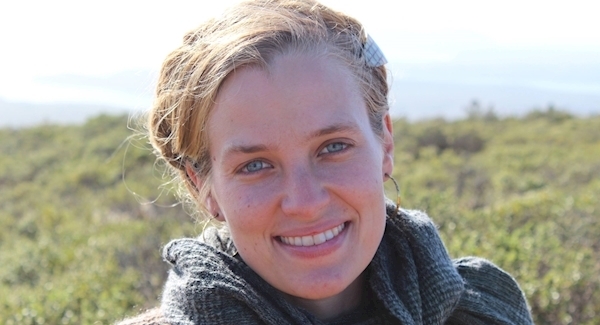
As she prepares to read in Cork, Sylvia Linsteadt tells how her love of nature informs her writing.
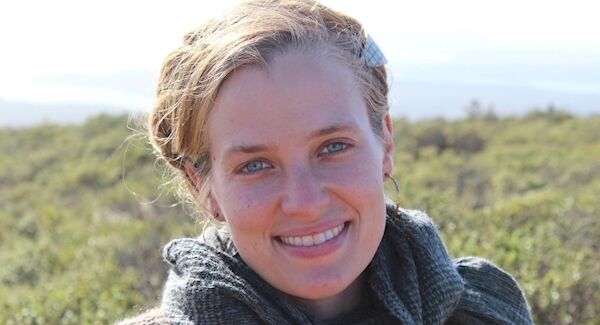
Fairytale and myth are the bedrock of our initial forays into reading, an enchanting gateway into the spellbinding world of literature.
But we tend to leave the fantastic realm of princesses, knights and trolls behind as we move onto adulthood and fare that is rooted in the ‘real’ world. For writer Sylvia Victor Linsteadt, however, folklore and myth contain a truth that resonates beyond the nostalgic mists of our childhood.
“They are obviously just stories but there is something in myth that touches something very true and deep in our psyche. I see mythology as a way of articulating our connection with the mystical, unseen, unknown magic of the world that we all recognise is there but that there’s not a lot of room for in this scientific, technological, rational world. I think a big part of it too is that I feel in a mythic context, everything is alive and speaks, not just us humans.”
Linsteadt, who is from California, knew she wanted to be a writer almost as soon as she started to read.
I was a voracious reader. When I was aged eight, in third grade, I decided the only thing that would be better than reading would be to write these magical stories. I never really wanted to do anything else and I’ve been writing stories ever since
She graduated from Brown University with a degree in literary arts and got a job with a publisher in the California university town of Berkeley.
“I very quickly realised I was on the wrong side of the fence, and I wanted to be writing books, not producing other people’s books. I took a big risk and left that job to try to make it as a writer.”
Linsteadt took the somewhat unusual course of reworking old fairytales and myths in the form of a series called The Gray Fox Epistles, which she mailed to subscribers all over the world.
“It was my attempt to democratise the arts in a way, to send these stories directly to readers. I made just enough to make a living but it was full-on.
“I was writing an 8,000-word story a month, editing it, packaging it, sending it out in the mail. I did that for several years. I find that traditional publishing is quite a relief in comparison,” she laughs.
The Cork International Short Story Festival website is now live! Tickets for evening events are only €5 and all library events are free. View our events and workshops for #CISSF18 12-15 September here: https://t.co/kDJdrJ3aAG @NanoNaglePlace @FirkinCrane @corkcitylibrary @rte
— Munster Literature Centre (@MunLitCentre) August 2, 2018
Much of Linsteadt’s work is rooted in ecology and our relationship with the landscape and wildlife around us. She lives in Point Reyes, a stretch of protected coastline an hour and a half north of San Francisco. Her passion for wildlife is reflected in her interest in animal tracking, in which she has an official certification. It may not be an obvious connection, but Linsteadt says the parallels with reading and language were immediately clear to her.
“Understanding the patterns that each different animal leaves, whether it is tracks or a feeding sign — suddenly I could read these stories in the landscape and it really brought it to life in real time. This was a specific coyote living its life… from these tracks in the sand, you could see it going down to the tideline to look for crabs.
“That tracking really informs a lot of my writing, just as a basic sub-stratum, I don’t really even think about it, it’s just there.”
Linsteadt’s most recently published book is a novel for younger readers called The Wild Folk, described by one reader on social media as “a bit Hobbit, a bit Watership Down, a bit Narnia”.
She laughs when she hears the description but is humbled and flattered by the comparisons.
“Watership Down, that was a profound book to me. I read that as an adult, not as a kid. I couldn’t appreciate it at that age. It is just so beautifully written and powerful. I created The Wild Folk to be like something I would have wanted to read at that age, nine or ten, trying to put in all the things I loved in one place. The main theme in it is the deep interconnection of all life… it is such an obvious thing but I don’t think we necessarily see it in our stories any more.
“It feels like there is this necessity of returning to a different kind of thinking about the world. I see these mythic stories and content as helping reorient me.
“If you think of everything as living and animated, and not objects for us to use, we would treat the world and the land incredibly differently. As kin rather than raw material, resources.”
Linsteadt has just spent two weeks on the Greek island of Crete, a site steeped in ancient tales and mythology.
“It has been a really quite profound experience,” she says.
Her visit to Cork for the Cork International Short Story Festival is her first visit to Ireland, where she has ancestral roots.
“I’m sure a lot of Americans say this but I have a fair number of Irish ancestors,” she laughs. “It will be great for me to see the land where they came from.”
Cork International Short Story Festival Highlights
Cork writer William Wall (below) has been acclaimed for his poetry, short stories and novels and won numerous literary prizes, including the Seán Ó Faoláin prize for short fiction.
His most recent novel is Grace’s Day. He formerly taught at Presentation Boys College, Cork, where he inspired the actor Cillian Murphy among many others.
The Stinging Fly magazine was established in 1998 and has since provided a valuable platform to some of Ireland’s top literary talent.
Reading at this event to celebrate its two decades in existence will be Danielle McLaughlin, whose stories have appeared in numerous publications including The New Yorker, and whose debut collection of short stories, Dinosaurs On Other Planets, was published in 2015; Eimear Ryan, co-editor of the literary journal Banshee and winner of several awards for her short stories; and Cork writer Danny Denton, who published his first novel The Earlie King and the Kid in Yellow earlier this year.
Simon Van Booy is the award- winning and best-selling author of seven books of fiction, and three anthologies of philosophy.
Poet, novelist and essayist Thomas McCarthy will lead a discussion on the revival of forgotten literary reputations, with Patrick Cotter, Declan Meade and Sinead Gleeson, who have worked to bolster the public profiles of Irish writers Frank O’Connor, Maeve Brennan and Norah Hoult.
Helen Oyeyemi was one of Granta’s Best Young British Novelists in 2013.
Visit the Cork International Short Story Festival website for more info.

CONNECT WITH US TODAY



Be the first to know the latest news and updates














