The dynamics of dyslexia as told by a specialist
Cork-based dyslexia specialist and guidance counsellor, on why she wrote a dyslexia-friendly guidebook for parents.
I have been working with dyslexic children of all ages and their parents for the past 15 years.
My experience has made me very aware of what works for dyslexic children, the changing attitudes and the continued misconceptions of dyslexia.
I have seen a particular need for a ‘dyslexia friendly’ guidebook for parents, focused on their concerns.
So I began to gather interviews with students and parents three years ago, and with my own knowledge and research I started to write At Home With Dyslexia: A Parent’s Guide to Supporting Your Child.
There are 60 parents and dyslexic children sharing their personal experiences and advice throughout the chapters.
Dyslexia is considered genetic in origin; therefore any guide for parents needs to be ‘dyslexia friendly’.
What is unique about my book is that it maintains at its heart the need to appeal to the parent who may also be dyslexic.
Parents want and need a guidebook that is visually appealing, including short chapters, bullet points, plenty of spacing, and illustrations.
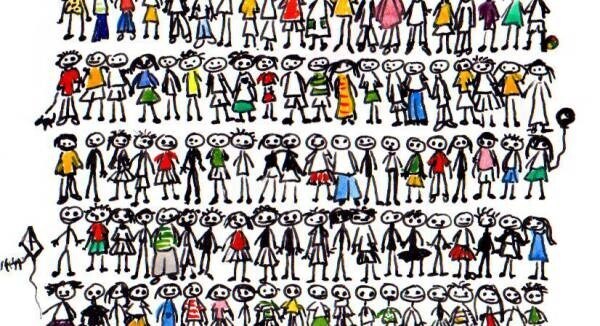
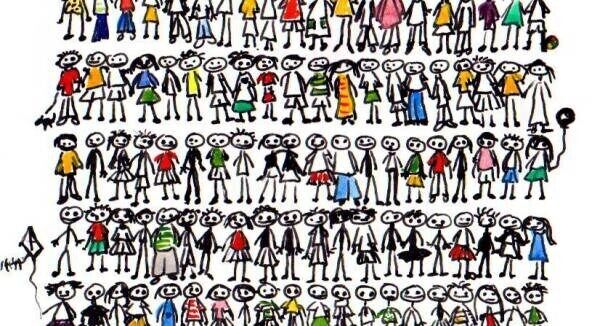
Danielle Sheehy is the book’s illustrator and draws on her own insights as a dyslexic parent of dyslexic children to capture the feelings and attitudes around dyslexia.
There is a sea change in terms of attitudes to dyslexia, as shown in the growing number of famous and successful people speaking out about their own dyslexia.
The creativity, strengths and abilities of people with dyslexia usually drive their success, for example; Thomas Edison, Charles Darwin, Isaac Newton, Einstein, Steven Spielberg, the Wright brothers, Henry Ford, Tommy Hilfiger, Walt Disney, Mozart, Picasso, Andy Warhol, Bill Gates, Steve Jobs, Jo Malone, Agatha Christie.
There are so many successful people with dyslexia at the top of every possible field of interest. People need to be more aware that our world is often shaped by the minds of dyslexics — in communication, transport, scientific research, films, books, technology and so on.
This extract from At Home With Dyslexia is taken from Chapter Four — ‘How to Talk About Dyslexia and Handle Feelings’, and emphasises the central message of my guide that dyslexia is not a disability but a learning difference with its own strengths and abilities.
Dealing with dyslexia is about finding creative solutions that will empower people with dyslexia to succeed.
How to talk about dyslexia and handle feelings
I actually felt pretty happy being dyslexic and happy to have dyslexia.
I thought it was a rare thing, I must be pretty lucky to have this. I was happy to find more people struggle just like me, and it is not a bad thing at all. I just told my whole class because I was so excited! What gave me confidence was talking to my mum and just me being me.’ Sean, 13.
The importance of talking with your child This chapter focuses on the importance of talking everything through with your child. It looks at the dominant feelings for young and older children, and how you can help by: Being open and honest.
Being positive and encouraging.
Educating others
I avoid the word ‘diagnosis’ or ‘diagnosed’, which is difficult to do when discussing a perceived disability. The word ‘diagnosis’ is loaded with negative connotations — of an illness, an affliction, a disability.
You don’t want your child to feel that dyslexia is any of these things, so try to avoid the use of any references such as ‘being diagnosed with dyslexia’, ‘after diagnosis’ and so on. It does not help your child’s self-image nor your household’s attitude to dyslexia.
You also now have to educate others on how people with dyslexia do not see it as a ‘diagnosis’ to be ashamed of or pitied, but it is part of who they are and their way of seeing the world.
As soon as you are aware you are a parent of a dyslexic child, change the language around it and correct others.
Use other phrases, for example: we ‘recognised’, ‘discovered’ or ‘spotted’ dyslexia; it was a ‘realisation’, ‘a revelation’, ‘a lightbulb moment when we found out’.
Telling your child about dyslexia
You will have a mixture of feelings once your child’s dyslexia has been confirmed. It could be quite a shock, you may feel angry at the school for not spotting it sooner, and blame yourself for not doing something about it earlier.
If you have dyslexia as well, you may feel guilt that you have passed it on to your child. And if your memories of school were painful because of your own dyslexia, you may be fearful that your child will have a similar experience. You may feel sad and worry about your child’s future. You might overreact!
Stay calm
Find out as much as you can about dyslexia and take a matter-of-fact approach. The way your child reacts to dyslexia will be greatly influenced by your attitude to it.
Be positive about the ‘label’
It is crucial that you show a positive and confident attitude from the start. Remember, dyslexia is not a disability; it is not something to be embarrassed by or ashamed of.
Your child will be sensitive to any negative feelings around the report and a dyslexia ‘label’. There are some widely held attitudes that children should not be labelled. Schools avoid definitive labels, and some educational psychologists avoid the word ‘dyslexia’. Unfortunately, such approaches can add to the idea of shame and struggle
around this learning difference.
Trust that those who work closely with parents and children with dyslexia overwhelmingly prefer to have the ‘label’ dyslexia written in the report and recognised by the school. Parents then feel more confident in their position to make sure their children receive the support they deserve.
Be open
Be honest from the start, talk about it freely. Go through the report with your child; it is about him, after all, and no one else.
Knowing better than not knowing
You and your family members will need to learn more about dyslexia, but essentially your relationship with your child has not changed. This is just a confirmation that she learns differently, and it has nothing to do with her intelligence.
Knowledge will give you confidence in combatting any negative reactions and ignorance coming from others less knowledgeable.
Fortunately, attitudes are changing, and talking about dyslexia is becoming more open and positive. Some celebrities and sports personalities have been talking about their dyslexia all of a sudden. You must encourage acceptance in society, change the negative language around dyslexia, and start to educate others about this different way of thinking.
CONNECT WITH US TODAY



Be the first to know the latest news and updates

















