Beat the sniffles: Tips and tricks to ward off illness during cold and flu season
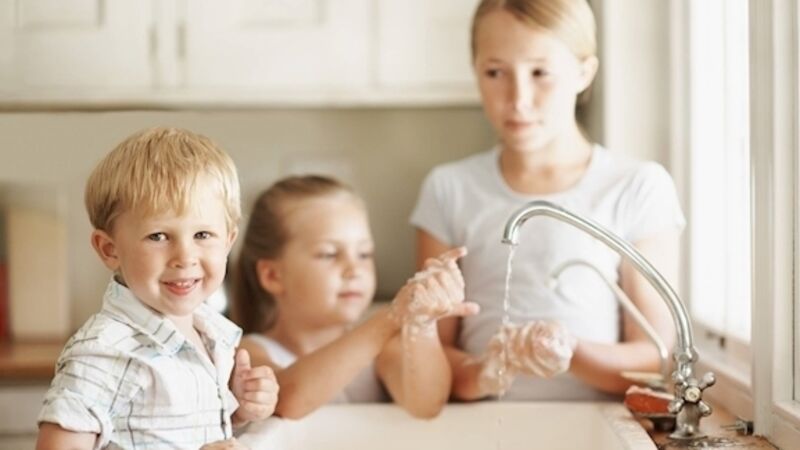
Back to school also means it’s back to flu and cold season. Dr Pixie McKenna offers some tips to ward off illness, writes
THE stage is set. The bugs are primed. With primary school children generally getting eight to ten colds a year, chances are your child will have succumbed before September’s out.
“I think by end of September we’ll be into cold and flu season,” says Dr Pixie McKenna, commenting after new research shows one in three children miss, on average, three days school a year as a result of a cold or flu.
“The children are all coming back from wherever they’ve been for the summer, bringing their various bugs with them, they haven’t seen each other in ages, and they’re all getting in together. It’s a melting pot for germs.”
The hands are the biggest vector for passing on infection, warns the star of RTÉ’s You Should Really See a Doctor and Channel 4’s Embarrassing Bodies.
And young children routinely do three things with their hands that guarantee a cold caught by even one child will quickly do the rounds of the classroom. “They’re very hands-on with each other, playing and passing items back and forth. They’re prone to putting their hands in their mouth and they don’t always wash their hands.”
McKenna — whose GP dad Jim was “an obsessive hand-washer long before anyone had fancy anti-bacterial soaps” — says if you can teach your child to do a high five, you can teach them to wash their hands properly. But you’ve got to be a good role model and show them the steps, which include washing hands with warm water, palm to palm, remembering also the backs of your hands, washing with interlocked fingers, and cleaning under nails.
“Get them to do this for the length of time it takes to sing ‘Happy Birthday’ twice — and remind them that drying hands well is also important.”
Most parents, faced with a child sniffling into their cereal and complaining about a sore throat, will have grappled with the to-send-to-school-or-not question: Will I keep her out? If I send her in, will her classmates catch it? McKenna’s advice is to “absolutely, definitely” send them to school — unless they have a temperature. “Never send a child with a temperature to school, even a low-grade one.”
The new research released this week by Scope Healthcare, an Irish-owned healthcare supplier, surveyed 428 parents and found one in three bring their child to the doctor with cold/flu symptoms, costing them on average over €250 a year. McKenna agrees that when your child’s unwell, it can be a hard call to make whether to bring them to the GP or not.
“It’s an anxiety-provoking time. If you feel your child’s not right, there’s no harm in getting that piece of reassurance. And any child with very high temperature, who’s irritable, and not taking fluids, and your gut is saying ‘this isn’t right’, go with your gut — go to the doctor.” She also encourages parents to make their pharmacist the first port of call when your child has cold/flu. And treat the child, not the temperature. “If the child has a high temperature and is miserable, give them something to bring it down. If it’s low-grade and not bothering them — they’re happy and eating — there’s no need to give them anything.”
With prevention better than cure, McKenna affirms the importance of plenty of sleep and a good diet. “An army marches on its stomach. Ensure they’re healthy nutritionally. A child who gets sick a lot is probably not eating enough.”
She particularly emphasises the role of vitamin D. “Having low levels does impact the immune system — it seems to make us more prone to infection.”
While we’ve had a great summer — and plenty opportunity to absorb the sunshine vitamin — McKenna says it depletes pretty quickly once the darker months set in. “It’s tricky enough to maintain vitamin D in the winter months. You’re never going to get enough in a standard diet unless you supplement. Egg yolk, oily fish — these aren’t necessarily the foods children naturally eat. And even if they’re eating tubs of sardines, they wouldn’t be getting enough [vitamin D].”
The research found 59% of 5-12-year-olds take a daily multivitamin. “Many adults take a multivitamin but they never consider kids in that equation,” says McKenna, who believes a supplement can “come in handy”, particularly when it comes to vitamin D. “Look at giving them a multivitamin that will bring them through the winter that will support them nutritionally and as they’re growing and developing because there’s a lot going on for them — their bodies are doing a whole host of things.”
McKenna’s six-year-old daughter, Darcy, doesn’t get colds or flu. “She’s just lucky. She has a fairly strong immune system. I’d be like that — I wouldn’t get sick often.”
In fact, Darcy, who “absolutely loves” school and is delighted to be going back, has never been off school due to illness. “She’s in a small class of 12 — that’s probably relevant,” says her mum.
But when it comes to meds or vitamins, McKenna has her work cut out to get Darcy to take anything. “For the first time ever she’s had to go on antibiotics because she split her foot open. She’s a very strong character and I can never get her to take anything. She [had to have] so much chocolate while she was on the antibiotics!”
And as the kids head back to school, McKenna has been putting her “nose to the grindstone” this week and getting back to “doctor work” herself after five weeks in Ireland. “September’s often a bit of a rush — people come with stuff that happened during the holidays that they want sorted.”
Vivioptal Junior has been specifically developed for children of all ages above one year. This supplement provides 12 essential vitamins and 7 trace minerals. The formula includes vitamins A, D and E, B1, B2, B3, B5, B6, B7, B12, vitamin C, and folic acid.
CONNECT WITH US TODAY



Be the first to know the latest news and updates