Back to school anxieties are common for kids
The school year has officially started. Often this time of year can be difficult for both children and parents alike. Winter is drawing in with its endless routine of lifts and lunches, so we can all come to dread that mundane regularity.

Back to school anxieties are common for kids

School refusal is generally the avoidance of the school environment due to the stress that environment places on the psyche of the child, writes Richard Hogan

The school year has officially started. Often this time of year can be difficult for both children and parents alike. Winter is drawing in with its endless routine of lifts and lunches, so we can all come to dread that mundane regularity.

Yet, for a small proportion of children the notion of going to school can cause deep anxiety and fear. And parents often struggle with what to do, because you cannot really punish a child for developing a phobia and your child has to go to school.

It is a legal requirement, so the stress school refusal puts on families can be considerable. In my experience a child’s reluctance to go to school can really test both the school and family as these joint systems try to develop effective strategies to get the child back into the classroom.

However, it often fails because they view the locus of the issue as emanating only from within the child. And school refusal can be far more complicated than that.

In this two-part article I am going to explore what school refusal is and what can cause a child to fear school. In next week’s article I will outline what parents can do to help their child with this issue.

Most children at some point in their educational career will try to avoid attending school. Often it is fleeting and does not need outside help. However, when a child develops, what seems to the ordinary eye as an irrational fear to school, parents can be left unsure of what to do.

So what is school refusal? It is important not to confuse truancy with school refusal. Truancy is the activity of not going to school because the student has discovered something better to do like hanging out with his friends at the amusement park or going to the beach.

It’s not so much that they fear school but rather they have something more exciting to do. School refusal can come from a far more complicated and darker psychological place. School refusal is generally the avoidance of the school environment due to the stress that environment places on the psyche of the child.

Children who avoid school consistently normally do so because:

The child wants to escape

It could be from situations that cause him/her distress like the canteen, lunch, travelling to school by bus or train or a particular teacher or class.

Performance anxiety

The modern classroom is a far more active and demanding place than ever before and children are expected to offer opinions in the classroom. This can be quite daunting for a child that is suffering with anxiety or is naturally more introverted, so they avoid the situation altogether.

Attachment disorder

Spending more time at home allows them time with a parent they do not want to leave.

Strained peer relations

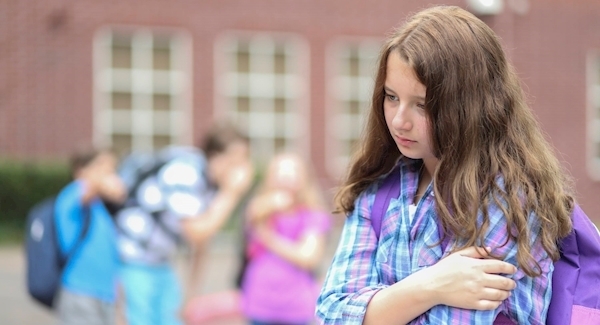
Often when a child suddenly develops an aversion to the school milieu they have suffered a fracture in their peer relations. Understanding this is an important step to a successful outcome.

Spending more time in the bedroom

The arrival of technology and ubiquitous internet means the bedroom is a far more attractive place because they can play games like Fortnite for as long as they want.

From these examples you can see that, in only two cases is the position of the problem coming from within the child. So understanding the origin of the issue is very important if there is to be a desirable outcome.

All behaviour is communication, so ask yourself; what is my child’s refusal to attend school saying to me? The answer might be, to spend more time with me, to avoid a teacher they dislike, avoiding stressful peer relations. As you can see the answer to this question will help you to arrive at a suitable strategy. But sometimes the answer is not so obvious and often the child might find it difficult to express what it is they are feeling and this can leave parents very confused and stressed.

But remember an irrational fear does not always make sense to us. I had a conversation with a student last year that was really struggling with school life. When we explored it further, he explained to me that he really was terrified of making a fool of himself in front of a particular group of peers. He told me that he even feared saying his name during role call for fear he said it incorrectly.

This type of social anxiety is becoming more common. Being self-conscious is a normal part of teenage life. However, when it is impacting normal life activity something pathological maybe developing. That student told me that he was eating his lunch in the toilet because he didn’t want anyone to judge the way he was eating. The sheer isolation that this behaviour was bringing into his life was striking. And it took many conversations to get to the root cause of the issue.

Next week I will outline what you can do if your child is labouring with an issue like school refusal.

If you have a question please contact: info@richardhogan.ie

More in this section

Cookie Policy Privacy Policy Brand Safety FAQ Help Contact Us Terms and Conditions

© Examiner Echo Group Limited













