Why are we obsessed with unicorns and mermaids?
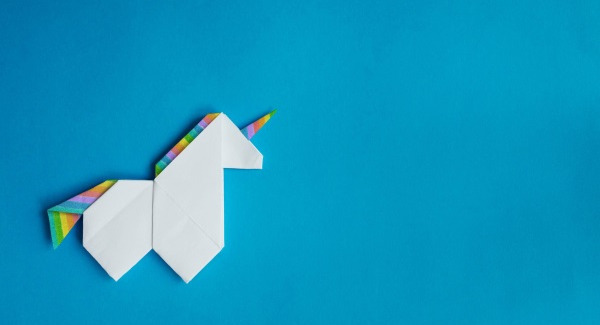
Unicorns are set to top the list of sought-after toys this Christmas. So just what is our obsession with this mythical creature, asks
Our fascination with mythical creatures especially mermaids and unicorns — so much nicer than ogres and yetis — began in ancient times and shows no sign of letting up. The unicorn is particularly ubiquitous. They are for the first time predicted to dominate the list of most sought after toys for 2018.
Unicorn-themed toys look set to take over family homes this Christmas as they make up a third of those on Argos’s top 10 toy list for 2018.
This year’s must haves include a giant plastic sit-on unicorn which travels at adult’s walking pace, interactive unicorns, and a model which poos out glitter. From Claire’s Accessories to Topshop, the mythological beast of fairytales has been rebranded as a 21st symbol of fabulousness, more Instagrammable than avocados.

We are all urged to Be More Unicorn — from the dressing up boxes of small girls to clubland Millenials, marketing departments are catching on and cashing in on our endless enthusiasm for magic horses with rainbow spiralled horns and swishy rainbow manes and tails.
There are hundreds of unicorn-based gift items on Amazon — pillows, mugs, colouring books, onesies, jewellery, T-shirts, aprons, toys, flasks, lights, stationery, lunchboxes, dressing gowns, craft kits — yet the one-horned animals which actually exist, such as narwhals and rhinos, hardly get a look in.
We prefer fantasy — unicorns, being mythical, are far more alluring than anything as lumbering as a rhino or peculiar as a narwhal. So have we reached peak unicorn?
We’ve had rainbow swirl hair dye, cupcakes, Fruit Loops, frapuccinos, unicorn snot (body glitter) smeared all over Instagram. Is unicorn fever incurable?
The 90s craze — fuelled by My Little Pony, the franchise that will not die (because who wants to kill Princess Twilight Sparkle?) — has made a massive comeback, thanks to social media.
The Google search term ‘unicorns’ has been steadily rising since 2012, with the unicorn food trend (rainbow birthday cakes, rainbow icing, unicorn toast — yes, toast) taking hold in 2016.
Unicorn-themed designs have been sent down runways, their image stamped on adult clothing lines.
They symbolise magic, ethereality, elusivity, inclusivity, cuteness, hope, innocence, singularity. They are whatever you want to them to be, hence their popularity from kindergartens to Pride marches.
Unicorns are not some 21st century fad however, but, like mermaids, are part of global culture, rediscovered by each generation, and venerated in increasingly imaginative, celebratory and playful ways.
They have been written about since the 4th century BC, first described by Ctesias, a Greek doctor travelling through Persia, who was told by fellow travellers of wild creatures the size of horses with white bodies, red heads and blue eyes with “a horn on the forehead about a foot and a half in length”.
These horns were multicoloured, and the animals moved so fast that “no creature, neither the horse nor any other, could overtake it”. The late Pulitzer Prize winner Odell Shepherd, unicorn expert (yes, really) and author of The Lore of the Unicorn, said that the creature was most likely never directly seen by Ctesias, but was a mishmash of transcribed sightings; in other words, not real.
This did not stop Scotland adopting the mythical creature as its national animal during the 1300s, despite stories of unicorns being so elusive and shy that only the naked breasts of virgin ladies could hope to lure them from their forest hideaways.
Unicorns also appear on the flags of several countries and regions, including Lithuania and Labrador.
Meanwhile, some unicorn enthusiasts are so keen that they believe themselves to be human unicorns. One Londoner known only as Shaft (who describes himself as “a fabulous unicorn”) formed a group of young adult unicorn hedonists, whose followers say of their founding member: “The moment I met him I became a unicorn” and “he’s a catalyst for a fire that keeps on burning.”
Shaft told Vice magazine that, inspired by trips to the Burning Man festival in the US, he had a vision that he really was an actual unicorn, and so began a polyamorous unicorn group who love to dress up in sparkly costumes with glittery unicorn horns, neck lots of drugs, and dance all night.
Unsurprisingly, human unicorn cults are also found in the more bohemian enclaves of San Francisco. Sex, drugs and unicorns — what’s not to like?
Mermaids, on the other hand, have no time for such frivolity. They are all about honing their free diving skills and learning to swim underwater without oxygen tanks. You’d rather have to, given how human mermaids are not born with gills nor can buy self adhesive gills in H&M, as you can with fake glittery unicorn horns.
Etsy shopowner Emily Wright (“half woman, half beautiful fish”) got into mermaiding after the birth of her daughter Etta. “A couple of years ago I wanted to get back in touch with my sense of self after having a baby, and recovering from a back injury,” she says.
“I felt alienated from my body, and I wanted to do something involving movement. But rather than the self-punishment of exercise and its associated weight loss that we can get so caught up in, I remembered how good it felt as a child swimming underwater.
“So I posted a message on Facebook looking for a body positive mermaid playground, and it went from there. I fell in love with free diving, and with the way mermaids swim — the ‘dolphin kick’ is indescribable until you’ve tried it. I began going to a free diving club every week, No Tanx in Brighton. I was really keen. So keen that now I run it!
“We also do monthly meet-ups called Tidal Gatherings, plus free-diving mermaid holidays, and we have a Facebook group called the Merpod. It’s all very inclusive. It’s mostly women, but there are men too. Everyone is welcome.”
Emily gets a bit tired of all the health and safety stuff written about mermaiding – like any aquatic pursuit, she advises common sense, like using proper equipment and training with a qualified experienced free diving instructor. Nor does she advocate combing your hair while sitting on rocks far out to sea in the hope of luring any sailors to their death.
“I’ve done sea swimming in my mermaid tail, but it’s not for beginners. You need to be properly free-dive trained, and you should never do it on your own.”
She says mermaiding has been a hugely positive aspect of her overall well being: “I am really happy underwater. It’s calm and peaceful, and I feel fluid and graceful.” Back on dry land, the Coney Island Mermaid Parade, founded in 1983, is one of New York’s more gloriously eccentric events, led annually by a King Neptune and a Queen Mermaid.
Inspired by the New York parade, a Brighton mermaid called Hannah Chilton started March of the Mermaids in 2012; every year the event gets bigger, as more pirates, mermaids, mermen and sea creatures join in. But it’s not just prancing along the seafront dressed as lobsters and jellyfish — all proceeds go towards marine conservation, and to highlight marine environmental issues.
Culturally, our fascination with mermaids goes back thousands of years. They were first referenced in ancient Assyria, when the goddess Atargatis turned herself into one. Since then mermaids have appeared in folklore around the world, from western Europe to China via Africa and India; selkies, part of the mythology of Ireland, Scotland, Iceland and the Faroes, are humans that can change into seals in a process known as therianthrophy. From Hans Christian Anderson’s 1836 tale, The Little Mermaid, to the upcoming remake of Disney’s 1989 film The Little Mermaid, via Darrell Hannah in Splash, dozens of false sightings and Louise O’Neill’s reimagining of the classic fairytale, we remain in the siren thrall of magical aquatic creatures.
Like unicorns, they will always be part of the human story.

CONNECT WITH US TODAY



Be the first to know the latest news and updates









