Nirvana before Cobain: Original of the species
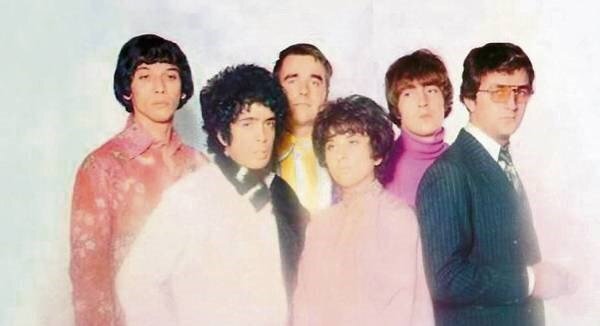
Decades before Kurt Cobain lifted a guitar in anger, there was another Nirvana.

Nirvana before Cobain: Original of the species

Decades before Kurt Cobain lifted a guitar in anger, there was another Nirvana.

A collaboration between Patrick Campbell-Lyons, from Lismore, Co Waterford songwriter and Greek composer Alex Spyropoulos, the duo were prominent on the London blues-rock scene of the late 1960s.

They were an original of the psychedelic species, an influence on everyone from Pink Floyd to The Beatles.

That they have been generally forgotten — and that the Irish connection is so little known — is an injustice that may be about to be corrected.

With their ambitious 1967 debut, The Story of Simon Simopath — about a boy who dreams of having wings — they pioneered the concept album, creating a wide-eyed, sometimes whimsical, template later followed by others.

That LP has now been reissued in an expanded edition, along with its 1968 follow-up All Of Us. As introductions to the psychedelic movement they are incomparable — weird, thrilling and horizon-expanding.

Campbell-Lyons hopes to follow up the re-release with live dates in Ireland towards the end of the year. It is sure to be an emotive return to a country he departed at the height of its stifling religiosity.

“We were slightly before Sgt Pepper, having started on our record a year earlier,” he says. “We were the first band to use a cello live. Nobody had done that before. And we were the first band to be called Nirvana.”

They were also the first band to release on Chris Blackwell’s Island Records, which gave them a front-row seat to one of the most thrilling moments in music.

After moving to London to work in an ice-cream factory at age 18, the wide-eyed Waterford lad was soon in the same blues circles of John McVie, later to lead Fleetwood Mac, and shared a bill with an early version of the Rolling Stones.

He went on to meet Spyropoulos at La Gioconda, a cafe on Denmark St popular with rock’n’rollers (Bowie, The Kinks and Marc Bolan were among the regulars).

Having considered Birth and Karma as name, they finally chose Nirvana.

Their sound couldn’t have been further removed from that of the Nineties grunge pioneers – the music was ethereal and orchestral, soaked in surrealism.

Waterford Origins

“I was born in Lismore and went to school there. And then to Clonmel and Cashel. I came to London at 18 for a student job.

"I needed to get away from the indoctrination in Ireland. If you didn’t become a school teacher it was a doctor or dentist.

“Or you were headed for the priesthood. I had some experiences growing that put me off. London was a whole new adventure.

" I started an R'n'B band and before I knew it was playing at the Star-Club in Hamburg [where The Beatles held their famous residency].”

Nirvana also collaborated with future David Bowie producer Tony Visconti, cavorted on television with Salvador Dali and travelled to Rio de Janeiro with reggae icon Jimmy Cliff.

There, Campbell-Lyons met original-of-the-chanteuse species Françoise Hardy and was caught in a shoot-out when gunman targeted a samba performance.

It was pretty wild. We went to a school for samba. They was beer everywhere — they were selling it from crates on their backs. All of a sudden you hear these bang, bang, bangs. I thought they were firecrackers. Everyone was lying on the ground. Two cops came in on Harley-Davidsons. The main thing was that the samba never stopped playing.

Being Irish in London in the Sixties wasn’t always straightforward, he recalls.

“I remember Hammersmith and Kilburn and the signs in pubs saying “No Dogs, No Blacks, No Irish” That was there. I adapted very quickly to being a vagabond musician.

"In those days, many of the people on the London scene were from other places. You had a whole mix. And, of course, if you were an outsider, you tried harder.”

Nirvana met Dali on French television in 1967. Their single ‘Rainbow Chaser’ was a hit on the continent and they were invited to appear on a quintessentially Gallic “Improvisation on a Sunday Afternoon” special.

This involved performing on set strewn with props, for which they were joined by Salvador Dali who brought with him two young women and two tigers.

As Nirvana sang, Dali splashed paint on them — which was as bizarre as it sounded. Campbell-Lyons would describe it as one of the greatest things to ever happen to him.

Alas, Nirvana would become eclipsed by ‘Smells Like Teen Spirit’, and all that followed. Determined to preserve their ownership of the name, Campbell-Lyons and Spyropoulos moved to Los Angeles in 1992, taking a case against Cobain and their record label, the mighty David Geffen Corporation.

Pleading their case was the lawyer who had represented Dr Eugene Landy, the controversial psychotherapist of Beach Boys’ leader Brian Wilson.

An undisclosed settlement was reached, under which the Seattle trio could continue as Nirvana (because the 1960s Nirvana have never toured heavily, cases of mistaken identity are rare).

Patrick Campbell-Lyons

Mellow Cello

“They said we had no American profile,” said Campbell-Lyons. “We showed we were on a Best of British album — that is how we proved we had a profile in America.

"They liked the name and they hadn’t bothered to research it. But it was our name and we had to defend it.

“Our ‘Nirvana’ was based around the ethereal side of that feeling — their thing was anti-Nirvana, to look on what the dark side of Nirvana could be. It was a punk thing.”

The existence of another band called Nirvana had come as a shock.

“Alex was listening on the radio and he heard a song called ‘Smells Like Teen Spirit’. The announcer said it was by a band called Nirvana from Aberdeen.

"He thought they meant Aberdeen in Scotland. He rang me up and said, ‘someone is taking our name’.’”

Under their out-of-court settlement, both Nirvanas were able to use the handle — on the understanding they didn’t encroach on the other’s distinctive sound.

Several weeks after the agreement, Cobain’s Nirvana recorded their iconic MTV Unplugged concert, bringing out a cello player.

“The cello was our trademark,” says Campbell-Lyons. “They were taking the piss a little bit.

"We did a version of [grunge staple] ‘Lithium’ in our style and released it about a year later.”

The expanded editions of the Story of Simon Simopath and All Of Us are out now.

x

More in this section

Cookie Policy Privacy Policy Brand Safety FAQ Help Contact Us Terms and Conditions

© Examiner Echo Group Limited













