Behind the screen: What your kids are watching
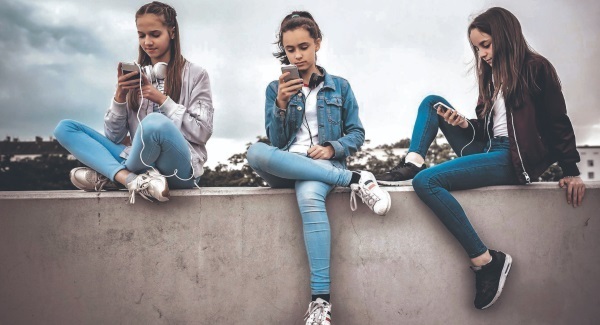
Who will your kids be watching on YouTube this summer? Marjorie Brennan gets to grips with teen screens.

Behind the screen: What your kids are watching

Who will your kids be watching on YouTube this summer? Marjorie Brennan gets to grips with teen screens.

The summer holidays are upon us, and the days get longer in more ways than one, with many parents struggling to keep their children entertained.

With schools off, devices and screens can end up filling the gap for busy parents and bored kids. This is nothing new — as a child, I remember many sunny days spent inside watching Wimbledon while my mother exhorted me to go play outside and get some fresh air.

Now, with the ubiquity of smartphones and being constantly connected, screen time involves pursuits that can be a lot more worrying than just getting ‘square eyes’.

As well as concerns about the impact of excessive screen time on their physical and psychological health, children are also open to the threats of cyberbullying and online predators.

For most young people, YouTube is the new TV, with recent figures from the Pew Research Centre in the US showing that about 85% of those aged 13 to 17 say they use the video sharing site, followed by Instagram (72%), Snapchat (69%), Facebook (51%) and Twitter (32%). While these figures relate to the US, figures on this side of the Atlantic usually follow a similar pattern.

There is also increasing concern over children obsessively playing the new gaming craze Fortnite: Battle Royale.

The game, in which 100 players fight until only one remains, has more than 40 million active monthly players, and videos featuring the game are the most watched on YouTube and the streaming platform Twitch.

In Britain recently, there were reports of one nine-year-old receiving treatment after becoming so consumed with the game that she wet herself rather than stop playing.

According to child and adolescent psychotherapist Colman Noctor, such platforms are designed to keep viewers watching for as long as possible. The fact that they are self-regulating also creates issues.

“When we talk about addictive qualities, YouTube wants to keep you on screen, and it doesn’t ever have a point when it says, ‘you’ve had enough, I’m going to stop’,” says Noctor.

“It demands that the child regulate their own desire, and children can’t do that. You don’t have a situation on a sleepover when the kids go, ‘look, it’s quarter-past eleven, let’s get some shut-eye’. They’ll stay up until five in the morning…. Therein lies the problem, with an unregulated population in an unregulated space.”

YouTube is also a huge and often lucrative platform for vloggers and influencers, whom children and teenagers follow in their millions. While considered by many to be just another relatively harmless element of the constantly shifting media landscape, Noctor believes we need to look more deeply at their impact.

“For teenagers, a lot of the boys look to influencers who have gaming platforms, and what that feeds into — also coming from the reality TV side — is that everyone can be a celebrity. The vitality or shareability of the content is more important than the meaningfulness of it.

"Values are shifting onto numbers and currency. What gets the most hits is not necessarily the truest thing online, it’s just the most popular, so we’re driving towards populism as opposed to authenticity,” says Noctor.

Psychotherapist Stella O’Malley says girls are also hugely susceptible to vloggers at a crucial time in their development.

“I’d be worried about the vanity and superficiality it brings into their lives. There is such an emphasis on looks and they are incredibly invested in that.

“It is having a serious and insidious impact on their psyche. These vloggers are making a brand of their personality. Then all these teenagers are following this brand — it’s not the true or real person. These kids who are watching it are being influenced to live a fake, contrived and looks-based life,” says O’Malley.

She also believes that children have become so monitored and protected ‘in real life’ that they are not experiencing the necessary risks that help them grow and develop as adults, and this is making virtual life more appealing.

“There is one interesting study that showed the more physical restrictions on a teenager’s life, the more barriers/rules they’ll break online. We need adrenaline to feel alive. If they’re restricted and not allowed to do certain activities, they are more likely to get their sense of risk online.”

She says it is important to participate in physical activity with some element of adventure, and all the better if that is done together as a family.

“Get them involved in something like kayaking or hiking. Maybe they won’t want to do it at the start but we need to lure them out through positivity as opposed to saying ‘turn off the screens, good luck and goodbye’. It’s a signal that their real life isn’t working if they think their virtual life is that great.”

Parents also need to be vigilant with younger children, with recent research by the UK group Internet Matters showing that almost one in three children aged between six and 10 post live content “sometimes”. YouTube was the most popular platform for broadcasting content, followed by Facebook Live and Instagram Live.

“Lots of small kids have their own YouTube channel. This makes them more exposed and vulnerable. We say we need to make kids more tech-savvy but that can lead them to places online which they don’t have the emotional savvy for,” says Noctor.

There have also been warnings about children accidentally accessing inappropriate content. In an investigation last year, BBC found hundreds of videos of children’s cartoon characters with inappropriate themes or containing disturbing images.

“Stumbling on inappropriate material through naive searches can bring up all kinds of material,” says Noctor.

“They can come across parody accounts — they’re looking for ‘Postman Pat’ and you get a site called ‘Postman Patrick’, for instance, which may have horrendous language or whatever.

"It’s not as if the child is going looking for that content, it comes up with the search term because YouTube has no way of knowing the child is nine, not 29. I have kids and they’re not allowed YouTube unless I’m right beside them for no other reason than they might stumble on something quite innocently.”

Noctor isn’t advocating a screen ban but he says parents need to consider the consequences of time spent on devices.

“It’s not about time spent, it’s time well spent. If you spend an hour on YouTube learning a song on the guitar, that’s a good use of time. If I’m looking at cats on skateboards for an hour that may not be the best use of time. The problem is that the likes of Google and YouTube aren’t concerned with time well spent, just time spent.

"There’s no issue giving a child ‘Peppa Pig’ for five minutes if you’re in a doctor’s waiting room, moderate use of the technology isn’t necessarily a bad thing. It’s the excessive use of it, or resorting to it all the time; for example, if you go to a restaurant and want the Wi-Fi code before the menu, then you’re setting that as a priority for the children.”

O’Malley says that parents need to be firm about setting boundaries in relation to screen time.

“There is so much money being spent on getting kids on screens, parents have to be vigilant in protecting them. There are parental controls available which can be used for several children across several devices.

"Agree a certain number of hours a week, using the controls, they see the clock ticking down and the game/device will shut down after that agreed time. Then it’s not a fight with mammy. People come to me and their child is online at 2am in the morning. That shouldn’t be happening.”

O’Malley also says that while summer camps are a good way of keeping kids away from screens, they also need to be given downtime and perhaps learn to be that dreaded word — ‘bored’.

“Some children come back from summer exhausted. Camps are brilliant but if you do too many, it exhausts the child and they get anxious and wired. It is quite noticeable. Imagine if you were meeting a new group of people every Monday for eight weeks…. you’d be a nervous wreck.”

And if all else fails, there’s always Wimbledon.

x

More in this section

Cookie Policy Privacy Policy Brand Safety FAQ Help Contact Us Terms and Conditions

© Examiner Echo Group Limited













