Fair Plé for encouraging female musicians in the trad world
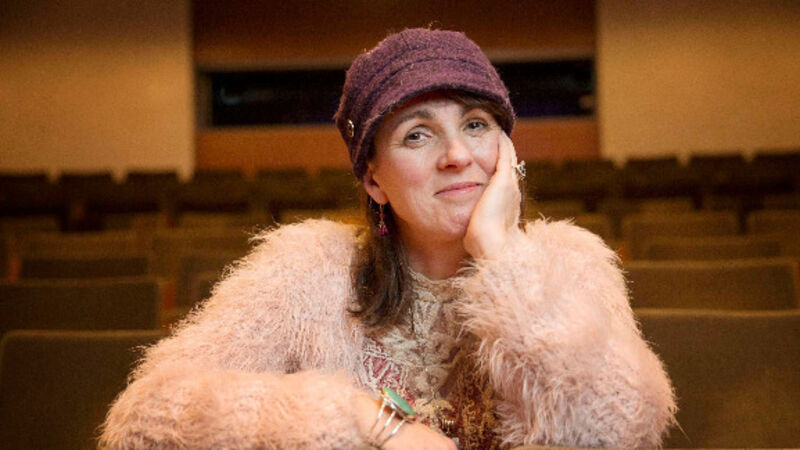
tells Marjorie Brennan about the supportive initiative she’s part of in the trad world
The fields of politics, entertainment, and the arts have all had their moment of reckoning when it comes to the increased participation and visibility of women.
Now, it’s the turn of traditional Irish music, with the Fair Plé initiative calling for gender balance in its production, performance, promotion, and development. The campaign organised a day of action last Saturday, with musicians playing in support of the initiative, in the Mansion House in Dublin, with simultaneous trad sessions in Ennis, Galway, New York, Nashville, and Chicago.
Waterford-born singer, Karan Casey, is one of the founders of the FairPlé campaign; she says the time was right for women in traditional music to join the fight for equal representation.
“It’s in the air, the zeitgeist, especially with #MeToo and Waking the Feminists, which was a big moment for us all. We started to reframe how we thought about ourselves and how we were treated,” says Casey, now based in Cork.
When the singer Pádraigín Ní Uallacháin posted on social media last summer about the lack of women in the line-up of a music festival in Killarney, it began an online conversation that rippled outwards.
Casey followed up with a post about a gig where she was the only woman out of 18 performers. Before long, the online organising led to offline meetings and FairPlé was born.
Things started to kick off and we saw it was the right thing to do, that so many women wanted and needed a voice — and a platform. There was just a massive, positive response.
Apart from the last weekend’s day of action, the campaign is also organising a two-day conference in Liberty Hall, Dublin, in September. There is also a performance in St Luke’s, in Cork, this Saturday, featuring Casey and fellow Fair Plé campaigner, Pauline Scanlon, among many others.
Casey says that while it would be good to see equal representation on performance line-ups sooner rather than later, the campaign isn’t seeking quotas.
“We’re talking more about redressing the imbalance and all the issues around respect and support,” she says. “We are trying to persuade people with our own stories — I think, if people feel backed into a corner they’ll just react.”
As for why there are fewer female performers featuring on line-ups, Casey says the reasons are varied — and a shortage of women is not one of them. “There is plenty of equal access and support for boys and girls, when it comes to music in schools, and I’d say there’s a majority of women in the universities doing music.
Something seems to happen when you step into professionalism. Maybe women are more risk-averse — the whole culture is pretty macho.
The requirement to travel in the music industry can also mitigate against women, says Casey.
“The culture around going on tour is difficult, particularly if women have young children, but that’s a societal issue, that’s down to politicians. We don’t have all the answers. Fundamentally, we’re asking if you’re making any decisions about music-making — whether that’s production, advertising, press, performance, sound — that you include women in that decision-making and then be kind and respectful. For example, when it comes to production, in 25 years I’ve never been recorded by a female engineer.”
The FairPlé campaign also has many male performers on board, including Martin Hayes, Donal Lunny, Damien Dempsey, and John Spillane.
“Male performers also need a platform to step forward and say they support women and their rights, and many men have done that. A sea change is required for us all,” Casey says.
Casey also acknowledges that many of those involved in organising performances and festival line-ups are unaware of any gender imbalance, until it is pointed out to them.
A lot have said to me: ’I didn’t even see it’. Many of them are volunteers doing this out of the love of the music. They are very sincere and genuinely didn’t notice their own unconscious bias.
Casey says the impetus for change is even greater since a group of 45 music festivals, under the EU Creative Europe programme, recently committed to achieving 50:50 gender balance by 2022. One of those is the Scottish festival Celtic Connections, one of the biggest on the traditional music calendar.
“The more big festivals like that lead, the easier it’ll be for smaller festivals,” says Casey. The campaign is also creating a directory of women who work in traditional and folk music.
We want to say ‘here we are, hire us’. We hear ‘you’re not there’, but we’re definitely here.
Fair Plé concert, featuring Karan Casey and Pauline Scanlon, and others, is at St Luke’s, Cork on Saturday, June 16, as part of the Cork Midsummer Festival. www.corkmidsummer.com / www.liveatstlukes.com
CONNECT WITH US TODAY



Be the first to know the latest news and updates