5 of the most awkward work situations and how to handle them

From explaining why you don’t friend coworkers on social media to dealing with a loud burper, navigating tricky situations at work can be difficult. In this exclusive extract, guides us through the minefield.
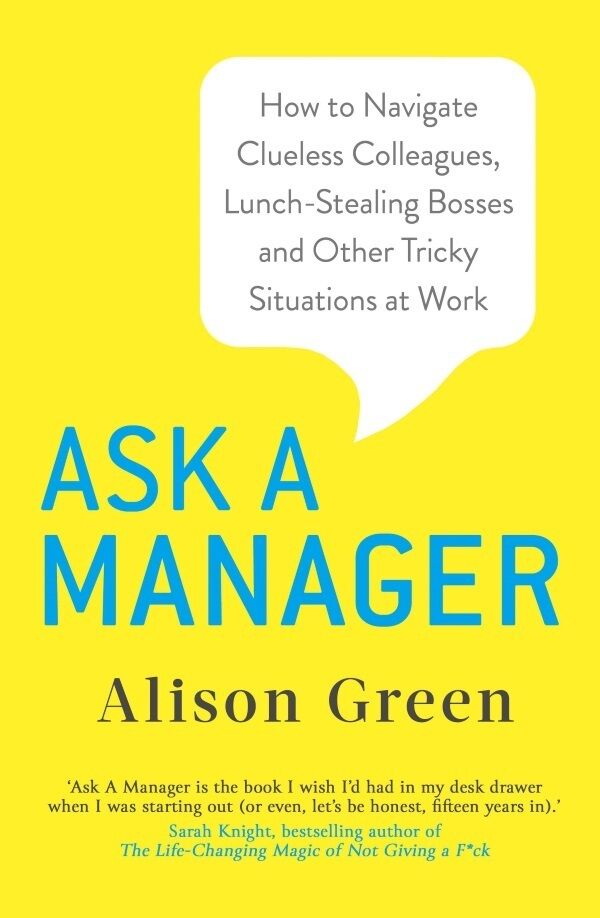
More than a decade ago, I stared a workplace advice column, ‘Ask a Manager’.
It turns out that our workplaces are full of people who are frustrated, hurt, or fed up — but aren’t speaking up about it because they can’t figure out what to say or even how to start he conversation. I receive around 60 letters a day at ‘Ask a Manager’ from people asking for help with workplace interactions ranging from the mundane to the truly bizarre. Here are some of my favourites.
Explaining that you don’t friend coworkers on social media
People have all sorts of preferences for whether and how they connect with coworkers on social media. Some people will connect on LinkedIn but not on Facebook because they want to preserve boundaries between work and the rest of their life, while others are perfectly comfortable connecting anywhere. Either choice is legitimate, but if you’re in the first group, you may occasionally run into a coworker who wants to know why you haven’t accepted her Facebook friend request.
One option, of course, is to accept the friend request and then adjust your privacy settings so that no one from work can see your posts. But if you’d rather not do that, try one of these:
“Oh, I’m old-fashioned about Facebook. It’s been drilled into me to keep professional and personal stuff separate. Let’s connect if one of us moves to another company, though!”
“I’m hardly ever on Facebook anymore. I really just use it to see photos of my nieces and nephews. Let’s connect on LinkedIn, though!” (These options work for your boss, too.)
You accidentally trash-talked someone who was cc’d on an email
Everyone warns about this happening, and yet somehow you never think it will happen to you . . . until the moment you feel the gut punch of realizing you just sent an email complaining about a coworker to that very coworker.
What to do? Take responsibility and apologize. It’s going to be awkward for both of you, but it’s the right thing to do and it’s going to be less awkward than letting it fester for weeks or months.
via GIPHY
For example: “I need to apologize to you for the email I just sent. My comment was unkind and I’m embarrassed by it. I’m very sorry for what I said.” If your trash-talking was rooted in a legitimate work concern that you haven’t addressed with the person directly, this might be the time to suck it up and do that.
For example: “I need to apologize to you for the email I sent earlier today. I made an unkind comment about how you handled the X project. I was blowing off steam, but it’s no excuse. The reality is, I was frustrated by how late the assignment came to me and I wished I’d had more advance notice. But I should have talked with you directly about that, not complained to someone else.”
Coworker keeps burping loudly
A reader writes: My department is pretty quiet. Most of the floor is waist-high cubes (i.e., no privacy), so we’re all fairly considerate of each other: earbuds for music, taking personal calls out to the stairwell, etc.
There’s a line of small offices—with doors—down one side of the room. Our new IT help-desk guy has been installed in one of the offices. In most ways he’s a huge improvement over the last couple of help-deskers we’ve had: reasonably friendly, seems to know what he’s doing, gets things done.
The problem? He belches. Daily. Horrid, long, loud, disgusting belches. Even with his office door closed, some days it’s downright nauseating.
I don’t know how to approach him about it. His supervisor is in a different building altogether. Our HR “department” is one overworked person who mostly deals with hiring and benefits. I don’t want to be a jerk about it, but it’s getting disruptive and something’s got to change. Any ideas?
It’s possible that it’s a medical problem, in which case there likely isn’t anything that he can do about it. But it might not be medical at all, and you don’t need to assume that it is without first talking to him. I’d say it this way: “Hey, I don’t know if you realize that when you burp, we can hear it out here. It’s pretty distracting! Anything you can do to control it or at least keep it quieter?”
A coworker took credit for your idea
If your coworker takes credit for your ideas, don’t stand by helplessly. Speak up and tell him that you want him to stop.
It’s possible that he doesn’t realize he’s doing this, in which case pointing it out should be the nudge he needs. And if it’s intentional, being called out on it should make it harder for him to do in the future.
If it happens once: “Hey, the idea you shared with Lillian earlier is the one I suggested in our meeting yesterday. I’m sure you didn’t mean to imply it was yours, but going forward, can you make sure to attribute stuff like that to the person it came from, so that Lillian knows how we’re all contributing?” If it’s a pattern: “I’ve noticed that when I mention ideas to you, you’ll often present them to Lillian without noting that they came from me. I want her to know what I’m contributing, so going forward, would you let me share my ideas with her myself?” And if you see it happening in the moment, jump in and take the lead in the conversation: “That’s actually the idea I was explaining to Jaime before this meeting. My thinking about it is . . .”
An employee is “out sick” but posting photos from the beach on social media
First things first: Are you absolutely sure the employee isn’t actually home sick? People sometimes post vacation or other photos after the fact, so simply seeing them show up on a sick day isn’t evidence that the person isn’t actually at home sick. You don’t want to be the boss who comes down on someone for lying when in fact the person was in bed nursing strep throat.
But if you do know for sure—for example, if the employee is tagging herself as being in Ocean City rather than at home in Virginia, or is writing about a trip in the present tense —then you might choose to say something, if for no other reason than that unplanned, last-minute sick days tend to be more disruptive than scheduled vacation days. (Plus, obviously, the lying is a problem.)
via GIPHY
There are a couple of ways to address this: The low-key “I know what you did on your sick day” method: “Did you intend to charge yesterday to sick leave or vacation leave? I saw you mention on Facebook that you were in Ocean City.”
The more direct approach: “I saw your posts on Facebook about being in Ocean City. I had thought you were taking a sick day yesterday. Did we cross wires?”
Note that neither of these begins with an accusation. That’s because if it does turn out that you’re wrong, having started with an accusation will poison the relationship. Just seek information first. If it does turn out that you were right, then you can say something like this:
“I support you in getting the time off you need, but sick leave is different from vacation leave because it’s unplanned, which means it can be more of a disruption of our work. Going forward, if you need a last-minute day off, come talk to me and we’ll see what we can work out — but I’d like you to reserve sick leave for when you’re sick. That’s what it’s for.”
All that said . . . even good employees play hooky occasionally. If the person is otherwise an excellent
employee and this is a one-time event that didn’t impact on anyone’s work, the smartest move might be to let it go and not bother with the conversation.
CONNECT WITH US TODAY



Be the first to know the latest news and updates

















