Katherine Rundell's childhood in Africa inspired many of her stories
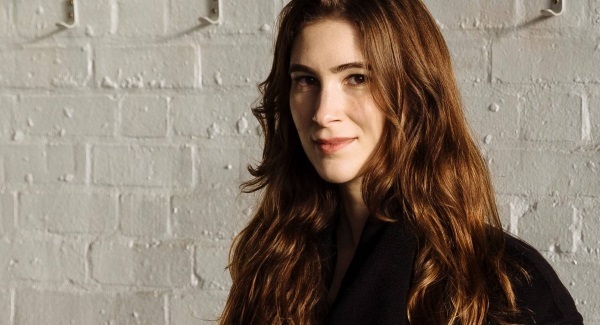
PRODIGIOUSLY talented is a description that doesn’t quite seem to do justice to the achievements of Katherine Rundell. She had barely dipped a toe in adulthood herself when she wrote her first novel for children, The Girl Savage. The book, which she wrote when she was 21, drew on her own experience of growing up on a farm in Zimbabwe.
Its publication was all the more impressive given that she wrote it as she was commencing a seven-year fellowship at All Souls College in Oxford. She has also written plays, has just finished a documentary and is a regular contributor to British newspapers and radio. For Rundell, words are sustenance and this all-
encompassing love of language and books is something she is passionate about passing on to others.
“I didn’t read until I was six. When I did, it suddenly clicked, I remember reading like I was hungry, reading anything — stuff I didn’t understand at all. I read The Hobbit over and over but also books like Jane Eyre, without really getting any of what it was really about. Those gothic emotions and sexual tension went completely over my head at the age of seven, but I found something to love in everything I read.
“If you ask a kid what they love about a book they may find it hard to articulate, but the love they feel for it is so strong at that age. I was like that, just bowled over by the potential in books.”
Rundell, now 30, went on to win the 2014 Waterstone’s prize for children’s fiction for Rooftoppers, about a young girl’s search for her missing mother over the rooftops of Paris. The £5,000 prize money went towards a trip to the Amazon, which inspired her latest book The Explorer.
It tells the story of four children fighting for survival in the Amazon rainforest and won the prestigious Costa children’s book prize earlier this year. She will discuss The Explorer and her other work at the Towers and Tales children’s book festival in Lismore, Co Waterford, this weekend.
Rundell’s own childhood could come straight from the pages of a rollicking children’s adventure. She was born in England but moved to Zimbabwe, her mother’s home country, as a child, returning to live in Brussels when she was 14.
“I guess in Zim, you are always on the edge of the wild. You go to a shopping centre and monkeys will try to steal your groceries. We were 45 minutes from a wonderful game park, and at 12 I was allowed to drive the car there. You could ride horses among zebras and up to giraffes... it felt like being given a gift, and even at that age I knew how lucky I was. I had friends in England who weren’t riding with zebras.
I was living in a world that was staggering, if you were lucky enough to see it. I wanted in my books to show parts of the world kids mightn’t necessarily get to, whether that was Zimbabwe or the Amazon or wild Russia. I want to give them another slice of life.
Rundell says she cannot remember a time when she didn’t write but it was the words of a teacher that gave her the belief that she had a future as a writer.
“I always wrote, from when I could first scribble. When I was about 14, after a creative writing exercise, one of my teachers wrote on it, ‘I look forward to reading your first novel’. I’m sure he said it to encourage me but it was such a kind thing for an adult to say. I was honoured by it and when my first novel came out I wrote to him with a copy and he was lovely about it. I was so grateful to him.”
ACCORDING to Rundell, this illustrates the importance of the words we choose to use with children.
“Children can remember things much more vividly than adults — you have to take so much care. Obviously you have to be realistic but I’ve been at schools where teachers talk about how difficult it is to be a writer and how unlikely it is one will get a book published. While on the one hand that’s true, I feel children can find that out later. If they want to be writers it might be better to tell them to keep going, that if they have a story to tell they can be a writer. And they can.”
Rundell says she feels a huge sense of responsibility as a children’s author.
“Joan Aiken, who wrote The Wolves of Willoughby Chase, has this beautiful book about writing where she says because you’re writing for children there’s a good chance yours will be the first book they read all the way through, that you can be the first chapter book they love. That is such a responsibility, writing something that doesn’t tell easy emotional untruths, that isn’t sloppy with language. We need rigour in language because without that we can’t think through complex ideas — how can we think about death or God if we don’t have a sophisticated way of talking about them?”
When it comes to recommending her own favourite childhood reads to the children she meets, Rundell has deployed a novel tactic in the past.
“A writer who is still read but is not as wildly famous as she should be is Diana Wynne Jones, who wrote Howl’s Moving Castle which was made into a film by Studio Ghibli in Japan. She also wrote a brilliant book called Charmed Life. When I visited a lot of schools, I would say to kids, if you read Charmed Life and you don’t like it, write to me and I’ll send you some chocolate. I got one letter form a kid saying ‘I’ve read it, I don’t like it, send me some chocolate’. I would also get letters from kids saying ‘I’ve read Charmed Life and I hated it… NOT!’ It was so adorable. That remains the book I try to make children read.”
Rundell is looking forward to meeting some of her Irish-based readers when she visits Lismore. She finds writing for a younger audience very rewarding and revels in their honesty and openness.
They don’t laugh at your jokes unless they think they are funny, they can be quite ruthless. They are great readers. The books I read when I was that age shaped me for the rest of my life. When kids care, they care so much that they shake with it. It is a great honour to write for children that age. Sometimes you get wonderful things, they’ve done pictures or leave letters on your signing table. Those are always special moments, the ones you cherish.
Katherine Rundell appears at Towers and Tales festival in Lismore, Co Waterford on Friday and Saturday. towersandtales.ie
Other highlights at Towers and Tales in Lismore
Authors Katherine Rundell and Celine Kiernan discuss what it means to be a ‘bold girl’. Bold Girls is an initiative by Children’s Books Ireland marking the centenary of women’s suffrage this year and aims to show girls female characters in children’s books with agency and power.
An exhibition of work by illustrator Chris Haughton, author of Goodnight Everyone. Young visitors can enjoy a worksheet as they explore the exhibition. All day event (11am to 5pm)
A fun, interactive event where a host of festival artists will recite engaging short stories to an audience of six people.
Deirdre Sullivan and Karen Vaughan, creators of Tangleweed and Brine, present feminist retellings of traditional fairytales in the suitably neo-gothic surroundings of Pugin Hall.
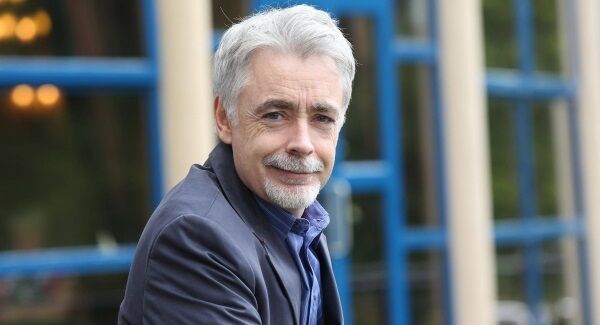
Former Laureate na nÓg and one of Ireland’s best-known children’s authors Eoin Colfer (above) weaves his storytelling spell as he takes the audience on a journey through his own childhood and his books.

CONNECT WITH US TODAY



Be the first to know the latest news and updates









