What Remains of Edith Finch fends off Mario and Zelda
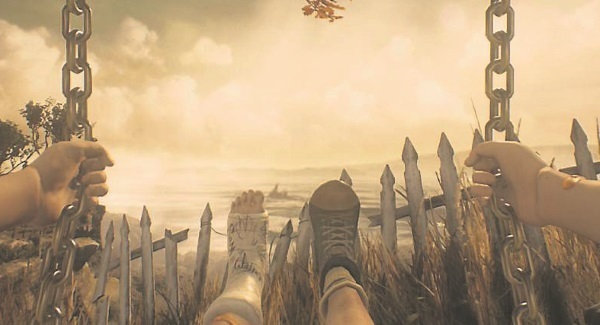
IT WASN’T a surprise but it was a shock. What Remains of Edith Finch, a quirky three-hour story in the style of Wes Anderson, won best game at the 2018 BAFTA video game awards. It beat out the heavy favourites, Super Mario Odyssey and Breath of the Wild.
It was a shock, because nobody really expected Nintendo to lose. In a year when Zelda and Mario reminded everyone why console gaming is still magic, there wouldn’t have been a single complaint had either the pseudo-elf or plumber taken home gold. Despite that initial shock, no one can really be surprised — What Remains of Edith Finch will be remembered as a pioneer.
Finch is one of those rare games where descriptions feel crushingly ineffective. However, we like to think of it as gaming’s first worthwhile short-story collection. Collectively, the stories chronicle the history of the Finch family, of whom Edith is the last surviving member. Each one of her relations has perished over the last 50 years, most of them in bizarre circumstances.
As you play, the tragic end of each Finch is represented through exploration, voiceover, and interactive storytelling.
While that may sound morose, the game handles its content like Tim Burton or Wes Anderson would, leaving you with a sense of imagination and magic, not melancholy or sadness. As you explore the Finch house, every family member’s demise is represented in unique ways, from flying a kite to becoming a cat and jumping across trees, to chopping heads from fish in a cannery, to playing in a bathtub as a child. The house becomes the connective tissue, linking stories and personalities together, as Edith slowly unravels the history of her family through brilliant storytelling.
What Remains of Edith Finch is fantastic game not because of these ideas, but because of their execution. It has shockingly good production values for such a small development team, from the voice acting to the stunning artwork and creativity of design. It is one of the most beautifully constructed and delivered games in recent memory and worth it alone for anyone who wants to see how gaming has ‘grown up’ as a storytelling medium.
The Bafta judges weren’t content with giving What Remains of Edith Finch the top prize — they also honoured another ground-breaking, heavily narrative game. Hellblade: Senua’s Sacrifice was the biggest winner overall, winning in five categories from nine nominations. Hellblade depicts a young woman suffering from psychosis in a fantasy world. One of the awards it received was in a new category, Games Beyond Entertainment, for games with a political or social message.
This year, the Baftas did us all a service. While few gamers would exchange Zelda or Mario for Finch or Hellblade, it’s great to see them share the same stage.
We look forward to a future where Finch winning is just a surprise, and not such a shock.
KEYWORDS GROWTH
No one should be surprised by the success of Irish gaming company Keywords. Anyone who has been following the firm’s growth in recent years will know Keywords is on an upwards trajectory. The Sandyford company services 23 of gaming’s top 25 companies across a variety of areas, including art production, audio, localisation, and player support services. In less than a decade, Keywords has grown from 50 employees to more than 5,000 worldwide.
Keywords recently announced a 57% growth in revenue for the year, with revenues of over €150m and a market value of more than €1bn. The firm has been doing its best Pacman impression recently, gobbling up 27 acquisitions in three years.
SEGA’S DRIVE
Finally, it will hardly come as a surprise to learn Sega has announced a Mega Drive mini, due to hit Irish markets later this year. Following hot on the heels of the SNES and Commodore 64 minis, the Mega Drive mini will feature a proper cartridge slot (so you can play real cartridges from your collection) and will likely contain a ‘rewind’ feature and other emulation perks. Sega did licence another Mega Drive for resale in recent years, but the hardware was produced by AtGames and wasn’t received well by fans and critics. AtGames is involved again in this case, but Sega, no doubt inspired by the success of the SNES mini, is paying closer attention this time.
CONNECT WITH US TODAY



Be the first to know the latest news and updates

















