Meet the couple who open their hearts and home to children in time of crisis
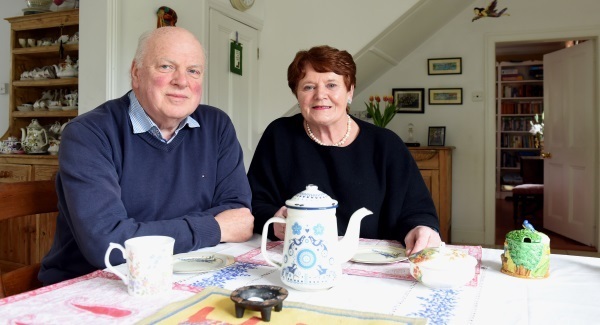
Sally and Donal Daly have been fostering for 30 years, they are there for children in a time of crisis, writes
Sally Daly is just shy of 75, but despite being well beyond official retirement age, shows no sign of any desire to call a halt to the job she loves: fostering children, who, for all sorts of reasons, cannot stay with their birth parents.
Sheâs the original Supermum, but instead of âleaning-inâ to earn her stripes, she bent over backwards to offer sanctuary to more than 150 children at her Skibbereen home over the past 30 years.
âWhen I open the door and I see a little child on my doorstep, I just want to help them in their time of crisis. Iâd do it for nothing. I love being there in their hour of need,â she says.
Sallyâs fostering adventures began in her 40s, when she was asked to care for a little boy whose mother was ill and whose father was working and not in a position to look after him around-the-clock.
âIt struck me at the time that there were other people in the community who had a similar need to this little boyâs family.
âTo be honest, I donât think Iâd ever heard of fostering. But someone said to me I should think about it and so I contacted the health board and I never looked back.â
Sally had the support of her husband Donal, 70, from the get-go.
âShe liked the experience of looking after that little boy and she was very, very keen to foster and I went along with it,â he says.
âWe are fairly laid back most of the time and we are very much OK about opening up our doors.
âBesides, one extra person in the house doesnât make that much of a difference. Mealtimes are the same, we have plenty of room, so itâs not huge extra work.â
Their relaxed attitude extended to their own four children.
âThe two older children went on to college shortly after we started fostering, so it was mainly the younger two that were at home.
But they never voiced any opposition to having additional kids around,â says Sally.
âThey just sort of took it for granted, it became part of their lives. And weâve been very lucky with the children we took in. Weâve had lovely children.â
The Dalys signed up for short-term foster care placements but Sally says it âdidnât always work out like thatâ. One little girl was placed with them at four months and sheâs still with them, aged 23 â they ended up adopting her just before her 18th birthday, at which point her foster care would have ended.
Sally says theyâve seen a big improvement over the years in aftercare for children who do turn 18, the point at which the Stateâs statutory duty to look after them ends, although each child has a right to an aftercare plan prepared by the Child and Family Agency, Tusla.
This plan, mandatory since last September, is supposed to identify transitional supports such as education, training, financial support and social network support and it must be provided before the young person leaves care.
âThat service wasnât there when we started out,â Sally says. âBut now they get help with housing and education and thatâs good.â
Some of the children who arrived at the Dalyâs house were very traumatised.
âThey were dealing with the trauma of leaving brothers and sisters behind, of being separated from their parents and of being brought to a strangerâs house,â Sally says.
âThey mightnât talk for a while when theyâd arrive or they mightnât eat. I wouldnât rush them into talking, Iâd never put any pressure on them to tell me anything they werenât comfortable with.
Iâd just let them know we are there for them and that we have their best interests at heart.â Her approach was to imagine how her own child would feel if they found themselves in a strangerâs house and what it would take to reassure them.
âWe are effectively representing their parents. Iâm very conscious of that, so weâd look after them as if they were our own.
âBut you also want to make sure you donât make the birth parents feel undervalued, because it mustnât be a nice feeling for parents to have a child in care.â
The youngest child the Dalys took in was just 15 days old. A number of years ago, they switched to emergency placements, where children are placed in care at short notice. These days, most of the kids they take in to their home are teenagers.
âThey could be with us for three weeks or three months, even though the emergency placements are meant to be short term. But it depends on the situation and we are pretty flexible,â Donal says.
Sally says there is support available to foster carers, particularly through the likes of the Irish Foster Carers Association (IFCA), but she worries that the children themselves donât always get enough support.
âWhat upsets me most is when children canât get in contact with their social worker. I know the social workers are overworked and under resourced, but the children can have a lot of questions that I canât necessarily answer like âWhere am I going from here, whatâs happening next?â I canât answer those questions.â
Sally would also like more effort made to keep brothers and sisters in touch when they are placed in foster care.
âSometimes the whole family has to go into care and the siblings are split up and thatâs very tough on everyone. It can make it very difficult for them to maintain relationships.â
Sally has seen improvements over the years in the access arrangements put in place by Tusla to help children maintain family links.
She is also appreciative of support groups that meet once a month, facilitated by social workers, where foster parents can trade experiences and learn from each other.
DONAL says training of foster carers has also improved hugely. Training is now compulsory.
âIt wasnât really there in the early days. You need a lot of specialised knowledge when dealing with kids so I understand where Tusla and the IFCA are coming from.â
Catherine Bond, CEO of the IFCA, is currently gearing up for Fostering Fortnight which gets underway on February 26. It will be âa celebration of all thatâs good about fosteringâ, she says.
âWhen you look at the statistics, 92% of more than 6,000 children in State care are with foster families, as opposed to institutional care, and thatâs a very significant success story for the Irish Government and the Irish State.
âBut we need to mind our foster carers and support them in doing very critical work. And that support needs to be timely,â Catherine says.
Foster families donât always have an allocated link social worker, whose role is it is to provide supervision and support for the foster carer and the child on a regular basis. Similarly, not every child has an allocated social worker, the individual responsible for the childâs safety and welfare. However the statistics are heading in the right direction, Catherine says.
She says foster care is âwithout doubt a successful model of care for childrenâ.
âAll the evidence shows they do best in a family environment,â says Catherine.
Sally says fostering enriched their lives.
âBut itâs a decision people shouldnât take lightly. It is a big commitment.â Nonetheless, she says sheâs âloved every kid thatâs come and goneâ.
âI do hope they are all happy and settled wherever they are,â she says.














