El Niño is coming! But what is it?
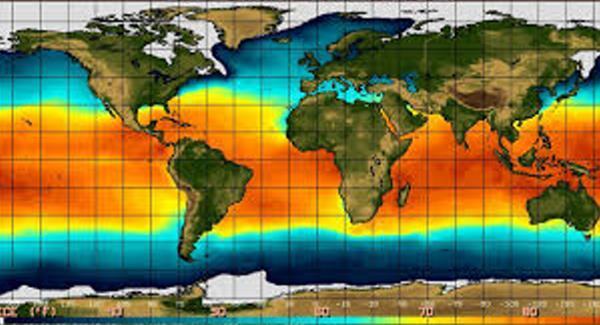
The weather phenomenon is predicted to hit before the end of the year.

El Niño is coming! But what is it?

A UN agency has warned that the weather event, El Niño, will hit before the end of the year. The World Meteorological Organisation (WMO) - which is based in Geneva - has put the odds of El Niño occuring at 60% between June and August and at 75-80% from October to December.

But what is El Niño and should we be worried?

El Niño (Spanish for ‘little boy’) is a recurring weather phenomenon that affects the world every two to seven years. It occurs when unusually warm waters in the eastern equatorial Pacific start to flow westwards towards Africa.

In the tropical Pacific Ocean, the Trade winds usually blow from east to west, gathering warm water as they go and pooling it in the west. This can create a temperature imbalance with cold water in the east and too much warm water in the west.

The Trade winds start to weaken and sometimes reverse direction completely, as the warm water starts to flow back towards the eastern side of the Pacific.

It is often followed by its counterpoint, La Niña - when the warm water reverses and flows west.

Think of it as a see-saw - when there is too much warm water on one side, it has to flow to back to the other side.

The WMO have pointed out that since February the Trade winds have started to weaken and there is a a large pocket of warm water developing in the Pacific.

As it travels, the warm water will rise - heating the atmosphere. This has a knock-on effect on global weather patterns. It usually raises temperatures worldwide which leads to unusual weather.

El Niño is known to cause droughts in Indonesia and Australia but heavy rain in parts of South America and the Southern US.

In Europe, the consequences are less clear. The effects are usually felt in winter with colder, drier conditions. It is very possible that it will also cause a rise in average summer temperatures.

It is not fully understood why it occurs but scientists are getting better a predicting it. The last big El Niño happened between 1997 and 1998 - it was the biggest of the century and the hottest year on record at the time globally. The extreme weather conditions were linked to the deaths of as many as 23,000 people.

Tim Stockdale, principal scientist at European Centre for Medium-range Weather Forecasts said that 90% of their scenarios now deliver an El Niño sometime this year..

"The amount of warm water in the Pacific is now significant, perhaps the biggest since the 1997-98 event.”

x

More in this section

Cookie Policy Privacy Policy Brand Safety FAQ Help Contact Us Terms and Conditions

© Examiner Echo Group Limited













