Fat bumblebees are invading our gardens! Kind of…
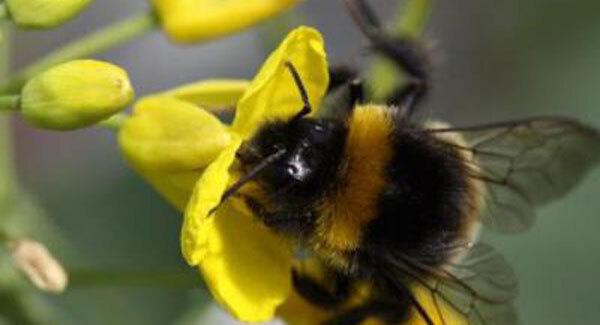
We were convinced … … that bumblebees were massive altogether this year. We just kept seeing them everywhere, huge things they were.
Well, we were perhaps two-fifths right.
The great summer last year, and relatively mild spring this year, both played their part, ecologist Una Fitpatrick told us.
Una, who works in the National Biodiversity Data Centre in Waterford said the bees are not actually fatter than in previous years, only that there are more queen bees about.
The queens come out between February and May, after a winter’s hibernation. The great summer last year meant colonies were able to feed more often, and therefore laid more eggs. A milder winter and spring meant those eggs were not killed off to the same degree as in previous years.
The double whammy has led to a bumper crop of bumblebees this year.
Queens are between two and 2.5 centimetres tip to tip. Female and male worker bees are about a centimetre smaller.
More queens = more hand-flapping urbanites jabbering on about a swarm of mutant bees (us).
- There are 20 different species of bumblebee;
- Six of those are threatened with extinction with one - the great yellow bumblebee - on the verge of extinction;
- Bumblebees can sting, but are entirely non-aggressive so only very rarely do so;
- They can sting repeatedly, as the barb stays in their bodies (unlike the honey-bee, whose barb stays in its victim’s body)
It is not known how many bumblebees we have on the island, but a project is underway to make a stab at guessing. A bumblebee monitoring scheme, run by the National Biodiversity Data Centre, is looking for volunteers to log the varieties and numbers they see on a fixed walking route each month. The resulting data will allow charting of the bumblebee population to begin.
More info on that and on all things bee here.
We liked this too:


CONNECT WITH US TODAY



Be the first to know the latest news and updates