Grin and bear it - Ruby Wax has no time for bitterness
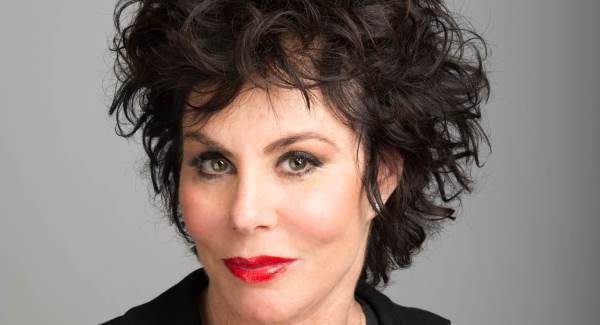
DELVING into the horrors of Europe’s most deadly land war to find peace with oneself may seem contradictory, but then again, Ruby Wax has never been exactly conventional.
The 66-year-old comedian and mental health advocate has frequently spoken about her difficult childhood at the hands of her Austrian Jewish parents, immigrants to the US.
But the BBC show Who Do You Think You Are revealed that Wax’s parents hid a dark family past from their daughter, one that may have helped her to understand their difficult behaviour.
Aired in October, the genealogy-themed show revealed her parents’ flight from Nazi-occupied Vienna just before the outbreak of WWII, her mother’s presence in the city during Kristallnacht, and a family history of mental illness that Wax links to her own mental health battles.
Tracing her family tree, she found two female relatives that had been incarcerated in mental institutions, one in Vienna and one in a sanatorium in Brno in the Czech Republic.
Having filmed the episode months earlier, Wax has had time to let the eventful experience of uncovering her family history sink in.
“I’m probably more at peace with myself since, because I don’t blame myself now for some of my behaviour,” Wax says.
“I understand where it comes from. Since I was a kid, it’s been my obsession to figure out how people think, and what makes you the way you are. And now I get it.” Social media responses to Wax’s episode varied; some praised her bravery, but some commenters expressed surprise at her lack of awareness of the extent of the suffering of World War II.
“You’re so fascinated that you don’t have time to be emotional,” Wax says. “You just go, ‘oh, I’m so grateful you’re telling me this.’ It puts all the puzzle together. It’s more gobsmacking than ‘poor me’.”
Wax, former celebrity interviewer, comedian and the scriptwriter for Absolutely Fabulous in the 1990s, has had mental health battles from a young age; she says her first episode of depression was at 13.
The bouts worsened following the birth of her third child, and she eventually checked herself into celebrity addiction and mental health centre the Priory for treatment. She has taken a variety of prescription medications to manage a mood disorder ever since.
Now the author of three books on mental health, and with an honorary MA in Mindfulness-based Cognitive Behavioural Therapy from Oxford University, Wax has found a new role for herself as mental health educator.
An extensive tour for her second book, A Mindfulness Guide for the Frazzled, has seen Wax breaking the taboo on mental illness, openly discussing her own experiences in the one-woman show based on her book, and encouraging others to do the same.
It’s a role that involves revealing her vulnerability, and she’s refreshingly honest about her struggles with self-esteem, a far cry from the Wax who sprung to fame as a clever parody of British clichés about Americans: abrasive, superficial and confident.
“You don’t need the armour anymore, not for this job, “she says.
“You do if you’re a comedian and you’re not confident, but I think my show is much funnier than it was before. I don’t have to be brash anymore, just funny. Someone said to me that at a certain age, you turn into wine, or vinegar.”
Wax’s mental health theories are a blend of physical and social models of mental illness.
While she emphasises that mental illnesses are as much a physiological disorder as any other ailment, she also acknowledges that societal pressures, the increased pace of modern living and isolation all play a factor in people feeling increasingly “frazzled”.
Her message has hit home with audiences: “People want to talk about their minds. This isn’t necessarily mental illness; people just feel that they’re being squeezed by pressures that they can’t see.”
But if society is the problem, why is it up to the individual to adjust themselves, instead of campaigning for systemic changes that permit a less stressful life?
“Listen, you can rail against the machine all you want,” she says. “but we are also the problem. We get caught up in the toys that we make: technology’s great, but they’re making it addictive, so we have to get a little enlightened and put our phones down.”
Wax’s faith in personal growth and mindfulness is clear when she’s asked about Donald Trump’s presidency.
She had a brush with Trump in the year 2000, for an episode of Ruby’s American Pie.
Viewed today, it makes for eerily prescient viewing; Trump had just launched a campaign for presidential nomination… with North Korea in his sights as a threat to US security.
He branded Wax “the world’s most obnoxious reporter”, and Wax later said the encounter made for one of the “most excruciating moments” of her career.
In her former incarnation as an outspoken queen of stand-up, she could have been expected to take any opportunity to have a pop at an adversary. But she refuses to be drawn; adding to the conversation is unhelpful, she believes.
“Look, the more we talk about him, the more we’re enhancing his popularity. In America, fame is everything. Fame trumps intelligence. I have to turn it off, because otherwise you get so angry you can’t think straight. I always say, ‘fix yourself and then go save the world.’
“It’s an atrocity, but it’s not my mission; I have to calm myself down enough to survive.”
As an interviewer, Wax had extraordinary encounters with celebrities like Madonna and Jim Carrey.
In them, her self-confessed love of figuring out what makes people tick is clearly evident. But it’s a path she’s not sorry to have left behind.
“If I got bitter about the fact that I got fired, I’d be wasting my life,” she says.
“If I could have interviewed Arafat; I got the offer, but they said, ‘No, we want you to stay with celebrities,’ and I said ‘Ok, bye bye.’
“I had figured out celebrities; I get the disease. There’s no need to keep repeating it.”
Her third book, How To Be Human: The Manual, is due for release next January.
Wax is enthused and liberated by her newfound interest in academic research; she worked with a monk and a neuroscientist for her new book.
“It surprises me, but I’m going with it,” she says.
“I’m reading books on genetics and going, ‘where is this coming from?’ Because I was not smart as a kid.”
“If your parents tell you what an idiot you are all the time, you’re going to buy in. Maybe I was traumatised, and that did something to me, but now I can finally find my brain.”
Having been dealt a hand in life with many challenges, is Wax proud of her journey?
“I don’t know what proud feels like,” she says.
“That’s a real narcissistic thing; I don’t know what that would mean. You just think, ‘I’m a lucky f**ker.’”
CONNECT WITH US TODAY



Be the first to know the latest news and updates














