Game Tech: Self-taught computer system
"I AM putting myself to the fullest possible use, which is all I think that any conscious entity can ever hope to do.” We could debate whether video games constitute ‘fullest possible use’, but HAL — the twisted computer system from 2001 A Space Odyssey — would have been proud of what happened at the DOTA Championships this year.
This year, for the first time, a human player was beaten by OpenAI, a computer system
developed by entrepreneur Elon Musk. Even more impressive was the fact that OpenAI ‘taught itself’ almost everything about the game.
DOTA (Defence of the Ancients) is one of the world’s most popular games. It’s a bit like hyper-chess, where players control one of 100 heroes, each of whom have different abilities and skillsets but can also equip various items and potions to change how they play. Games of DOTA play out amongst ten players, with two teams of five battling for dominance of the ‘board’.
While AI long ago learned how to beat human players at chess (and more recently GO), this particular achievement is being hailed as an even greater step forward for
machine learning, because DOTA is much less reliant on numbers and sheer calculation. It requires a certain degree of ingenuity.
OpenAI didn’t quite compete on an even playing ground, however. For a start, the game was reduced from a 5V5 format to a special 1V1 format, where the machine was matched against professional player Danil ‘Dendi’
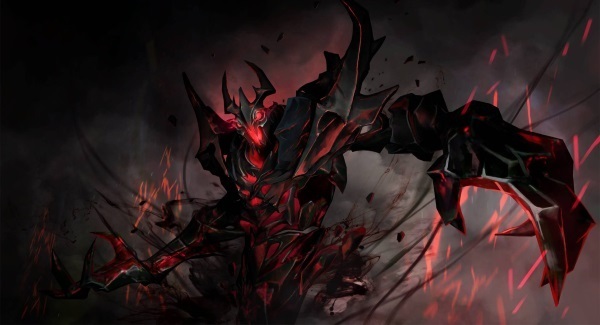
Ishutin. The choice of heroes was also removed, with both sides using the Shadow Fiend, who supposedly has a more straightforward series of attacks, making circumstances a little less complex for the machine. Finally, OpenAI also had access to the game’s API files, which are
effectively the innards of the software, allowing it to ‘know’ things (like distance between players) that a human player would need to judge by eye.
The professional player took on OpenAI three times and was killed on all three
attempts, before accepting defeat. The AI
community are divided on the merits of the
victory itself, due to the limitations involved, but most are celebrating the manner in which OpenAI learned how to achieve the victory in the first place. Over the course of two weeks, OpenAI reportedly ‘played itself’ over and over to achieve a ‘lifetime’ of experience from which it could learn. Among its achievements was how it learned to ‘fake out’ an attack, by
starting the attack and cancelling at the last second, causing the opposition to react in
unnecessary defence.
“You have this system that has just played against itself, and it has learned robust enough strategies to beat the top pros,” says OpenAI’s Greg Brockman. “That’s not something we should take for granted.”
Despite all that, OpenAI’s dominance didn’t last long. While it beat Dendi on the stage, once human players got a look at its strategies they were quickly able to poke hole in it by using ‘unconventional’ attacks.
As HAL might have put it: “It can only be
attributable to human error.”
Artificial Intelligence
Before you know it, artificial intelligence will be winning at everything. Except hurling. (We’d always beat them through the back door.) Obscure hacking and hurling jokes aside, there may come a time when AI will beat us at every game in the world, so we’d better enjoy it while we can. Maybe that’s why the
International Olympic Council (IOC) are
considering putting video games in the 2024 games. While Paris is not yet officially
announced as host for the 2024 games, that
announcement is expected to come at an IOC meeting next month. A member of the Paris candidacy committee had this to say:
“Young people are interested in such games. Let’s see what it’s about, let’s meet them. I think it would be interesting to discusss the issue and the IOC will have the final say on whether to include them in the program.” Just don’t invite OpenAI.
Brain boost
Finally, according to a somewhat limited study in Molecular Psychiatry, certain video games might be better practice for ‘winning’ than others. The study claims that violent shooting games like Call of Duty negatively affected the hippocampus, causing it to shrink, while games like Super Mario increased grey matter in the same area. Based purely on gaming taste, we’re not going to argue.
CONNECT WITH US TODAY



Be the first to know the latest news and updates









