Looking back in time with Dennis Dinneen's pictures
HEN photographer David J Moore was trawling through the negatives of Dennis Dinneen, he knew what he had was special.
âAs soon as I saw them, I knew we had something different on our hands. A lot of it is reminiscent of studio portrait photographers like Seydou KeĂŻta and Mike Disfarmer and even the work of Diane Arbus. I hadnât seen anything like that in an Irish context before.â
However, while the work of Keita, Disfarmer and Arbus has been acclaimed and hung in prestigious galleries, Dinneenâs pictures could be found on the walls of the family pub which he ran in Macroom, Co Cork.
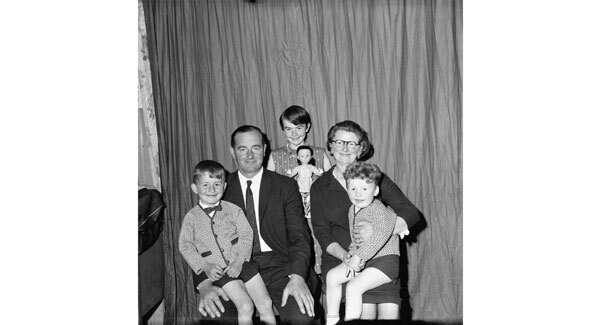
In the Ireland of the 1960s and â70s, it wasnât unusual for the local publican to also be the grocer, undertaker, or hardware provider. In Macroom, as well as being the local taxi driver, Dinneen was also first port of call for family portraits or passport photos. His subjects would pose in a makeshift studio in the back of the pub and the results are a poignant and often humorous selection of portraits, evocative of an Ireland that is now largely gone.

After Dinneenâs death in 1985, his collection of negatives lay untouched for decades. In 2011, local teacher Sean MacSuibhne compiled some of the pictures in a book, Muskerry Through the Lens of Dennis Dinneen, which raised funds for Macroomâs senior citizens. This awakened the interest of Moore, who had come across Dinneenâs work decades before.
âI moved to Macroom when I was 12 and I would have seen Dennisâs work when I was playing pool in the bar when I was about 16. Both my parents were photographers so I always had an interest. I knew Dennisâs son Lawrence and the family so [after the book was published] I asked him could I have a look at the negatives and it took off from there,â says Moore. âLawrence came and met me up in Dublin, and I had a look through about a hundred negatives.â

Dinneenâs work was shown in an exhibition in UCC in 2013 and now Moore has curated a larger selection for a show at the Douglas Hyde gallery in Trinity College, Dublin. Lawrence Dinneen, who now runs the family pub with his brother Dennis, recalls how photography fit into his fatherâs life.
âHe was a real character, very sociable. I remember when I was young, about 7 or 8, I would go to weddings with him, Iâd carry his camera bag. Most Saturdays in the summer in the late 1960s, he would have two weddings. He would stay on after they were all finished the meal and take pictures of them cutting the cake â I have memories of me and my dad having our dinner at the back of the dining room after everyone else was finished. Then theyâd ask my dad to sing a couple of songs, and we could be there until midnight or 1am.â

Lawrence says his father had a strong work ethic and was dedicated to all his professional roles.
âMy dad worked extremely hard, he was running a pub, taking the pictures, he was a taxi driver as well. He was very focused on whatever he did â when he came back from a wedding, no matter what time, the first thing he did was take the rolls of film out, and head straight out to the darkroom. He served his time as well; he didnât just pick up a camera and start taking photos, he studied in London and was a member of the IPPA.â
However, while photography became a passion for Dinneen, his first love was actually medicine.
âHe was in college for one year studying medicine and his dad died, he was only 39. His mother made him pack in what he was doing and help her run the family pub. That scuppered my dadâs plans. He took up photography straight away and blended it into the pub life.â

Moore, who now works as a photographer in Dublin, believes he is in the perfect position to both appreciate and evaluate Dinneenâs work.
âItâs like when documentary filmmakers go live with their subjects before they ever take out a camera â I had 15 years of living in Macroom, absorbing the people, the humour and all of that before finding this archive. It sort of puts me in the strange position where it is very easy for me to look at this from an outsiderâs point of view but still have that knowledge of what the town is like.â
However, while the pictures are of great personal interest to the people of Macroom, for Moore, they transcend their location.
âI can approach it in a purely photographic context â I donât necessarily want it to be about the town of Macroom or even Cork, which is why the exhibition is called âSmall Town Portraitsâ â it could be any small town. The images on the walls and printed in the book, they donât come with any names or information, you are supposed to create the narrative yourself.â
While digitisation of archives has been a developing area in the last few years, Mooreâs guiding principle during the curation process has been authenticity.

âIâm more interested in getting them on walls and in print. I am trying to keep it as authentic to how Dennis Dinneen would have done it. In terms of retouching or anything, Iâve only done what Dennis could have done in a dark room, for example, removing dust. But if thereâs a scratch in an image, I wonât photoshop it out because then it is taking on a different life altogether, I want to keep it as authentic as possible.â A series of books of Dinneenâs pictures are currently being prepared.
Lawrence Dinneen believes his father wouldnât have believed his work is still being appreciated. âHe would have been gobsmacked. Heâs up there laughing at us. Itâs unreal â 32 years after his death, here we are, trying to keep his work alive.â
- Small Town Portraits by Dennis Dinneen runs at the Douglas Hyde Gallery, Trinity College, Dublin until May 27















