Lisa McInerney follows up the Glorious Heresies with another look at Cork's seedy underbelly
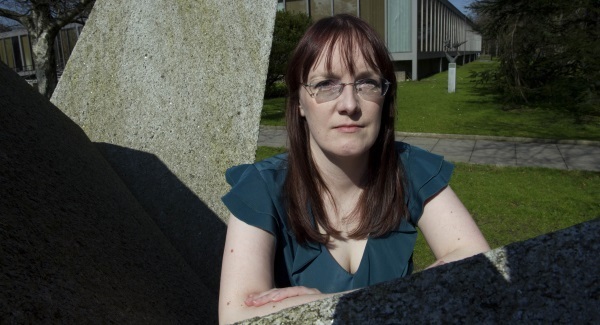
ALKING to Lisa McInerney is a lot like reading one of her books: entertaining, funny and enlightening, with a healthy sprinkling of the profane â her Twitter handle is @SwearyLady, after all.
McInerney grabbed the imaginations of readers around the world and some high-profile prizes with her debut novel The Glorious Heresies, so expectations are high for her second, The Blood Miracles.
Talking from her home in Gort, Co Galway, she is is glad of the distraction of an interview. She is struggling to write a synopsis of her third book.
âI have to write one page, to give my editor an idea of where it might go. These ideas that sounded really fantastic in my head look really stupid. Iâm going: âBut trust me, it will be good when I write itâ,â she laughs. Does she find the process of writing tortuous?
âI think every writer feels like that. I always say you know you are a writer if the only thing that makes you more miserable than writing is not writing. When you are writing, there is that constant state of âthis is awful, I hate myself, Iâm a terrible writer, Iâve done this wrong, why is this so hard?â When youâre not writing, youâre thinking âGod, I wish I was writing, Iâm so boredâ.â
The Blood Miracles features some of the same characters as The Glorious Heresies and is also set in Cork. The main protagonist of both is promising pianist turned drug-dealer Ryan Cusack, and much of the action focuses on what could be termed the âunderclassâ of the city.
âClass fascinates me,â says McInerney. âPeople say there is no working class now, thereâs just a welfare class and you get that kind of warfare going on. That drives me up the wall. The reality is more complex and messy. I used to find it very interesting, that youâd have all these people going: âThese scummy drug dealers, theyâre ruining societyâ, and Iâd be saying, âYeah, but youâre going out buying cocaine every weekend, you canât complain about the young fellas who are risking their necks to get it to youâ.â
McInerneyâs descriptions of the drugs and dance scene certainly have a ring of authenticity about them, I suggest.
She laughs. âItâs funny, when my agent first read the book, he said âYou know what, if this writing thing doesnât work out, youâd make a very good drug dealerâ. I said: âWell, thank you very muchâ.â
What kind of research did she do to achieve such a realistic portrayal?
âFor a lot of people of my age, or my generation, or younger, this is stuff you know, because youâve lived it, youâve seen it. Itâs not that hidden from society. If you have to do huge research, then you probably shouldnât be writing that story, if itâs that alien to you.â
McInerney has the enviable gift of making the characters come alive on the page; do they spring fully-formed from her imagination?
âIâm very visual â I try to imagine it like a scene from a play or a movie. I put myself into that scene, look around and see where the light falls. I know that sounds wanky,â she laughs.
McInerney has also been praised for her sharply-observed portrayal of Cork and its people, especially their distinctive vernacular. All the more admirable given that she is a Galway native. Her expertise was honed during her ten years living and working in Cork. âCork people are brilliant,â she says.
âAs Kevin Barry, who is from Limerick, said, the thing that really grabbed him about Cork was that it was the first place that wasnât down on itself. He said everyone in Limerick was âI canât wait to get out of the placeâ but in Cork it was like, âwhy would I ever leave?ââ
McInerney signed a book deal after gaining attention for her blog âThe Arse End of Nowhereâ (which still, refreshingly, takes pride of place in her author bio). How does she think blogging helped her on the path to publishing success?
âIt helped me develop my voice and taught me how to treat writing as a full-time job, which a lot of emerging writers have a problem doing because they think they are being self-indulgent. You really have to cross over that line and stop thinking of it as a hobby,â she says.
Many writers now complain about feeling under pressure to have a social media presence to help promote their work. McInerney is an enthusiastic and entertaining tweeter but she is not evangelical about social media.
âI do it because I get some fun out of it and itâs nice to be able to chat with people. But I think a lot of people now are being told that if you want to be a writer you have to have this social media presence. I donât agree. Social media can also be an awful drain and distraction, in any kind of job, but especially for a writer. It can sap your creativity; you are giving away all your best lines. If there is somebody out there who wants to write but is afraid they have to set up a Twitter account, Iâd say, fuck that, donât bother. Although that goes against what any publicist would tell you,â she laughs.
McInerney won the Baileyâs Prize and the Desmond Elliot Prize for The Glorious Heresies and was also recently long-listed for the Sunday Times Short Story Award. What has such recognition meant for her?
âIt is validation. It is proof that you are not mad and you are not wasting your time, that is very important. It has been a whirlwind year and it doesnât make a lot of sense to me yet. You need to be able to pull back at some point and look at what it means. Itâs a fantastic opportunity that you can build on; it makes it easier, for example, to get reviewed, all these things. Itâs a lovely leg-up.â
Is there a danger that all the attention and opportunities that come with such awards can distract a writer from the actual work that got them there in the first place?
âThere is, but at the same time, itâs not going to last. Youâve won a prize in 2016 â by 2019 nobodyâs going to care. You should be able to take time after winning a prize and enjoy the extra attention and opportunities that come your way. Youâll get back to writing and youâll have to prove yourself all over again.â
McInerney has been working on a television adaptation of The Glorious Heresies, which she his hugely enjoying.
McInerney is also preparing to get to work on a third book. âI donât want to call it a trilogy because that tells readers they have to read the first or second one â I think you could read The Blood Miracles without having read The Glorious Heresies. It will be more like a set of books with some of the same characters. But the next one will definitely be the last one I do with that set of characters â Iâm going to close it off and move on to something new. Who knows? I might even write a Galway novel.â

- The Blood Miracles is out now.














