Book review: The Man Who Created the Middle East
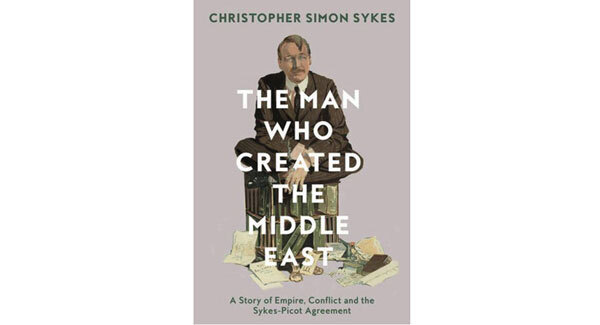
THE ill thought-out and ill-fated Sykes-Picot agreement was a British and French colonialist line-drawing-in-the-sand division of the failing Ottoman Empire.
There was a war on, of course, but even in the aftermath, during negotiations at Versailles and St Remo, there was little understanding of how the region could best evolve along ethnic divisions.
What began to seem more important to the imperialists was a share of Iraqi oil.
Currently ISIS (so-called) and, from an oppositional position, Kurd nationalists, are skirmishing around, or bulldozing, Sykes-Picot border divisions.
North of the Sykes-Picot line, France would control or influence Syria, the Lebanon and parts of Turkey whilst further south Great Britain would have a similar dominion over Jordan, Iraq and Kuwait.
The agreement ignored promises of self-rule made, to regional Arab leaders, by among others, TE Lawrence, âLawrence of Arabiaâ, in exchange for loyalty and warriors to fight the Kaiser.
In The Man Who Created the Middle East, Mark Sykesâs grandson, Christopher Simon Sykes, attempts to show that his ancestor was not a crass, ignorant, chinless wonder but, instead, a man of intelligence with a deep and wide-ranging knowledge of the region.
Whilst Mark was a student at Cambridge, his don, Dr Foakes Jackson, described him as âa man of exceptional powers ⊠who really understood the travellerâs art ⊠showing an extraordinary grasp of all that was really important in the countries he visitedâ.
Academics were lenient allowing him periods of absence to travel, and to prepare and write his book, Through Five Turkish Provinces.
As a child, Mark, had spent many lonely weeks alone at his fatherâs house in Sledmere, Yorkshire. His parents, Sir Tatton and Lady Jessie Sykes often travelled for six months or more.
His stand-in âfatherâ was an aged stud groom and his mentor was his tutor, Doolis, who later wrote to him to say that âyou must fight and strive against circumstancesâ or âyou will grow up a worthless, cruel, hard-hearted, frivolous manâ.
Markâs education was severely interrupted: he was moved from school to school, tutors were employed and dismissed, and both parents frequently took him abroad for months at a time.
In some ways, as Foakes Jackson stated, his âeducation had been neglectedâ but his Cambridge tutor, the Rev EG Swain, opined that Markâs âexperiences of travel, acute observation, retentive memoryâ made him an outstanding young man.
So, in spite of his fatherâs miserliness â extreme â almost to the point of insanity, and his motherâs incipient, and then equally extreme, drinking and gambling, Mark benefited in some ways from his eccentric upbringing.
During his years at Cambridge, before his stint fighting in the Boer War, he met a young woman, Edith Gorst, and became attached to her âbecause you are honest and unselfish, because you are the only truly straightforward person I have ever metâ.
Now, with his future wife alongside him, Mark could address the homework set by Doolis.
Edith, or as he addressed her, âdearest co-religâ â they were both converts to Catholicism â became Markâs chief correspondent, and it is on his letters to her, that much of The Man who Created the Middle East relies.
Mark wrote to Edith almost 150 times whilst he was âfightingâ in South Africa.
It was, he wrote, âa hideous nightmareâ as he was sidelined on guard duty for much of the two years as well as suffering from malaria and food poisoning.
Of the senior officers, it seems that he revered only Lord Kitchener, stating that he âis (thank God) a brute & that is what you want in a War when geniuses do not happen to existâ.
Although he and Edith were by this time engaged Mark did not feel worthy of marriage because he had not yet achieved a position for himself. He set off on a grand tour through the Ottoman Empire, resulting from which he hoped, he could write a book and make his name.
But by January 1904 Edith had found a flat for the newly married couple, close to the Irish Office in London. This was handy as Mark had been appointed as Private Secretary to George Wyndham,
the land-reforming Chief Secretary to Ireland, and was now based in Dublin.
The marriage seems to have been happy and before long their first child, Freya, was born.
The couple moved to Constantinople before the arrival of a second child, Richard, since Mark was now honorary attachĂ© to the British Ambassador in Turkey. He was back where he liked best to be, in the Middle East, feeling that his work there was âmore ârealâ than the Irish Officeâ.
And, of course, the couple had produced an heir for Sledmere.
In 1906 Mark was ready to be adopted Conservative candidate for Buckrose, his home constituency, and he and the family moved up to Yorkshire.
Soon, the twins, Christopher and Everilda, arrived and, according to Edith, Mark was âa delightful fatherâ, playing games, organising expeditions and treating the children as rational beings.
Mark lost in two elections in Buckrose, travelled in Tunisia and Spain, and saw his fatherâs house, Sledmere, gutted by fire, before finally winning Central Hull in a 1911 by-election.
The following year, whilst engaged in rebuilding his family home, Mark and Edith welcomed a fifth and penultimate child, Angela, to their family (a third son would be born in 1916).
Soon after they returned to London to be near the House of Commons in which Mark, now succeeded to the family title and thus Sir Mark, was enthusiastically forwarding his political career. He was a âspell-binding speakerâ and admired for his grasp of foreign affairs.
Markâs finest hour, by all accounts, was a speech on the Irish question. On April 1, 1914, he said that the âblame must lie upon us all. We have drifted on passions, and both sides have gone from one wild cry to another until we have divided class from class, creed from creedâŠâ.
Mark thought the only way forward was to temporarily exclude Ulster from Home Rule.
He asked members of the House, especially all Irish members, to help âlift politics out of the quagmire of personalities, ill-feeling, hate â and pettiness âŠâ.
But Markâs enduring interest was the Middle East and he spoke in the Commons the same year about his anxiety over the decline of the Ottoman Empire which he feared would lead to Britain having borders with both Germany in Mesopotamia and Russia in Persia.
He thought Great Britain would âbe like a stranded whale on a mud bank, with a river hippopotamus on one side and a rhinoceros charging down from the hills straight in frontâ.
Given the outcome of negotiations and the final placing of the Sykes-Picot line, it is strange to read that Mark spoke in 1914 of âthe seeds of native states which exist in the provinces of the Ottoman Empire ⊠which could be made into independent states. If the worst came to the worst, there are Armenians, Arabs and Kurds who only wish to be left in peace to develop the countryâ.
The Paris Peace Conference in Versailles (1919-1920) had many issues to resolve and the Arab question was fudged. Mark Sykes, whose entire life had prepared him for the negotiations, was not there, nor was he at the St Remo conference (1920), which did focus on the future of the defunct Ottoman Empire.
His life had been cruelly ended, in February 1919, at the age of 39, by the Spanish âflu. He was one of its fifty million victims.
Christopher Simon Sykes presents a sympathetic and engaging account of his grandfatherâs life.
This contrasts with the way that history has generally portrayed him but provides sufficient evidence for thinking that, had he lived, Mark Sykes might have proved, as he strove for peace, his tutors right, and become an âexceptionalâ and âextraordinaryâ man.














