Violinist Min Kym talks about when her life became unstrung
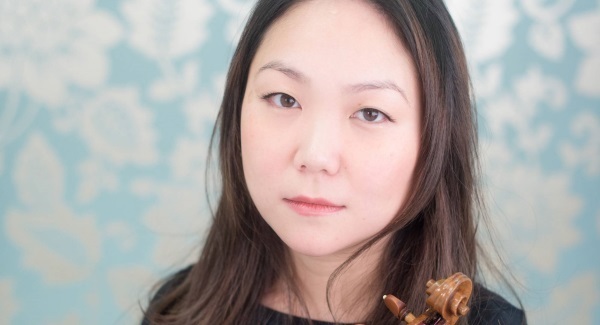
MIN Kym, South Korean-born child prodigy and violin genius, will never forget the day that changed her life â Monday, November 1, 2010.
It hadnât got off to the best start. The internationally acclaimed classical violinist had the remnants of a chest infection, but agreed to travel to Manchester with her then boyfriend, a cellist, who lived there.
Kym took her ÂŁ1.2m Stradivarius violin with her. The rare 1696 instrument had been like an extra limb, part of her very being for a decade, and rarely left her side. Sheâd paid just under ÂŁ450,000 for it, when she was 21, with money sheâd saved over the years from doing concerts and recordings, selling her old Bergonzi and remortgaging her flat.
âThe Strad was magic,â she recalls, welling up at the memory. âYou know how you meet someone and you know theyâre The One, I just knew this violin was The One. It absolutely fit like weâd been made for each other. I knew every millimetre of that violin. It was a complete extension of my body.â
That fateful day, Kym and her boyfriend had decided to grab some food in Pret a Manger at Euston station while waiting for their train.
Securing a table by the entrance, sheâd initially sat with her violin case between her legs, with the strap wrapped around her ankle. But her boyfriend suggested she put the violin with the rest of the luggage and his cello, nearer to him. They argued loudly about it until she finally relented.
Soon after, in the crowded cafe, three known thieves working together created a diversion and, in seconds, snatched the violin.
THE DAY THE MUSIC DIED
She recounts the whole traumatic story in her memoir Gone: A Girl, A Violin, A Life Unstrung, which charts her life as a child prodigy, who began playing the instrument at six and won her first international prize at 11, through to the theft and its aftermath.
Meeting Kym today, she still has trouble relaying the details, tears never far away when she recounts how cruelly she was treated by the press who accused her of being negligent, of how she wasnât able to drag herself out of her flat â let alone play a violin, any violin â for months afterwards, how her system just seemed to shut down through the grief.
âI try not to take my mind back to that place now. I relived it every day, like a tape recorder, for years. It was a perfect storm of bad timing, bad things, if we hadnât caught that train, if we hadnât gone to Pret, it was all of these things.
âIt really was a one in a million chance, all these things conspiring against that one moment.â
She felt powerless to respond to accusations of carelessness.
âWe didnât want the thieves to destroy it so the best thing for the sake of my violin was not to talk about it. But if you donât talk about it, things get made up, and thatâs what happened.â
She didnât play for about a year.
âI shut myself off. I couldnât play â I didnât have my violin â and I couldnât bring myself to play another violin. I went through a phase in a zombified state. When babies and animals have gone through a trauma they just curl into themselves, and I was protecting myself in that way.
âI went through all the stages of grief. I canât really pinpoint when I started to come out of it, but I got a few phone calls from friends to say, âWhy donât we play some chamber music together?â Chamber music got me out of that hole.â
The thieves â whoâd tried to sell Kymâs violin for ÂŁ100 in an internet cafe near Euston â were arrested following a BBC Crimewatch appeal, and in 2011 Irish Traveller John Maughan was jailed for four-and-a-half years for the theft, and two teenage accomplices were sentenced for their involvement.

FINDING SOLACE
But the instrument wasnât recovered until 2013, nearly three years after it was snatched, when police located it in a warehouse in the Midlands. The find, however, brought little solace.
Unable to afford to pay back the ÂŁ750,000 insurance money sheâd received after the theft, which sheâd used to pay debts and help her parents when they fell on hard times (she also purchased another violin), her beloved Strad became the property of the insurance company and ended up being auctioned off to a consortium.
She was allowed to say goodbye, in a room at a dealerâs office. âI can remember the adrenaline, the butter-flies. Itâs like being reunited with the love of your life and you know youâve got to say goodbye. I was incredibly excited in one sense, because we hadnât seen each other for so long.
âIt brought back the grief. In a funny sort of way, the time it was gone I was in a suspension. When I said goodbye to it properly, thatâs when it really hit home. It was like round two, with more of a sense of finality.â
She played, for one last time on her beloved instrument, the Brahms violin concerto as a farewell. âThat piece is a love story from Brahms to Clara Schumann, the great unrequited love of his life, and it just felt right.â
HEADING FOR WEST CORK
Today, she talks about life before the Strad and life after it. Sheâs rebuilding her career, plays an Amati, and recently did her first solo performance in London since the theft.
âOne of the reasons I really needed to write the book was that I found myself. For the first time, I could speak my mind and nothing bad happened.
âThe Amati doesnât compare with the Strad,â she continues. âNothing will replace my violin. For me, itâs irreplaceable. But I do belong on stage playing concertos. I have to find a new voice, a new relationship.â
She has an album coming out, concerts planned and will be appearing at the West Cork Literary festival in July. She is once again optimistic about the future. âI feel stronger. I feel ready to embrace a new life in a way that I havenât before.â















