Mater Private: Parathyroid glands are vital for health
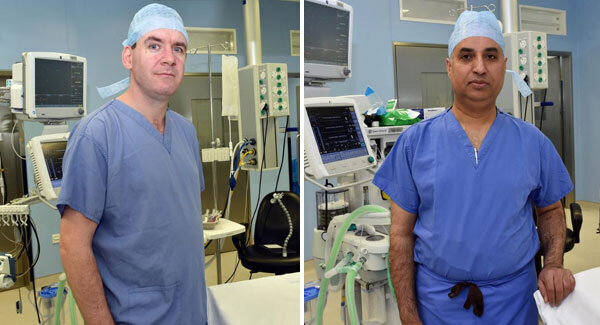
Recently two Mater Private Cork consultants collaborated on an interesting and relatively common condition — a case of primary hyperparathyroidism. The consultants involved were James Ryan and Tahir Khan.
Dr Ryan is a specialist in endocrinology and diabetes, which involves diagnosis and treating conditions that affect the normal production and balance of hormones.
Mr Khan is a general and vascular surgeon with a particular interest in minimally invasive surgery.
The parathyroid glands are four tiny glands, located in the neck close to the thyroid gland, that control the body’s calcium levels, explains Dr Ryan. Each gland is about the size of a grain of rice.
They produce a hormone called parathyroid hormone.
This hormone maintains blood calcium levels by several key methods including breaking down the bone causing calcium release, by increasing the body’s ability to absorb calcium from food and by increasing the kidney’s ability to hold on to calcium that would otherwise be lost in the urine.
Normal parathyroid glands keep blood calcium levels in a very tightly controlled range.
When the blood calcium level is low, parathyroid hormone is released to bring the calcium level back up to normal.
When the calcium level is normal or gets little too high, normal parathyroids will stop releasing their hormone.
Normal calcium balance is crucial to several processes in the body including normal functioning of the heart, nervous system, kidneys, and bones.
Primary hyperparathyroidism is a disease in which one or more parathyroid glands constantly makes too much parathyroid hormone.
This leads to calcium being taken out of the bones or stomach causing softening of the bone, and increasing the blood levels of calcium.
The calcium-rich blood is filtered by the kidneys and this can lead to kidney stones, kidney damage, and other problems. Primary hyperparathyroidism is more common as we get older particularly after 45 with an average age of diagnosis about 65 years.
Primary hyperparathyroidism is the most common cause of abnormally high blood calcium levels, which can damage every organ in the body gradually over time.
In the past doctors learned the classic symptoms of primary hyperparathyroidism through the saying ‘bones, stones, moans and groans’, which represented weakened bones, kidney stones, stomach pain and low or altered mood.
Often patients have several symptoms affecting the gastrointestinal system including nausea, vomiting, constipation and even the development of stomach ulcers.
In addition, patients can also develop depression, difficulty with concentration, worsening short-term memory and fatigue.
Dr Ryan says symptoms cause much distress and, in cases such as his recent patient, the correct option clinically is to refer to his colleague Mr Khan for a surgical opinion.
It should be noted that careful work- up in terms of laboratory and radiological examinations is required to rule out other causes of raised calcium and therefore avoid unnecessary surgery.
Surgical removal, or parathyroidectomy, is the most effective treatment for primary hyperparathyroidism. With an experienced surgeon, success rates can approach 98%.
The good news, Mr Khan says, is that following successful parathyroid surgery, as happened in this case, patients regain significant improvements in their bone density meaning less risk of fractures and improvements in their quality of life with relief from the common symptoms like fatigue, poor concentration, bone and joint pain, depression and abdominal pain.
www.materprivate.ie/cork

CONNECT WITH US TODAY



Be the first to know the latest news and updates

















