The Restaurant judge, Marco Pierre White, shares his recipe for a happy life
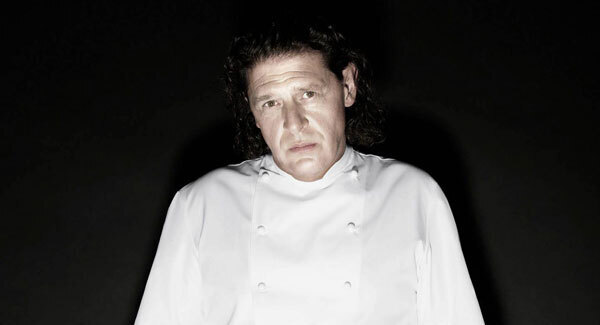
He earned a reputation as one of the most feisty and temperamental chefs in the business, but in person Marco Pierre White is quite the pussycat.
While he has a larger-than-life persona that some might find intimidating, there’s a warmth about White that belies those stories of a chef who used famously to eject customers from his fashionable and revered London restaurants.
Those were more hectic times, and these days White is as likely to be found fishing or gardening (his wellies are among his favourite possessions) as at a restaurant pass, and that suits him just fine.
We meet to discuss the new season of TV3’s The Restaurant, which he has been recording over the previous several evenings, and he’s happy to be back.
“It’s a clever concept actually, because what it does is take an individual who has a passion for cooking to have the chance to be head chef for a night in a restaurant where they have to cook for 50 people,” he says of the show’s popular format.
“Last night’s food was sensational, it really was,” he says of the mystery guest.
“Had I gone to a Michelin- starred restaurant and had that, I wouldn’t have questioned it, it was that good.”
It’s many years since White walked away from a career where he’d become the world’s youngest-ever chef to hold three Michelin stars (a record that still holds) yet he remains one of the best-known figures in the food industry, travelling the world for TV work, visiting his chain of restaurants, including two in Dublin, and running his hotel near Bath.
The Restaurant, where he acts as a judge with food critic Tom Doorley, is one of his favourite gigs.
“I turn up at about six o clock, I have a glass of wine, sit down, have dinner, make a few comments and then I go home. It’s the best show in town.”
Marco Pierre White has no regrets at spending 22 years in the kitchen, but now enjoys freedom from pressure

While White remains a busy and successful businessman, it’s hard to blame him for embracing a more straightforward life.
At the height of that success he was working up to 100 hours a week and life outside the kitchen was non-existent.
In an unprecedented move, he handed his three stars back and walked away.
“Winning three stars is without question the most exciting journey for any young chef.
"But once you’ve got them it’s the most boring job on earth, because you’re this well-oiled machine and people come in to you for your specialities, dishes that they’ve read about.
“I’d also seen two of my ex-mentors go from three stars to two stars — the great Albert Roux and Pierre Koffman — and I didn’t want to be one of those chefs.
"It’s a bit like being a heavyweight boxer and you’re the world champion. One day you get beaten and you’re trying to win it back.”
His options, he says, were to continue to work those hours and never see his children, to live a lie by pretending to be behind the stove, or “to live my life. To accept that I would be unemployed”.
Change was hard. “In a strange sort of way, at that level, you become institutionalised, because your world is the kitchen. You can operate in that kitchen. And when I left the kitchen, I was completely lost.
“I did exactly what I did as a young boy when my mother died. I went to the countryside, and just sat with nature. I didn’t do anything.
"I went fishing every day, or sat on the coastline with my sons. But like everybody else in this world I have to go to work and make a living.”
Now he does that on his own terms and new projects are always on the table.
He’s just recently returned from Australia where he met with Russell Crowe to discuss the long-mooted movie of his groundbreaking book White Heat, still being reprinted 25 years after it was first published.
He’s been coming to Ireland, a country he loves, for more than 10 years now, and feels our food is getting better and better. He has fond memories of Cork’s former Arbutus Lodge and Ireland’s first Michelin-star chef, Declan Ryan.
“It was ranked among the best in Britain and Ireland. It was a great, great place.”
He travels the world for work and misses three comforts when he’s away — his cup of tea, his HP sauce, and his wellies.
He still loves to cook at home.
“I like one-pot cuisine, I like to make big pots of things. I like to put the food in the middle of the table. If I make a big bowl of spaghetti, it goes on the middle of the table.
"Or a big pan of risotto, or a roast joint. If things are big, they retain heat. I don’t like cold food.”
You get the sense that White is happy with his lot.
“I travel and see the world, and I don’t have that pressure. I enjoy my life more. Having said that, I have no regrets spending 22 years of my life in the kitchen.”


CONNECT WITH US TODAY



Be the first to know the latest news and updates









