Tips on how to make healthy food fun for children
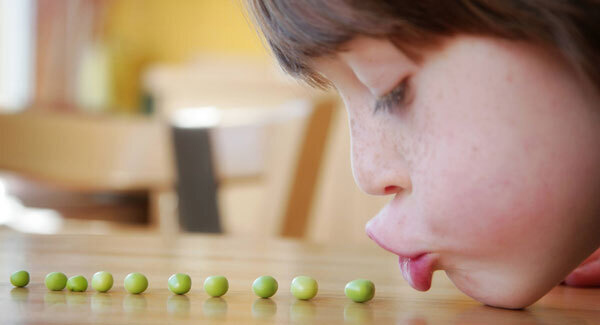
HOW far would you go to get your child to eat his five-a-day?
Would you give cash for courgettes, money for mange tout, an extra euro every day he polishes off all the fruit and veg you offer?
In Britain, spokesperson for the National Obesity Forum Tam Fry has suggested putting small amounts of money into a bank account as an inducement to kids to eat their greens.
And a 2016-published US study found small bribes can improve healthy eating habits in children.
For 18 months, the researchers observed 8,000 children in 40 elementary schools to see if short-run incentives could positively impact children’s eating habits, even long term.
At lunchtime, students who ate at least one serving of fruit or veg received a 25-cent token redeemable at the school’s store, carnival or book fair.

The researchers saw an immediate rise in fruit and veg intake, reporting that the small incentives “produced a dramatic increase in consumption during the incentive period”.
And the change was sustained: two months after the end of intervention, the consumption rate remained 21% above what it was pre-study for schools that ran the incentive for three weeks.
For schools that ran it for five weeks, it was 44% above what it was at the outset of the initiative.
Here in Ireland — where just one in four children eat fruit and veg daily and where one in four kids is also overweight or obese — dietitian Orla Walsh says while the US study worked in the short-term, there’s no research to suggest it’s a good long-term solution.
Such an approach might capitalise on the mechanics of habit-forming, giving children an incentive for just enough time until the habit is formed.
“We do know that if we get children eating a new vegetable at least 10 times, even the most reluctant will start to eat more of it,” says Walsh.
But the concern is that bribing could create a negative connotation around certain foods.

“It could suggest that fruit or vegetables need a reward for you to eat them,” cautions Walsh.
Most parents probably find themselves operating on a spectrum between cajoling and outright bribery when it comes to encouraging children to eat healthy.
INDI (Irish Nutrition and Dietetic Institute) dietician Cathy Monaghan is on board with the idea of rewarding the eating habits you’d like your child to have and ignoring the negative.
“Who doesn’t like reward, recognition and praise? You’ll make progress more quickly from an appropriate reward system than nagging and begging your child to eat something.
"It can take 15-20 times of tasting a food for a child to like it, so using a reward chart helps track how many times your child has tasted something.”
Monaghan says the reward must be age-appropriate and the goal specific — ‘try broccoli’, ‘try apple’.

“Two to three-year-olds generally need instant or same-day rewards like stickers, visiting someone, or going somewhere: ‘you were so good eating your porridge this morning – let’s go to the playground’.
“A five-year-old can work up towards a weekly reward like arts and crafts materials or going swimming. Or when you buy them something (preferably something they already needed), you could say ‘I got you this because you’re great at eating your broccoli’.
“Older children may work towards screen time or a money-based reward to save for something they’d like. Sometimes it helps to mention the healthy food choices they’ve made when you’re not at the table.
Tucking them in at night, you might say: ‘you were great at eating that apple today’, or tell a relative how good they are at trying new food.”
But Monaghan warns against using junk food as reward.
Telling them to ‘eat the broccoli and I’ll give you chocolate’ makes eating the vegetable a chore.
And food shouldn’t be used as punishment either.
“I’ve heard of children getting vegetables in their advent calendar if they’ve been misbehaving. Bribery is useful for achieving a specific goal — such as eating a specific vegetable — but don’t overdo it.”

Dr Cliodhna Foley Nolan, director of human health and nutrition at Safefood, “absolutely” doesn’t agree with bribing children to eat certain foods.
She advocates a more subtle approach, which involves reinforcing healthy foods/eating as a pleasurable activity.
“It’s very important to make food attractive and tasty. Eat with your children — make it a sociable bonding time.
"Make mealtimes a pleasant occasion, not a battleground with parents standing over children until they finish their vegetables.”
Foley Nolan prefers praise over a reward chart in getting kids to eat healthily.
“Educate children about the healthy benefits of food,” she advises.
“And talk in the short-term, tell them ‘you’ll have more energy for playing’.”
In her practice, when working to improve children’s diets, Walsh suggests having a family competition, where child plus parents and siblings each eat a handful of each colour of fruit and vegetable every day and then record what they’ve had on a rainbow chart attached to the fridge.
“If the child eats every colour fruit and vegetable that week, they get to pick a truth or dare.”
Walsh says if it’s a choice between money and daring the parent to do something silly, they always pick the dare.
“One child’s mother had to shout ‘Moo!’ every time she passed the dairy aisle in the supermarket. They think [a dare] is so funny, better than money.”
* Paediatric dietician Cathy Monaghan will hold a weaning class on April 9 at Airfield Estate in Dundrum.
See www.eaning.ie on Facebook for details.
Experts reveal their top tips on how to improve your kid’s eating habits:
* It’s important children realise the food journey from farm to fork. I grew up in a house where we dug vegetables out of the ground and picked fruit from a tree if we wanted to eat them. We helped our parents prepare them. Popping peas from their pod was fun.
* To encourage your kids to eat fruit and vegetables, they need to be visible in the house. They need to be produced frequently, at every meal and snack. They need to grow up thinking that all meals and snacks are colourful!
* Starting your baby on the right flavours from weaning is vital. Parents often don’t realise the amount of sweet flavoured foods their babies are eating. In Ireland we tend to start with pureed fruits. In [the rest of] Europe, vegetables are the first foods of choice.
* Often, baby food products are sweet-flavoured and lots of recipes aimed at babies are sweet. Parents need to be mindful of this. For your child to eat the meals you eat, you need to train them to eat the meals you eat.
* Parents should lead by example — let your child see you eating the foods you want them to eat. Don’t promote fussiness, but if your child has a preference within a food group, such as a liking for broccoli over peas, give them more broccoli than peas.
* Offer really viable alternatives. Instead of simply removing deep-friend chips, replace them with sweet potato wedges done in the oven with a minimum amount of oil.











