Taking control: Helping children when they are victims of bullying
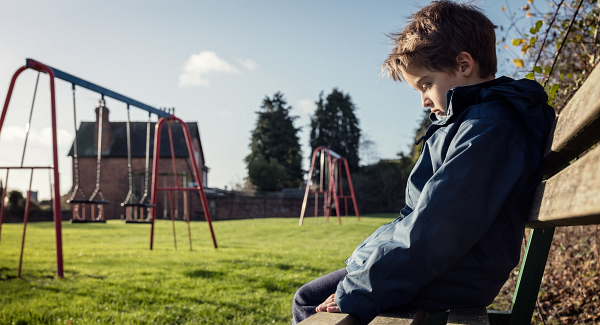
WHEN a school principal contacts Jenny Ryan in her North Dublin office, it’s often because a parent has reported bullying but the teachers haven’t seen it.
Or they get in touch because teachers have noticed an issue with children in a particular class — maybe fifth class kids aren’t gelling well at yard time or a child’s being excluded.
For the past three years, Ryan, a psychologist and founder of My Life Solutions, has been running Saturday assertiveness workshops for nine to 16-year-olds affected by bullying.
And for five years she has offered her schools programme (encompassing parent talks, staff training and student workshops), predominantly focusing on tolerance, inclusion, empathy and assertiveness.
This is for children from first class up.
“Teachers often don’t feel qualified — they see it as a bit of a scary topic — so schools hire someone in,” says Ryan, who with educational psychologist Sarah O’Hanrahan and one other facilitator has delivered the programme in approximately 12 schools, mostly primary, in the past year. In the same period, they’ve run four assertiveness workshops.
Ryan’s team is adept at seeing dynamics in class groups. They use creative techniques to help children see them too.
For example, pupils are asked to select a potato from a box of potatoes and say why it’s different to another potato.
They return it to the box and are then asked to find it again based on its difference.
“They can’t find it. The point is: we’re all human. We all have different flaws and imperfections so we mustn’t judge by first look.”
Ryan almost always uses the weighing scales metaphor —drawing it on board or Powerpoint — to help children understand where they are on a spectrum spanning all the way from aggressive through assertive to passive.
“I ask: ‘if everybody was fair and equal to everybody in the world, where would we sit on the scales?’ They all say ‘we’d be in the middle — no one would be up or down’.
“Then we talk about when things go wrong, when somebody decides they’re better than us or that they have something we don’t. They tend to go up in order to raise their social status. If they lack empathy, they bring someone else down in order to bring themselves up.”
Ryan says children immediately get the concept.
They say ‘oh, that’s when they don’t let us in the game or they laugh when we get a question wrong’.
It’s explained to children that those at the ‘top’ are aggressive, though they mightn’t be shouting or screaming, and that the person who has been brought down — who’s feeling low, laughed at and excluded — is often passive because of their responses.
“The children can plot themselves [on the scales],” says Ryan. “They say: ‘oh, yeah, I was down there because I put my head down or I walked away’.”
Once we understand why a situation’s happening, we cope better.
Ryan sees the weighing scales exercise giving children lots of validation, helping them understand the behaviours and feelings accompanying the ‘up’ and ‘down’ positions.
“Children learn that the middle line is an assertive type of communication — and that it’s where you get balance.”
Pursuing a Masters in Forensic Psychology and specialising in the development of youth aggression, Ryan’s interest in this area accelerated after a stint as a school guidance counsellor 12 years ago, when she dealt with a situation involving two senior students.
“One suffered relentless bullying and had no strategies to deal with it.
“He ended up lashing out and got into serious trouble, though he was the one targeted for years.
“[After] this, I dealt with many situations with the same commonality — children having no effective strategies and parents and schools not knowing how to deal with the situation.”
Ryan says schools and parents mishandle bullying in several ways. “Much of the time, children aren’t told the impact of their behaviour on someone else. They’re told ‘that’s bold, not nice’. They’re not asked ‘how do you think what you did made that other person feel?’”
It’s all very well teaching children to treat others as they’d like to be treated, but that’s not teaching them empathy, says Ryan.
“If we teach children that everybody likes to be treated the same way, we’re not teaching empathy because empathy means understanding that different people feel differently to us sometimes.
“Everybody has a different story and a different level of sensitivity.” Disciplining the ‘aggressive’ child doesn’t help either.
“It can cause resentment and make the situation worse for the targeted child. A child bullies because they feel powerless and are trying to increase their power plus they lack empathy. Discipline doesn’t help either.”
Advising children at the receiving end of bullying to ‘give as good as they get’ or to walk away doesn’t help. “If a child responds with an aggressive comment, they’re now in conflict with the other.
Each person tries to go one step further. When they run out of ideas face-to-face, they resort to online bullying. On the other hand, responding by walking away shows powerlessness.”
Instead the child should stand their ground — literally own the ground — with eye contact, shoulders back and a neutral comment: ‘that’s your opinion’. Role play helps to perfect this.
“We advise them to fake it ‘til they make it. When they’ve successfully done it once, they feel empowered.”
Ryan says both the ‘aggressor’ and the targeted child have responsibility in a bullying situation.
“One child has to go from aggressive to assertive, the other from passive to assertive.
“The child who’s targeted by bullying will often laugh at the behaviour and say ‘it’s fine, I don’t mind’ and then go home and complain.
This child needs to say ‘I do mind. I don’t like it’.”
Child support
Parent tips for dealing with bullying:
Liaise with the school. Talk to your child about their fears around your doing this. Communicate these fears to the school.
Do not tell your child to fight back — this can result in your child being hurt or they may get into trouble.
Do not tell your child to ignore the bullying. This can be a red rag — it shows the other child they have power and control over your child.
And this only fuels the situation.
Encourage your child to stand their ground and not to give the other child power. They can do this by holding assertive eye contact and responding neutrally (‘OK’, ‘Whatever’, ‘That’s your opinion’). Practise this skill through role play ‘til they feel comfortable doing it.
Make sure they have safety in numbers and that they don’t find themselves on their own.
Reassure your child that they have done nothing wrong. Continue to build their self-esteem and sense of empowerment through assertive role plays.
CONNECT WITH US TODAY



Be the first to know the latest news and updates









