Trendsetter Jackie Kennedy knew the power of image and branding
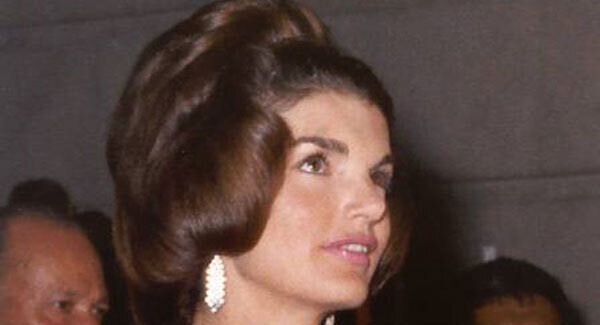
IT MAY now be one of fashion’s most over-used terms, but Jackie Kennedy was a true style icon.
Over the last century, few women have left such a lasting imprint on the fashion landscape that they would be considered genuinely worthy of that title, but nobody with even a basic understanding of fashion would argue Jackie Kennedy’s inclusion among that select few.
Her pioneering approach to fashion, her innate understanding of the power and symbolism of clothes, her natural sense of style, and her intrinsic good taste have ensured a lasting legacy for one of America’s most beloved first ladies.
She held the position for less than three years, but arguably set the bar for the role and visibility of the first lady going forward.

Now, with the Oscar-tipped film Jackie in cinemas, Mrs Kennedy’s style is being pulled into focus once more.
For proof of her iconic status, look no further than the movie’s poster: A woman in a red bouclé suit, her dark bouffant bob flicked out; three strands of pearls visible behind the standing collar of her neatly tailored jacket.
Beautiful, elegant, timeless — the power of the image she carefully crafted is such that we don’t need the word “Jackie” to tell us who this is supposed to be.
While Michelle Obama used accessible fashion to heighten her appeal to middle America, Jackie Kennedy turned to couture to create the much-needed illusion of a fairytale presidency during a fraught and anxious period in US history.

As a teenager, she had studied at the Sorbonne; after college she travelled Europe.
She even flirted with an editorial position at Vogue (albeit for one day), so Jackie was certainly no stranger to fashion.
As the wife of an ambitious senator, she had displayed a remarkable understanding of the political game the couple were playing; and as the wife of the president she wasted no time establishing the vital role fashion would play in cementing their image as a youthful, dynamic, modern-thinking couple.
On the campaign trail, her outfits had garnered huge media attention — not all of it positive.
Her love of French designers was widely criticised, and that criticism was noted.

When her husband was elected, from her hospital bed, two weeks after a caesarean section, Jackie interviewed some prominent American designers for the unofficial role of creating a wardrobe fit for a young, modern first lady.
Oleg Cassini was chosen; his forward-looking aesthetic and refined sophistication were a perfect match for the stylish and cultured Jackie.
Their impact on the trends of the day was instant.
Sales of pillbox hats (her’s were designed by Halston) went through the roof, and when she dented her hat at her husband’s inauguration, dented hats became all the rage.
Her chic bouffant bob became the defining style of the early ’60s.
Hairdresser to the stars (including Marilyn Monroe) Kenneth Battelle tended to her locks, and the aura of celebrity and glamour settled over the White House.
It was never more apparent than at state dinners, where the president and his first lady shone like movie stars.

If her daywear — those iconic skirt suits with their playful proportions and quirky, statement buttons and collars — secured a place in history, her evening wear was so cutting edge it continues to inspire today.
To Cassini, Jackie was an exotic princess, and he designed strapless evening gowns considered so risqué for a first lady that she needed the president’s permission to wear them.
She popularised the strapless column, the one-shouldered gown, and pioneered the empire line at the beginning of a decade now synonymous with that cut.
Her commitment to American fashion was such that the infamous pink suit she wore on that fateful day in Dallas was actually made in the US, from a pattern and cloth provided by Chanel; so it’s significant that one of the few foreign designers she publically embraced in the White House was Ireland’s Sybil Connolly. Perhaps as a nod to her own and her husband’s Irish lineage, she wears a Connolly design in her official White House portrait.

The power of image and personal branding — long before that was even a legitimate concept — was not lost on Jackie. It’s also significant that she refused to change out of her blood-stained suit for Lyndon B Johnson’s swearing in on the flight back to Washington.
Allegedly telling advisors, “Let them see what they’ve done”, photos of that event show a newly widowed Jackie, defiant in the face of grief, dignified in the face of unthinkable personal trauma.
Mere hours after the death of her husband, she was already — perhaps unwittingly — crafting the persona that would come to be known as Jackie O.
No less iconic than Jackie Kennedy, Jackie O continued to set trends for decades to come.
CONNECT WITH US TODAY



Be the first to know the latest news and updates














