How to care for vintage and antique books
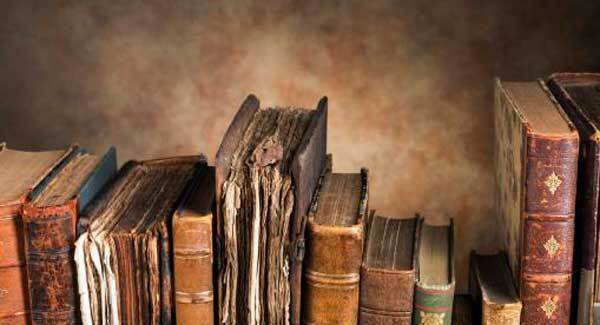
The vast majority of antique books do not survive use, abuse, and damp and poor storage. Whether it’s investment or sentiments there are simple things you can do to protect your favourite reads old or new.
How to care for vintage and antique books

Handling

Handle books inside and out with scrupulously clean hands. The acids, grease, and day to day grime on your finger tips can get into the fibres of covers and pages. Never eat or drink in or around valuable books or ephemera.

It’s just too easy to bash a cup of coffee over with an elbow or wrist. If you are in a reading room of a public library or museum, you must follow the curator’s protocol to the letter. Book jackets and alkaline wrappers are available online for vulnerable books.

It is not necessary to wear white gloves and most (but not all) archivists and preservation librarians no longer do so as once the hands are clean and dry, the potential damage to their paper, leather, and cloth is imperceptible.

Gloves also make you clumsy, pick up dust, and raise the potential for dropping the book or tearing pages. Still, don’t touch colour-washed artwork or original photographs if possible.

To remove a book from the shelf, grasp it without too much pressure, at the centre with your thumb and fingers on either side of the spine. If you can reach forward, try pushing the book towards you from its front edge or move the companion books back to release the spine. Don’t snag the ‘head-cap’ at the top of the spine with your fore-finger.

When reading a book lay it down on a table or cradle it in the hands, if it’s small and light. Don’t force the book flat as this puts a lot of pressure on the binding and failing spine (tell me about it).

You can prop it open on a support of a couple of rolled clean dusters to let it open to an angle of 90- to 120-degrees. It goes without saying, don’t mark passages with sticky post-its or dog-ear any book.

Storage

Light and damp are the main environmental dangers for old books. Light bleaches spines, covers, and paper; damaging the colour and structure. Damp can cause sad antique conditions in old books including iron-gal which puts a halo around ink.

Foxing is caused by metal traces (which rusts), and mould, (which is alive and grows), in the paper and is worsened by damp conditions. Avoid putting bookshelves on an exterior wall without suitable insulation as they will draw moisture.

The attic is only useful for book storage if you are completely sure there are no mice or multi-legged vermin, both of whom enjoy handmade paper and the glue that holds an old books together.

In terms of humidity, 35%-50% is about right, ruling out most uninhabited basements and outbuildings. Keep books away from direct heat (radiators and beside windows), intense daylight and fluorescent lighting — which added to arid conditions — will dry out leather covers and paper.

Books can be stored square and upright on a shelf, but there is something to remember about large old books.

The pages are made up into bundles of ‘text blocks’ and once set upright these are often too heavy for the spine and board covers to hold up.

They can drop down in a section, and pull away from boards and twist the spine of the book. Pricey books can sit on what are called ‘shoes’ in an archival safe foam that give the text blocks support.

Otherwise, if the book is heavy and the cover oversized like a folio, lay that book flat with a soft material between any book placed on top.

Keeping like-sized books together gives them suitable equal, vertical support on each cover.

Cleaning and conservation

Clean your books with a soft brush (a flat soft cosmetic brush for blusher or water-colour brush is ideal); don’t use anything stiff or bristled.

Move the hairs from the head-cap to the page edges with the book held closed and angled downward to allow dust to fall out and away.

Be careful if using even the brush head of a vacuum cleaner, covering it with an old stocking to ensure loose pages are not sucked out of position. Gentle treatment goes for collectible paper-backs too, where materials including those thin, low-grade pages are highly acidic, and actually more fragile than their ancient cousins made with linen and cotton. (Newspaper is made with ground-wood pulp which finally goes so brittle you can break it).

Don’t photocopy valued books flattened out, including paperbacks, the sewing and binding can be damaged. Give pages a light flick to dislodge dirt.

Problems such as brittle collapsing bindings and insect infestation (droppings found in the spine are called frass) are best placed in the hands of a conservator. Assign the book and any loose pages, an individual acid-free box, tying the book shut with cotton tape, and don’t let it tip around when you’re transporting it.

If you are moving house, put books in similar sized groups, or try packing books in re-enforced cardboard boxes, closely together and spine down without anything on top. Don’t put standard leather dressings on a leather bound book to moisturise it —refer to an expert for advice.

For a list of book conservator’s in Ireland including the renowned Muckross House Bookbindery in Killarney go to: conservationireland.org.

More in this section

Cookie Policy Privacy Policy Brand Safety FAQ Help Contact Us Terms and Conditions

© Examiner Echo Group Limited










