Why jazz star Robert Glasper felt compelled to address the issue of police shootings in the US
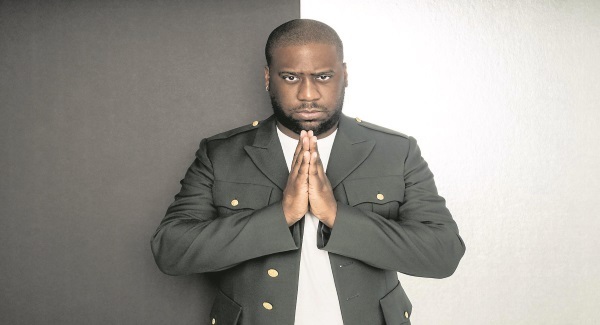
In advance of his jazz festival gig, Robert Glasper tells Alan O’Riordan about his genre-straddling music and why he felt compelled to address the issue of police shootings in the US

Why jazz star Robert Glasper felt compelled to address the issue of police shootings in the US

ROBERT Glasper’s 2005 debut on Blue Note, Canvas, opens with ‘Rise and Shine’. It’s a well-named track — bright, tight and assured. Here is a young pianist who’s ready to roll in the grand tradition of the piano quartet.

Few, though, in the core jazz audience could have guessed where exactly Glasper would end up. In the years since, he’s recorded with Stevie Wonder, Mos Def, Snoop Dogg, will.i.am, Kendrick Lamar, Jill Scott, Norah Jones, Kanye West and a slew of other top hiphop and R&B artists.

All the while, he’s kept releasing straight up jazz. It’s an eclecticism he says goes back to the house he grew up in, in Houston, and continued into his very earliest days as a musician.

“My mother was a pianist and a singer,” he says, speaking on the phone ahead of his Cork festival gig, “so in the house a lot of different music played, from gospel to rock to RnB, soul, jazz, so I grew up in a household that was very eclectic musicwise.”

Hip-hop came into the mix in the early 1990s, as Glasper was nearing graduation from a performing arts school in his home town. Perhaps significantly, he came of age during a golden age for the music, with jazz-heavy sounds of A Tribe Called Quest’s classic Midnight Marauders grabbing his attention.

Glasper went on to study in New York. There, he met the vocalist Bilal and began performing with him and a host of diverse acts. “He got signed to a record deal and I was his music director for seven years. At the same time, I was going on the road with Russell Malone, Christian McBride and Roy Hargrove. I was always doing stuff with Mos Def, the Roots. Once I got to NY I was straddling both sides of the spectrum.”

Despite this background, Glasper’s decision to begin his recording career with straight jazz was a conscious one. “I did that so I could prove to everyone that I’m a legit piano player,” he says. “It was very important to me that I gain that respect first. If I had done R&B and hip-hop first, I wouldn’t have had that respect.

“Jazz is such an elite type of music to learn and know and play, that most people that go from one thing into jazz, they end up not being very good. So, I understand the mentality. When you are a jazz artist and prove you can do that well, and then try something else, I feel you have a better chance. You have Herbie Hancock, Donald Bird, you know what I’m saying, they went that route — people have done it, and it’s been good. If you go to hip-hop to jazz, you have a lot to prove to the jazz audience because the jazz audience is the hardest audience to prove something to.”

Glasper acknowledges that his genre-crossing doesn’t please all his fans all the time. “They are mostly older though,” he says with a laugh. “And I understand why. Some older people get it and love it; some don’t get it, which I understand. It’s a different generation. It’s OK. But my audience is really mixed. I get the older crowd at the trio shows, but not so much at with my Experiment band — that’s mostly young people.”

It’s the Experiment band that Glasper will be bringing to the Guinness Cork Jazz Festival tomorrow, six years after the group’s magnificent debut on Leeside. Perhaps the Everyman crowd, which usually hosts the festival’s jazz hardcore, should be forewarned, but, then again, last time there was plenty to thrill all music lovers.

Glasper says the show will be based on his new album, ArtScience, a recording that is typically diverse in its range and influences. It includes a vocoder-led cover of Human League’s ‘Human’, moments to match Stevie Wonder at his best, beats Quincy Jones would be proud of and many points between in a spectrum that stretches from bop to hip-hop.

Robert Glasper with his t band: Casey Benjamin, Derrick Hodge and Mark Colenburg.

“We got in the studio for two weeks and we wrote they whole thing,” he says. “I told everyone, don’t worry about genre, just put it all in one album. It’s genre-crossing. We aimed to put as many vibes on there but still make it cohesive as an album. It’s all African-American music. The music of my people. How I sequenced it, how it flows from jazz to hip-hop to disco, the sounds kind of blend together. There are a lot of factors that I think make it a smooth listen.”

Glasper says he’s not a very political person, but his work has often been at least implicitly political. Here, on ‘Find You’, his seven-year-old son can be heard suggesting “Let’s try and make the polices better”. It’s an emotive moment, coming against a background of incessant police shootings of unarmed black people. The very week we talk has seen the shooting dead of Tyre King, a 13-year-old who had been carrying a toy gun.

“When stuff is happening, I try to address it,” says Glasper. “You can always listen to my album and know what year it is. To take some action. I feel I have to say something in a way musically. As black people we fear for our lives every day here. And the people who are supposed to be saving our lives are the ones we fear. People say, no, racism doesn’t exist, it’s over. But we keep proving it on camera. Every day there is something. It’s not over. It’s very much here. It’s hard to swallow. As a black man I cannot allow my son to have toy guns. He says my friends have them, and I have to explain why he can’t. His friends are white. There are no white kids getting shot because they have toy guns. I have a voice and a platform and I have some responsibility to talk about these things in some way.”

Meanwhile, there’s a bemused tone to Glasper’s reminiscence about his last trip to the Cork jazz festival in 2009. “That it was the only festival I ever played at that did not allow musicians see other musicians play. It’s very weird. People in Ireland ask me, do you know any Irish musicians? And I’m like, no, because when I went to Ireland to try and see some musicians they told me, ‘Oh, it’s sold out’.”

No doubt the organisers of the festival have all sorts of ticketing and health/safety issues to deal with over the course of such a big event, so giving tickets to artists might not be as straightforward as it sounds.

Either way, the policy also resulted in the surreal scene of one of the genre’s living legends being turned away from Glasper’s gig.

“Herbie Hancock and his band tried to come and see me. I met Herbie the next day and he was like, ‘Yo, I tried to come see you. They said it was sold out.’

“I hope they change it. The whole idea of a festival is festivity! For musicians to see other musicians. We as Americans want to see Irish musicians play.”

Hopefully, he’ll take away better memories of this year’s event.

  • The Robert Glasper Experiment are at the Everyman Palace Theatre tomorrow. For more details, see guinnessjazzfestival.com

Not just a jazz festival: weekend highlights in pictures

Cork Guinness Jazz Festival

x

More in this section

Cookie Policy Privacy Policy Brand Safety FAQ Help Contact Us Terms and Conditions

© Examiner Echo Group Limited













