How diet helped Thomas Barr become an Olympic hurdler
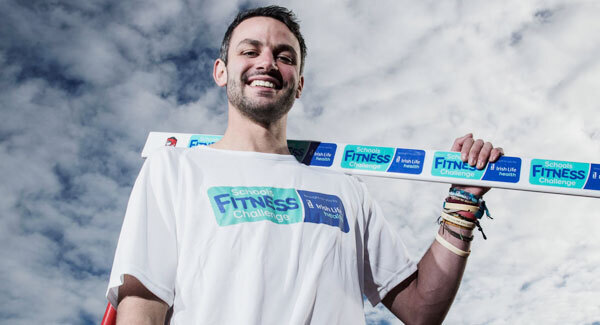
Olympic hurdler Thomas Barr tells Clodagh Finn how diet changes have improved his performance and how life in the fast lane extends to a passion for drift car racing.

How diet helped Thomas Barr become an Olympic hurdler

THOMAS Barr’s remarkable Olympic performance still hasn’t quite sunk in, though he is getting used to all the attention — the handshakes on the street, the pats on the back, the requests for selfies, not to mention the heart-throb tag, which elicits a hearty laugh.

“I would never see myself as a heartthrob, but I think it’s funny and cool. I’ll enjoy it while it lasts.”

For the record: He’s single and says, in the nicest possible way, that he’s playing his cards close to his chest on that subject, if you don’t mind.

Despite all the fuss — Thomas, 24, was blown away by the buzz his near-medal generated while he was still in Rio — you get the impression the record-breaking 400m hurdler takes it all in his artfully calculated stride.

“It hasn’t hit home, even now,” he says, and you get a sense of his lingering disbelief when you read his Twitter bio.

It simply says: “Fourth place with 40.7 seconds. Didn’t expect it, but that’ll do.”

Life, he says, has changed slightly, yet he’s quick to tell you that he’s still the same person.

Though, he does allow himself a moment to reflect on what coming fourth in the Olympic Games in Rio last August has meant to him.

“The Olympic Games is the pinnacle of an athlete’s career and I came fourth. There were only three people ahead of me. There is no bigger playground or proving ground for an athlete. It’s cool,” he says.

Now, he will focus full-time on athletics, training in Limerick alongside his sister Jessie, a fellow Olympian and 400m hurdler.

He’s leaving academia behind, but not before having completed a degree in mechanical engineering at the University of Limerick and graduating with an MA in sports performance this year.

He says he doesn’t plan to use his qualification in the near future, but says he has benefitted hugely from what he learned in the last year, particularly in terms of nutrition and physiology.

Changes in his diet played a big part in improving his performance, he says.

“I found that the timing [of meals] and the portion sizes are equally important as what you eat. I got my diet into the right regime, where I was eating the right amount and types of food at the right time, to coalesce with training time,” he says.

In real terms, that means ensuring he gets enough protein to repair his muscles, while also getting enough carbohydrate to fuel his track sessions.

An average training day might start with scrambled eggs on toast before heading to the gym for a session.

After that, he has a protein shake or an omelette – “eggs are a big part of my diet”.

“Before a heavy track session, I want to make sure that I am getting in enough carbohydrate before and after. About two hours before, I’ll have pasta and chicken and broccoli, or a brown bread sandwich to get some complex carbohydrates,” he says.

He’ll include protein with every snack or meal. “25g of protein is what the body can absorb in one hit. I try to get five of them in a day.”

He snacks on nuts and yoghurt and then makes dinner, which can be anything from sweet potato and salmon, steak and sweet potato fries or Bolognese.

“I do all my own cooking. I’m not a bad cook, but I’m not going to be bringing out a cookbook, let’s put it that way,” he says with a laugh.

While the next 10 months will be focused on training and eating to maximise his performance, it will not be all work and no play.

To go back to that Twitter bio, Thomas Barr is a man who is “99% up for the craic!”.

Though, his downtime is less frequent than that might suggest. He takes a night off to go out and have a few drinks with friends every five or six weeks.

He’s also a huge fan of extreme sports, a complete adrenaline junkie, as he puts it, who loves snowboarding, surfing and wakeboarding, though, he doesn’t get to do any of those things regularly because of the injury risk. Instead, he’s content with his other hobby: Drift car racing.

Ask him to describe it and he enquires if you know the ‘Fast & Furious’ action films, before explaining it involves trying to drive a car on its side around a bend.

When it’s suggested to him that that might be an injury risk too, he produces that big hearty laugh of his and says: “It’s relatively safe. It’s one of the slower motor sports out there and I always wear a helmet.”

Having said that, he takes the threat of injury very seriously. A recurring hip injury kept him out of action for 11 weeks this year.

After shaving almost a second off his personal best and winning gold at the World University Games in 2015, Olympic expectations were high.

However, as Barr recalls, that bout of injury meant that, on paper, he had no chance of performing well.

“I was starting to lose focus. I was tipped to be a finalist off the back of last year and all this pressure was on me. I had a lot of expectation myself and I could see it slipping away.”

Then, he managed to tell himself that there was no point in panicking and he started to work towards the Games with the help of physio Emma Galvin and his strength-and-conditioning coaches.

He says it helps having a training squad and a family member close by. He and his sister Jessie share a birthday — born on July 24, he’s three years younger than her.

They are both from Waterford but train in Limerick. “We can talk about things in training. It’s great, even for a bit of constructive criticism. We can say it as it is and there’s no hard feelings.”

There’s another sister, Becky — “we can’t forget her, she’s the cool one studying business and Spanish in Madrid” — is not into athletics, but she’s a drift racing fan.

The Barrs are a close family as you would have gathered if you saw Thomas’s parents, Martina and Tommy, pouncing on their son during a post-race interview in Rio.

“That was definitely one of the highlights. I was on a high having come off the track. Then I heard them shouting at me. They jumped in on me. I thought they were going to be passed out, in need of resuscitation somewhere up in the stand. That’s why I shouted: ‘You’re alive’.”

The Olympic ticket and drug controversies passed over his head, he says.

“That didn’t really creep into the Olympic Village. It was really cool being in that elite atmosphere. It’s like a bubble, completely removed from the outside world. If you don’t want to talk to the outside world, you really don’t have to. It was good to be able to focus.”

The focus now is on training and, while he is competing at the top of his game, it was not always that way.

“When I was younger, I never got into sport for the competitive side of things. I always just enjoyed sports for sport’s sake.”

That’s why the Irish Life Health Schools’ Fitness Challenge resonated with him. It is designed to get young children and teenagers active in the sport that appeals to them.

“I only started back training on Monday and I’m feeling better already. It gives you such an adrenaline rush and it releases all these chemicals,” he says, encouraging others to get active.

Schools’ Fitness Challenge

EIGHT in ten 15-year-olds have high blood pressure, according to a new study. The study of Transition Year boys by Professor Niall Moyna, Head of the School of Health and Human Performance at Dublin City University, also found many of them were unfit and spent up to 68% of their day sitting down.

“Every school around the country has unfit children, but the good news is that every school has a free lifestyle drug that can cure it – exercise,” Professor Moyna said.

He was speaking at the launch of The Irish Life Health Schools’ Fitness Challenge which is designed to encourage PE teachers and secondary school students across the country to take positive steps to improve their fitness levels over a six-week period.

Olympian Thomas Barr said small steps were the way to go to improve fitness levels.

“The Irish Life Health Schools’ Fitness Challenge is a great way to show how simple steps to improving fitness can have an impact after only six weeks,” he said.

“I would encourage PE teachers nationally to continue to measure students’ progress as a way to encourage and inspire them.”

Cork camogie star Ashling Thompson called on students of all fitness levels to get involved. “Being active is not just for those students who consider themselves ‘sporty’, or who are part of a sports team. Being active has great benefits both to mental and physical wellbeing.”

The initiative runs until mid-November.

x

More in this section

Cookie Policy Privacy Policy Brand Safety FAQ Help Contact Us Terms and Conditions

© Examiner Echo Group Limited













