Dr Ian Gargan treats our most violent offenders but a 13-year-old was among the scariest
Ian Gargan has spent much of his career as a criminal psychologists studying some of Ireland’s most violent and sadistic criminals — yet one of the scariest people he has ever met was a 13-year-old boy.
The child, whose psychopathic tendencies emerged as young as the age of five, tortured animals, tormented young schoolmates, and set dangerous fires, was contained in a secure detention centre by his teens, recalls Gargan, a leading forensic psychologist who has just published a book about criminal behaviour.
Conor was a psychopath. By his early teens, recalls Gargan, he was “the worst bully I have worked with, deeply manipulative and with absolutely no sense of remorse.” He was also extremely clever, insightful and insidious. Even his mother was afraid of him, Gargan recalls:
“When Conor entered the room it was as if she held herself smaller and tighter — for all the world like she was scared of him and flinching before an attack,” he recalls.
“Conor’s behaviour around her was also very interesting. He held her in a long and grippingly tight hug, but it looked more like an assertion of control over her person than a loving gesture.
“In my mind’s eye I saw an image of a tree caught in the chokehold of ivy. That was how Conor hugged his mother, and that was how she endured it.”
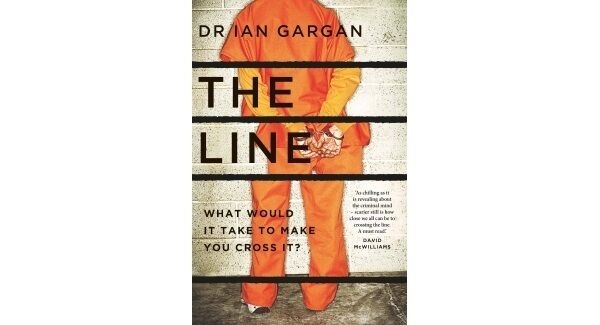
With Conor, he recalls in his new book The Line, there was an emptiness that was chilling.
“He was so myopic, so determined to cause upset and he enjoyed it so much. He really enjoyed what he was doing, and got a kick out of other people’s pain. No matter how hard I worked with him, I felt he was getting a narcissistic buzz out of the attention I was giving him — he really revelled in it.”
Conor was later released, against Gargan’s advice, from the secure unit in which he had been detained. During his release he set a fire in a commercial building that nearly killed 10 people, a crime for which he subsequently received a 20-year prison sentence.
Yes, there are genuinely bad people out there, says Gargan. Surprisingly, he insists however, that such individuals are rare.
“I don’t believe that someone is born bad,” he explains, adding that in his view the majority of anti-social behaviour is closely linked to a variety of factors and life circumstances.
These include a person’s family, relationships, the greater environment, their life choices and even genetics — Conor, for example came from an impoverished, violent background and a broken family.
However, this is not an excuse, Gargan adds. Calling for a better understanding of the potential contributing factors to cirminality isn’t another method of seeking lighter sentences for criminals or an attempt to excuse bad behaviour, he says. What Gargan wants is a cleverer approach to how we deal with criminals.
Such an approach, he believes would ideally be based on an understanding of how people come to cross what he calls ‘the line’ between acceptable and anti-social behaviour.
Take, for example, someone who grows up in a family hall-marked by chaos; an environment where there may be no stability, comfort or security.
Most people can recall ‘good’ things about their childhood, Gargan explains; when asked, they will mention Christmas-time, birthdays, holidays or schoolfriends.
Yet, he says, he’s met many criminals who did not have good memories about a single thing in their childhoods. Interestingly, not only did such people have no memories of any happy or positive childhood events, they didn’t even have the vocabulary for what he calls the “touchstones” of childhood for those who go on to develop strong, confident identities and successful lives.
If illegal activity, inappropriate sexual behaviour or drug-taking is taking place in the home; if there is criminality, chaos and joyriding in the immediate neighbourhood, this becomes normalised in the perspective of someone growing up in such an environment.
In turn this contributes to the normalisation of anti social behavour, he explains.“People who engage in sexually deviant or vulnerable behaviour may do so because such behaviour became so normalised in the home or environment that it was not stigmatised or even unusual to them.”

Peer relationships also play a significant role here, he explains, because what is acceptable or otherwise among a young person’s peers, will have an influence on the way they behave.
If, says Gargan, he was out somewhere with his friends and suddenly flung a bottle at somebody, it would be deemed unacceptable behaviour and he could lose friends as a consequence. However, the same could not be said for the peer groups of many of the juveniles who come into contact with the justice system. That line is not there, and neither, he observes, are the consequences.
Sometimes a partner can be tolerant of someone’s criminality and facilitate it, he explains.
Research has also shown that a genetic link exists for criminality. Mental health issues such as schizophrenia or depression can often play a role — 70% of prison inmates have mental health issues.
And then there are the choices we make — because we think we might get away with something, or because we are genuinely desperate, whether for food, money or resources.
One of the saddest factors he explores in his book is what he describes as “one of the key traits” he has noticed in young offenders — that is, an inability to see any future for themselves. There is a striking similarity, he says in their lack of interest in creating a future.
“They don’t think that way and if I suggest it, they don’t feel it’s something they can do.”
Sometimes these factors can play a really crucial role in a person’s fate. “I think there were a few of the people I met who could have taken another path if they’d had more support from parents or been in a different environment.”

CONNECT WITH US TODAY



Be the first to know the latest news and updates

















