Book review: The Countenance Divine
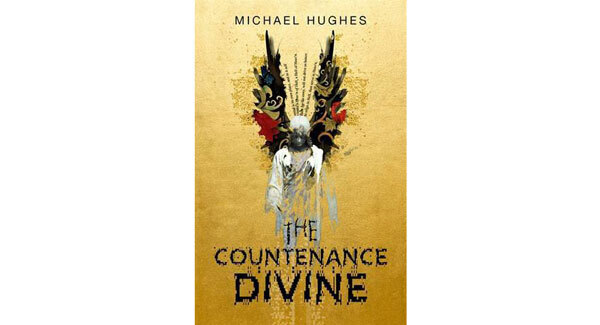
READING the opening of The Countenance Divine, I was struck by the overt crafting.
I delight in patterns in novels, and I saw, on the flap of the dust jacket, 1999, 1888, 1777, 1666. As well as magical dates, there are other important numbers.
Within the first chapter, the sections are divided thus: 01, 02, and so on, and there is also consideration of the ‘Year Two Thousand Problem’ (Y2K), familiarly known as the Millennium Bug.
Binary and four-digit numbers are foregrounded, but the central pattern is in the form of a gadget.
In 1999, Chris, a computer programmer, purchases, from a stall in Brick Lane, London, a Victorian puzzle: a ‘Practical Rebus’.
“Each piece had an image or motif painted on it, but together they formed one overall design. The pieces could be interchanged, and every arrangement made a different pattern.”
The puzzle has a profound effect on the seemingly dull protagonist, one that he seems barely to have the imagination to compass.
If this all seems mannered, the artifice does not end there. In the list of principal characters, divided into sections according to century, one can see both William Blake and John Milton. And in 1888, we encounter Jack the Ripper.
Allusions are made to all three in the first chapter, with one of Chris’s Goth colleagues nicknamed Dark Satanic Mills (DSM), after Blake’s famous hymn, ‘Jerusalem’, a section of his longer poem ‘Milton’.
DSM lends Chris the graphic novel, From Hell, which is purportedly based on a letter to authorities from the Ripper himself. DSM states that there is “another way of looking at the world, where everything was connected, including the past and the future”.
Ah, a clue! Chris is visited by the past in uncomfortable ways. Everything coalesces. As to the future? That would be a spoiler… It is impossible to accuse Hughes, who is Northern Irish, of laziness.
Hughes’s research is thorough and his writing honed by years of study and teaching. In particular, his rendition of dialogue is masterly, maybe developed by his work as an actor, under the name Michael Colgan.
Hughes moves fluently through the registers of Jack the Ripper (“with tother hand Ile take my knif and stab it in your neck”), William Blake (“my only monument shall be the simple little songs I leave behind”), and Milton (“religion at its most fanatick is almost an evil”).
His presentation of Chris, in 1999, is more pedestrian, “He couldn’t think. He did not know what to say”. Form and structure reflect character and era.
The narrative swivels from one century to another, cross-stitched together with motifs.
The key ideas of the novel can be summarised by reference to Blake’s ‘The Marriage of Heaven and Hell’: “Without Contraries is no progression. Attraction and Repulsion, Reason and Energy, Love and Hate, are necessary to Human existence”.
“From these contraries spring what the religious call Good & Evil. Good is the passive that obeys Reason. Evil is the active springing from Energy. Good is Heaven. Evil is Hell”.
The Countenance Divine has been compared with Cloud Atlas and Wolf Hall.
The admirers of the former will certainly relish Hughes’s craftsmanship, and those of the latter will enjoy the historical education that Hughes bestows, encouraged to identify factual material and separate it from his imaginative creation.
It might seem churlish of me to say that I was not drawn into any of the four narratives, as I would not want to dissuade readers from The Countenance Divine.
But I would rather read Blake or Milton and, as for Jack the Ripper, I have previously read and seen more about the misogynistic femicides than I can stomach.
All the main characters, other than Chris, are renowned, and if you like this genre, and these periods of history, you may love The Countenance Divine.















