Book review: The Vegetarian
THERE is a jarring juxtaposition early in Han Kang’s The Vegetarian.

Book review: The Vegetarian

The protagonist Yeong-hye is suffering from horrendous blood-soaked dreams and as a consequence; she decides to stop eating meat.

We are led though this narrative through the eyes of her husband; who introduces her as an ordinary women until she took this decision to stop eating meat.

We observe Yeong-hye through selfish, hopelessly unaware eyes. She becomes an inconvenience to her husband who had married her for her sheer ordinariness.

Kang’s narrative at this point never tries to understand why Yeong-hye is acting this way because her husband never tries to understand.

We observe this fragile being begin her descent and we live this priggish man’s life until he cuts himself away.

The Vegetarian is broken into three parts, after the husband comes Yeong-hye’s brother in law, a visual artist who becomes obsessed with her fragility and finally through her sister In-hye’s desperate attempts to save her.

As we move though these three viewpoints, Yeong-hye’s aversion to meat becomes fanatical to the point of death.

The novel is narrow in narrative scope but vast in its universal struggles.

Kang has crafted a wounding, unsettling book. The fantastical imagery of plants, trees and flowers reinforce Yeong-hye’s purity. The book is a journey in trying to understand her and the reactions she inspires in others.

Yeong-hye comes to believe she is turning into a plant.

Kang’s novel has been called many things and since its Man Booker International win, it’s a safe bet to assume that this will come under something of a critical microscope in the next year.

Some have zeroed in on a possible critique on the oppression of Korean society while others point to the metamorphosis of the main character as an obvious ode to Franz Kafka but at its heart; it’s a book about the unknown and familial and societal reactions to behaviour that ruptures the normal.

Kang doesn’t waste a sentence in a tightly wrapped novel that manages to incorporate these universal ideas into 180 pages. She demonstrates her power in effortlessly letting us see Yeong-hye through different eyes and catalogue her transformation.

Transformation is at the heart of her tale. She is trying to escape herself.

The oppressive violence of her father, the indifference of her husband, even her sister’s acquiescence of their behaviour, these all contribute to her needing to escape herself.

Her manic refusal to eat meat is a way of cleansing herself, of returning to earth, of living the most natural of lives.

The third act renders us helpless as In-hye watches with us as her sister falls into madness and near death and in understanding her descent, sees her own.

‘Time passes’ is the phrase used to drive much of the story at this point. A simple phrase with heavy meaning.

Han Kang’s great achievement is crafting a small tale from which great things grow.

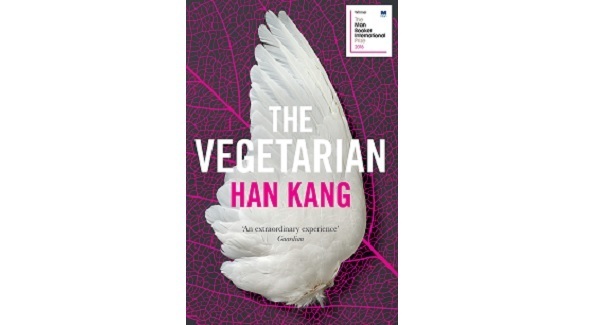
The Vegetarian

Han Kang

Translated by Deborah Smith

Portobello, €12.95

Review: Paul Ring

x

More in this section

Cookie Policy Privacy Policy Brand Safety FAQ Help Contact Us Terms and Conditions

© Examiner Echo Group Limited













