Vintage View: Silver spoons
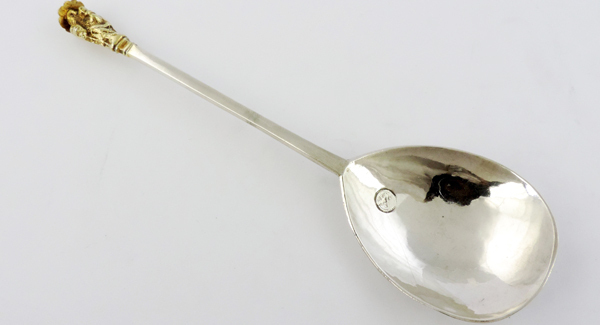
Being born with a silver spoon in the mouth really was a mark of rank. Kya deLongchamps sups at the long history of precious flatware.

Vintage View: Silver spoons

Someone washed a plastic ‘spork’ and returned it to the cutlery drawer in my kitchen last week. Even I, progressive in my habits, have my limits.

Pinched between thumb and forefinger, it was flicked in one terse movement into the bin.

Spoons for elevating, and then slurping up sloppy food have been known since classical times.

Personal, portable and worth more than their ounce weight, royal chewers of the original silver spoons, were the first to show spoons as part of their inventory of treasured objects.

King Edward I of England, Lord of Ireland and Duke of Aquitaine in 1300 had silver and gold spoons marked with the fleur-de-lis in his ‘wardrobe’.

In early spoons, figural spoons or ‘apostle spoons’ with fig shaped bowls and disk (flat) ends made from the late 15th century into the 1660s, are the most familiar.

Thirteen spoons, their handle (finial) formed in the cramped form of a tiny holy man depicted with their symbol of martyrdom or trade, and one master spoon formed to represent Jesus Christ, were very popular. Judas was bumped for a St Paul’s sword.

Complete sets of apostle spoons by one maker, are museum level finds and only two are known to exist worldwide.

Individual spoons might be given to an aristocratic child in honour of their patron saint, and they were gifted not for show, but for use, so genuine early ones will have plenty of wear.

Look out for more affordable 18th century sets from Nuremberg in Germany and 19th century Victorian reproductions with elaborate finials, stems and bowls.

A specialist dealer in silver antiques will be able to date the piece by its marks, quality and form and tell you more about its place in the dateline of silver-making.

Four surviving, clearly struck hallmarks (even three) are rare. As small silver collecting took off in the 1980s, apostle spoons where heavily reproduced, so be wary.

In Georgian times, the upper classes would bring their own spoons along when travelling.

In a dingy crowded coaching inn, this was a shining social pointer, engraved with the owner’s initials, the slender cupped bowl and balanced shank creating a polite canal to the mouth.

Size varies from delicate spice spoons to fabulous ladles by the 18th century, and with every gentile family requiring an impressive set of table spoons, there are plenty out there on the market to scoop up today.

Finials flattened out from the mid 17th century to the trefid form, finished in three lobes.

Tea spoons were used to fish out floating tea leaves from the surface of the cup, rather than being smashed around to dissolve sugar as we rudely do today. Silversmiths would play around with the finial delivering new fashions — the pointy dog nose, the fiddle, thread and shell.

Varieties of spoon blossomed in the later 1700s to serve and eat sophisticated courses of the genteel table — citrus spoons, sifter ladles, sorbet spoons.

If you want to be really annoying at a dinner party (without producing your own spork), point out to the host tramping to the kitchen for supplies, that spoons and forks are not properly referred to as cutlery at all, but flatware. That should get you the smallest cutlet.

Finding examples of your favourite patterns can be deeply absorbing, or you might like to collect from one period, maker, or type of spoon. Rat tails are a lovely feature of many 18th century silver spoons. The long fluted rib like a bracket, supports the bowl.

The style lasted right through the three Georges, giving it the other name of Hanoverian rat tail. A dealer will examine details like this, spotting any solder marks along the way, and will set it against the Hallmarks and the character of the spoon to tell you more about its date and what it was intended for.

Signature styles from maker to maker vary, and rat tails were revived by the Victorians and are produced by top silversmiths right to the present day.

The tail on other Hanoverian spoons may be a short flattened finger, a shell or circular puddles of silver.

There’s a lot of fascinating jiggery-pokery in the world of silver spoons, so it’s vital to get to know those knobs and trefids and signs of interference — conversions from one spoon type to a more desirable one like a marrow spoon or a mote spoon for example. Three pronged 18th century forks can be clipped out of spoons.

Damage and reducing of a spoon by being filed to a new profile to hide wear will reduce the value — the bowl may appear odd in profile and the gauge of metal thinner. Dents to the bowl and bends in the stem can be mended, but deep rubs in decoration — less desirable.

Get specialist advice if you are spending in the hundreds for this sip of history from London, Sheffield, Birmingham, Dublin, Limerick or Cork.

Could you already have a gorgeous bright cut piece of Irish Georgian silver in a drawer handed down in the family? Prices for a plain Georgian Irish basting spoon by a known maker start in the area of €400.

Don’t sell anything for its flat bullion price without some research.

If you want to use silver flatware, the choice of available, affordable Victorian silver and silver plate pieces is far wider that Georgian. Harlequin sets of different patterns of flatware picked up at home and abroad are real conversation starters over candlelight.

To keep to the centuries-old tradition of gifting a christening spoon, consider a set of beautiful turn of the century coffee spoons from 1900-1920.

Examples with tiny ‘bean’ finials, plain stick like stems and Arts & Crafts style rounded bowls start around €120 in a velvet lined box.

Whether just kept as heirlooms or even used, they will certainly be more appreciated in later life than teddy-topped silver plate.

x

More in this section

Cookie Policy Privacy Policy Brand Safety FAQ Help Contact Us Terms and Conditions

© Examiner Echo Group Limited













