Blogger Jordan Younger on why social media needs a health warning
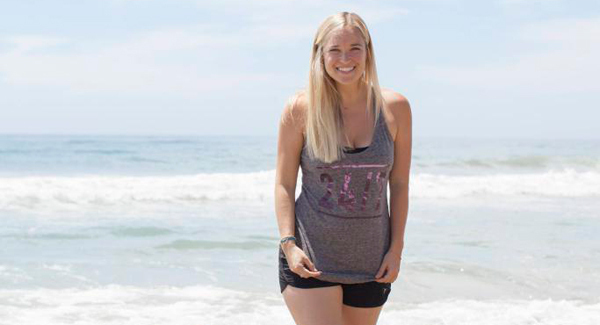
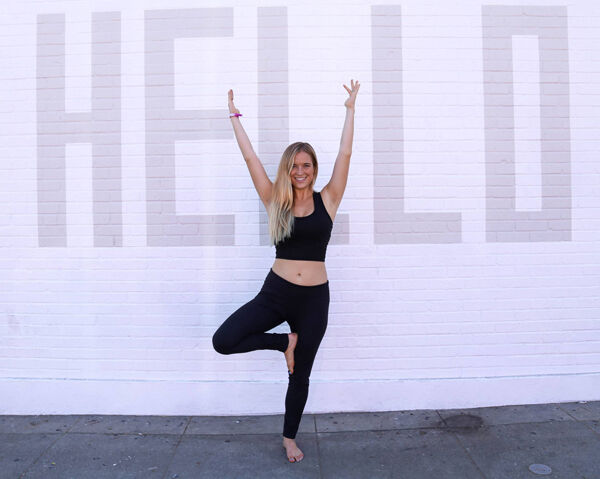
BLOGGER Jordan Younger has more than 138,000 followers observing her every green smoothie and yoga pose on Instagram and her website, The Balanced Blonde.
A California native, the 25-year-old is part of a newly emergent species of wellness stars who sit somewhere between girl bands and celebrity chefs on the fame barometer.
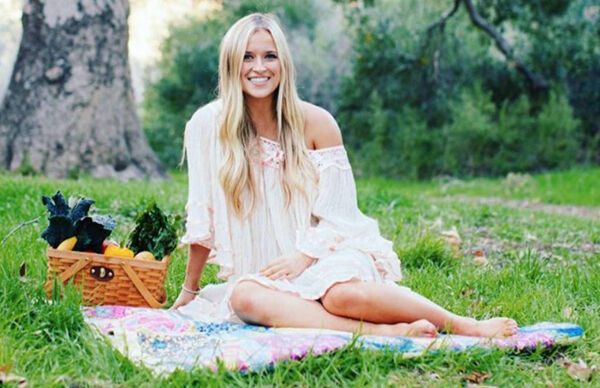
As such, she’s the definition of all-American wholesomeness: chirpy and positive, perfect teeth, long blonde hair and symmetrical Nordic features.
Her apartment in Brentwood, an affluent but young and buzzy neighbourhood of Los Angeles, is surrounded by juice bars, raw cafés, gyms and yoga studios.
She can walk to Whole Foods, the beach or into the mountains, perfect backdrops all of them for the sunny, smiling photos she posts on her blog.
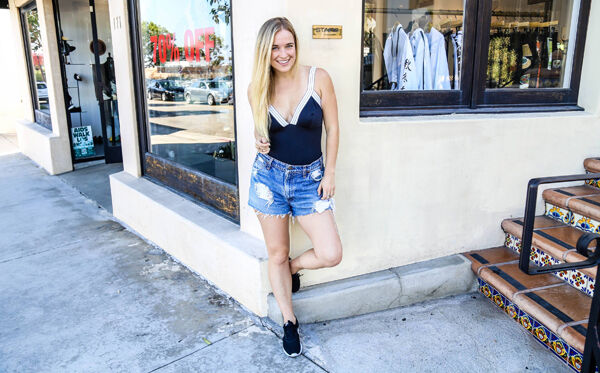
When I speak to her, she’s training for the LA marathon; her run route takes her down Rodeo Drive and past the Beverly Wilshire Hotel.
In fact, Jordan Younger is so well suited to her surroundings that there’s an almost allegorical quality to what happened when she moved to the colder and darker climes of Manhattan for grad school.
Having just launched her blog, then called The Blonde Vegan, she became obsessed with following the highly restrictive plant-based diet she had set herself: no meat, fish, eggs, dairy, gluten or legumes; no fried foods, sauces, oils, flour or sugar, and only a few types of grain.
Her inner health freak ate itself, as it were.
Emotionally drained, physically debilitated and borderline mentally ill after just over a year of this, she was caught by a reader eating a chicken salad in a café.
Younger had finally admitted to herself that she had an eating disorder.
“I know”, came the reaction from her mother when she called home, aged 23, to California to break the news.
“In the week and a half before I said anything on the blog, I was scared to be seen in public,” she says.
“I was terrified about walking through the grocery store with eggs and fish in my basket. Luckily, that person [who saw me] was really understanding.”
The rest of them would not be so kind. Younger was suffering from an illness that is on the rise directly in line with the wellness scene that she’s part of.
Orthorexia nervosa is an obsession with what the internet calls ‘clean eating’ — a diet free from additives, preservatives and other chemicals, sometimes from animal products and often also from several food groups at a time.
Things until recently considered staples, such as sugar and bread, are off the list and in some cases so is solid food. At her most extreme, Younger undertook a juice-only ‘cleanse’ for 30 days.
However, veganism comes with its own set of extremes — namely, its most vocal adherents.
When Younger uploaded a blogpost with her reasons for transitioning away from the lifestyle, her website crashed under the interest.
Up and running again an hour later, it, and her Instagram feed, had been inundated with comments, even death threats.
“She was a fake all along; she was only vegan to grow her followers; she’s fame obsessed, a horrible person,” Younger lists the most common refrains, until her voice cracks.
“She’s fat and ugly and everyone hates her.”
When she wrote the post, her hair was falling out in clumps, her periods had stopped and her skin was inflamed and sore.
Due to an excess of betacarotene in her diet, it had also turned a muddy shade of orange.
(“Carrots and sweet potatoes were two of the only things that were OK to eat.”)
She had delved deep into her eating disorder, describing in detail the psychological distress she experienced around food to her followers before she had told many friends.
Still, the commenters had little regard for her condition, only for what they perceived to be fraudulent behaviour on her part: weakness, dishonesty and disloyalty to the vegan cause.
If the internet has taught us anything, it’s that you don’t need a pitchfork to join an angry mob these days.
“A lot of these people had been my earliest supporters,” she says.
“People I felt like I knew were telling me they couldn’t speak to me until I saw the light again. I didn’t sleep at all that whole week.”
Orthorexia is a product of the extremes that frame any modern discussion around food, nutrition, health and beauty.
On one hand, the conflicting rules of thousands of diets and the multi-million euro industry they have spawned over the past 40 years; on the other, an endless supply of cheap, processed food that, while bad for us, is nevertheless fetishised — and even imitated in some of the most haute kitchens in the world.
The obesity crisis versus size zero. Health as a status symbol for some; the introduction of a fat tax for others.
In a 2011 survey of psychologists and social workers, more than two thirds reported working with patients who displayed signs of the condition.
“Orthorexia is easier to develop now than it ever has been,” Younger says.
“Those of us interested in being kind to our bodies are freaked out by all the stuff you hear about how bad things are for you. I had crazy anxiety around food. I was terrified and fascinated. I couldn’t go to bed without obsessing about breakfast.”
Wellness, the latter-day cult of clean eating, exercise and motivational sloganeering-cum spirituality is fronted, for the most part, by glowing, aspiration-inducing young women such as food bloggers Deliciously Ella (918,000 Instagram followers), yoga tutor Caitlin Turner (316,000) and personal trainer Kayla Itsines (5.5 million).
They’re as photogenic as the smoothie bowls and rainbow chard that fill their feeds, and they sell their lifestyles via recipe books, clothing lines and fitness regimes on their websites.
(Younger still sells €35 five-day juice cleanse packages and TBB-branded fitness gear on hers.)
When it comes to activating the self-improvement reflex, they’re more effective than a New Year’s Day hangover, and they’re changing the way we eat.
However, has our new interest in health simply sanctioned ever more complex food neuroses, body dysmorphia and obsessive behaviour?
When I was a teenager, we worshipped Kate Moss but we knew that having a cigarette for breakfast in homage was Not A Good Idea.
The closest I came was only eating yoghurt for a week or so. However, the worry is that teenage girls who follow health bloggers are forming unhealthy relationships with food under the guise of doing the right thing.
Why wouldn’t you follow a restrictive diet if you were told it was good for you? And isn’t that the first step towards orthorexia?
Many of the young women who boast hundreds of thousands of followers on Instagram are extremely thin.
Yoga devotee and “lifestyle photojournalist” Sjana Elise Earp (1.2 million followers) regularly posts images of herself in bikinis and warrior poses that emphasise her tiny waist.
Those who follow the trainer Kayla Itsines’s “bikini body guide” fitness regime tag their posts #bbg - there are more than three million of them, all featuring “clean” recipes, ripped abs and all-important transition shots.
One need only glance at the skinny limbs, protruding ribs and food diaries posted under the hashtag #thinstagram to see that the eating disorder community that once thrived online (but had faded after heavy policing by host sites) has simply moved over to the social media platform instead.
“The rise of the insta-anorexic, who dresses up an eating disorder with a green juice and says, ‘I’m strong not skinny,’ but is completely emaciated, is a real worry,” says James Duigan, the founder of the Bodyism gym, with its “clean and lean” philosophy.
“Social media plays into people’s deepest insecurities. Instagram should come with a health warning,” Younger agrees with Duigan.
“It’s hard not to fall down the rabbit hole of comparing yourself with others.”
During her vegan odyssey, she once forced herself to drink a 12-banana smoothie on the advice of a blogger (it incapacitated her for almost a whole day).
“I was really vulnerable. When you’re trying to get your health under control, you listen to other people.”
She says she is careful not to suggest her way of life as a fix-all for her readers, nor that her own existence is as perfect as many highly curated Instagram accounts often suggest.
“I’d never tell them you have to eat one way to look one way. You have to be authentic. I want people to know what real life is like. I’d post a picture of me looking like this.”
(It’s first thing in the morning, so she has her hair in a bun, isn’t wearing make-up and, predictably, looks fresher than most would in that state.)
“People are catching on and realising that authenticity is more interesting than all these perfect photos.”
Hence her new ‘balanced’ persona. However, all balance is relative: yours might be not going back for that second helping of lasagne.
Younger’s, as laid out in the recipes at the back of her memoir, Breaking Vegan, remains firmly within the dairy-free, gluten-free realm of almond butter, coconut oil, buckwheat groats and raw cacao.
Anyone assuming her turn away from veganism might precipitate a wider shrugging off of the ideology that has overhauled your kitchen cupboards will be disappointed.
However, there has been something of a backlash from those, like Younger, who doubt the perfect façade of the wellness movement.
There’s already a ‘Deliciously Stella’ parody account on Instagram (127,000 followers and a steady stream of carbs, sweets, booze and own-brand tote bags printed with the slogan “You can’t milk an almond”).
Columnists are being churlish about chia seeds. In the alt sitcom Broad City, one character works in (and relentlessly mocks) a spiritual spinning studio clearly based on the New York It-class SoulCycle.
In November, an 18-year-old Australian blogger named Essena O’Neill made headlines for pointing out her own bad Instagram habits, deleting more than 2,000 images and rewriting the captions of the ones that remained.
“Stomach sucked in, strategic pose, pushed-up boobs. I want girls to know this isn’t candid life it’s contrived perfection,” read one.
She spoke out about how she skipped meals (she remains a vegan), about empty consumerism, and recommended quitting social media, as she has now done.
O’Neill had more than half a million followers, and claims to have made up to €1,165 per post from sponsorship deals with brands.
PR man and creative consultant Micah Paldino calls these types of pictures a “pretty girl in an alleyway with a Céline handbag” shot.
Frustrated with the hyper-real gloss of Instagram and its perfect inhabitants, he set about creating something he felt was more authentic: an entirely fictional It-girl called Blaise Bender, whose story arc is played out in twice-weekly posts on the platform.
“It’s satirical,” he says.
“[Social media] has become so manipulative, I wanted to combat these phony bloggers who never declare when products are placed or paid for. What are we seeing that is even real any more? Blaise isn’t real, but she’s more real than they are.”
In the ultimate satirical twist, Paldino reports several brands are interested in being featured on Blaise’s feed, and he has signed five new clients off the back of the project.
“I’m choosing the products that I think deserve the attention,” he says.
Emily Sheffield, Vogue’s deputy editor and editor of its teen offshoot Miss Vogue, is willing to defend Instagram’s aspirational side.
“It encourages us all to up the ante,” she says.
“To make more of our lives and project who we want to be. I think teenagers are getting wise to these visuals and guessing at the reality behind them.”
So wise, in fact, that many now have what is known as a Finstagram or ‘fake Instagram’ — a second account that is locked to all but their closest friends and family.
This is the place for no make-up shots, eating chips and for pulling faces, while the other unsecured account is full of sunsets and salads. So perhaps the kids are all right, after all.
In fact, Jordan Younger’s difficulties with food had their roots in something all too familiar and unpoliceable — something that anyone who has ever experienced the one upside of grief will understand.
It was the end of a relationship that led Younger to become vegan in the first place, the break-up diet being one of the most effective known to man (or, realistically, to woman).
“I was barely eating at all and I’d already lost a lot of weight,” she says.
“Finding veganism allowed me to maintain that. People would ask how I did it, and I’d say, ‘I’m vegan. I eat all these vegetables,’ but I always knew the truth was not really that. It was effective, though. I kept all that weight off for years.”
Younger believes this is one of the reasons she became quite so obsessive about her diet.
She didn’t even allow herself the vegan-friendly treats that fell within the strict parameters of her regime.
In this respect, she concedes the commenters who blamed her problems on being too restrictive rather than veganism per se have a point.
She has practised yoga since her early teens, and continues to do so almost every day.
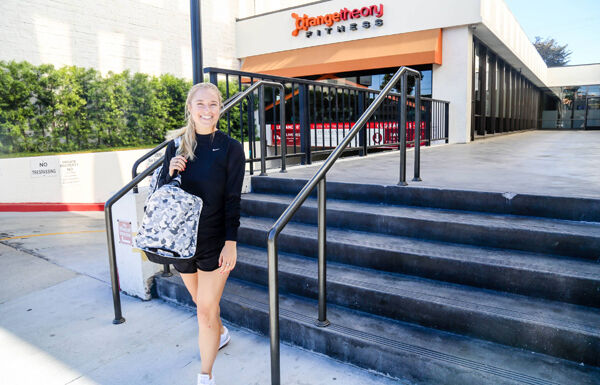
In addition to her current marathon prep, she’s also doing a six-week high-intensity-interval-training, weight-loss challenge at her gym three times a week, although she is quick to add she isn’t in it for that reason.
“It’s just fun. I feel confident and better with the way I eat than I used to, so I don’t have those plaguing feelings any more. You can be careful without being obsessed and you can avoid things without being fearful of them,” she says.
To anyone who counts calories from the moment they sit down at the dinner table, or chooses lunch on the basis of whether it will fill you up as opposed to how it tastes, this will sound like true enlightenment.
To anyone who has made a batch of biscuits only to eat all of them immediately or thrown away perfectly good food to stop themselves doing so, Younger’s book provides the other side of the conversation you’re having on Instagram right now about sweet potato fries.
“I don’t have those intense moments of anxiety about food any more,” she tells me.
“I feel like I’ve come a long way.”
- Breaking Vegan is published by Fair Winds Press, €16.99
Dr Steven Bratman, an American physician, first described orthorexia in 1997. However, is not a formal diagnosis or a recognised eating disorder.
Characteristics of orthorexia may include:
* A preoccupation with the composition and origin of food.
* Giving priority to biologically pure foods, leading to significant diet limitations.
* Feelings of guilt and anxiety when the “rules” are broken, resulting in even more stringent diet behaviours.
* The rules becoming more complex and detailed over time.
* Avoiding social situations where it’s difficult to follow food-related rules.
* A loss of moderation and balance, leading to an obsession with food and withdrawal from life.
* Causes may be hidden and masked by the desire for total control over health and life, and the belief that own perspectives on eating are the “best”.
Few studies have been conducted internationally to determine the prevalence of orthorexia.
Also, research instruments used to assess it have not been thoroughly validated and information on treatment remains limited.
* Bodywhys, The Eating Disorders Association of Ireland, see: www.bodywhys.ie
CONNECT WITH US TODAY



Be the first to know the latest news and updates









