How to make homework more productive and enjoyable, for both children and parents
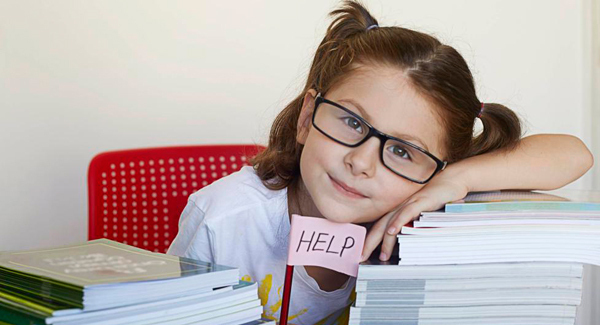
ASK any parent of a school-going child what they like most about summertime, and for most of us the answer is the same â two months free from school lunches and homework the twin pillars of term-time headaches.
But while school lunches can be a boring but doable chore, homework is the real battle in many homes.
Why is homework such a problem, why is it important, and are there ways to make it easier?
Homework is often a challenge for kids who come in tired after a day at school, but equally, itâs difficult for parents, especially in homes where both are working.
I remember so many evenings coming home at 7pm, dreading sitting down with my daughter to go over her homework - in theory it was a good way to see what was going on at school, but in reality, it was the last thing I wanted to do, especially so close to bedtime.

An OECD study in 2014 found that students who do more hours of homework score better in tests. And while many may nevertheless resent its existence, homework is here to stay.
Even educational professionals can find it challenging.
âA night off homework gets a cheer from everyone in our house,â says educational psychologist Deirdre Griffin.
âBut itâs the way for the teacher to see what has been learned thatâs the real function of homework.â
There can be a problem if parents are correcting homework and sending it in error free.
This breaks âthe communication link with the teacher,â says Griffin.
Niamh Fortune, who lectures in Maynooth University Froebel Department of Primary and Early Childhood Education, says homework shouldnât be a battle.
âIf thereâs a huge difficulty, look at why that is. Is it going on too long? Is it too difficult? If parents are having to do the homework, put a note in the journal.â

Yvonne Ryan, a primary school teacher, agrees.
âIf itâs becoming a negative experience, talk to the teacher. All teachers are different but Iâd say if children are focused and working, stop after 30 minutes and write a note in the diary.â
Indeed, âHow long should homework take?â is a question frazzled parents often ask.
Many teachers, like Dublin-based Kathryn McCloskey, give that information at the beginning of the year.
âI send home a letter in September to explain what I expect and my views on homework.
"It depends on the class level - at 5th class level I would say that 40 minutes of good homework is enough and that if parents are happy that their child genuinely worked hard for the 40 minutes then thatâs enough for me.â
Beyond building links with the school, there are other benefits too.
âHomework is a fantastic opportunity to get extra one-to-one support that teachers just canât give,â says Ryan.
âAnd itâs a chance for kids to measure themselves. It teaches them work ethic, and to work independently.
"Also a child might be more comfortable telling a parent about something theyâre not understanding, rather than telling teacher and worrying about being singled out at school.â

Knowing there are benefits may help reduce parental resentment, but it doesnât make the battle any easier, so our experts have some practical tips.
âThere should be a tidy desk with no distractions, and itâs also important to take a breather before starting,â advises Griffin.
âLet them eat and drink something, and maybe have a burst of physical exercise. Start with your childâs favourite subject, then their least favourite subject, and end with something middling so they walk away feeling good.â
Fortune agrees, and says itâs OK to pause in between if needed. âBreak it up into two slots â say âLetâs do our favourite things first, then letâs get a breath of fresh air.â And then come back and do more.
"In wintertime especially, kids often need air after being in school all day. And parents should be hands off â give kids the skill to go and find the answer.â
McCloskey also says itâs important that the homework is completed by the child, not the parent.
âI think children should be encouraged to sit independently and do their homework themselves, but it should always be checked over by a parent so the child knows they need to put in some level of effort.
"And leave the teacher to do the correcting and to deal with the standard that has been handed up.â

Reading is the cornerstone of homework in Irish households, but there are ways to vary it up.
âGet children to read aloud to you, but it doesnât necessarily have to be from a reading book,â says McCloskey.
âGet them to read a recipe aloud or a newspaper article or sports review for the older kids.â
In fact there are lots of ways to make homework more fun, says Griffin.
âGet your child to be the teacher, and pretend you donât understand how to do the sum. Get it wrong, and ask them questions.â
Or try a physical game: âChildren take one step forward when they get a spelling or table right, or freeze if they get it wrong. They donât move back â thatâs really important. Theyâre allowed to ask you a horribly hard spelling every second time too.â
Or try moving homework outside the house entirely, says Ryan.
âTake your child to the library to choose books theyâd like to read themselves, or have a family day out somewhere historical, like Kilmainham Gaol or a local monument.â
Of course, it may not be that the homework is too difficult â a child may find it hard to concentrate due to tiredness.
Healthy sleep habits are key to concentration says sleep therapist Jean OâHanlon.

âMany important restorative processes take place during sleep that ensure optimal brain functioning the next day. Memory consolidation is one of these key processes and because of this, sleep is vital for learning.
"We also know that children who sleep well will display better decision- making skills and social skills as well as enhanced creativity.â
âChildren aged five to 12 years and teenagers require nine to 11 hours sleep per night. This is a general guideline â each child is different and some may need less or more.â
Hunger can also impact concentration, says dietitian Louise Reynolds.
âBreakfast is so important to help with concentration in school and similarly, a healthy snack is important for homework.
"Fish is one of the first things people think of as brain food and certainly fish oils would be a very beneficial food to include in a childâs diet.
"It wonât improve scores in a particular test â thereâs no magic bullet â but because childrenâs brains are growing, itâs important to include it in the diet.
âWhen kids come in from school, steer clear of sugary foods that will give a quick burst of energy and a slump afterwards.

"Try a slice of wholemeal toast with peanut butter, rice cakes, banana, or a small chicken sandwich on a wholemeal bagel.
"Cut up slices of pineapple or melon and put them in a bowl in the fridge so kids can easily access them.
âAnd to drink, give milk or water. Steer clear of juice â instead put a jug of water in the fridge with slices of orange.â
But above all, if there are nights when nobody wins the homework battle (and usually, when it goes wrong, there are no winners) donât be too hard on yourself.
Influential paediatrician and psychoanalyst DW Winnicott developed the concept of the âordinarily devotedâ or the âgood enough parentâ.
âWe donât have to be perfect, we just need to be good enough,â says Griffin.
* Endlesswordplay is a free app that helps children to learn simple spellings in a fun, colourful way â suitable for younger children.
* CĂșla Caint is a gorgeous free app from TG4. Children touch pictures on the screen, then see and hear the word as Gaeilge.
* www.Storybird.com is an excellent online tool to help motivate children with writing, prompted by pictures. Children write their own stories in book format.
* www.Mystorybook.com allows children to write stories and choose simple graphics to illustrate them.
* Math Training for kids (Android) is a free app with simple sums to try.
* Interactive Telling Time Lite (iOS) and Telling Time â Learning Time (Android) are free apps that teach kids to tell the time in a fun, easy to follow way.









