120,000 to walk for suicide awareness. Will you be one of them?
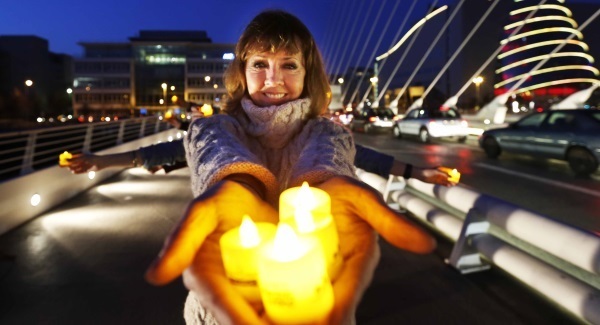
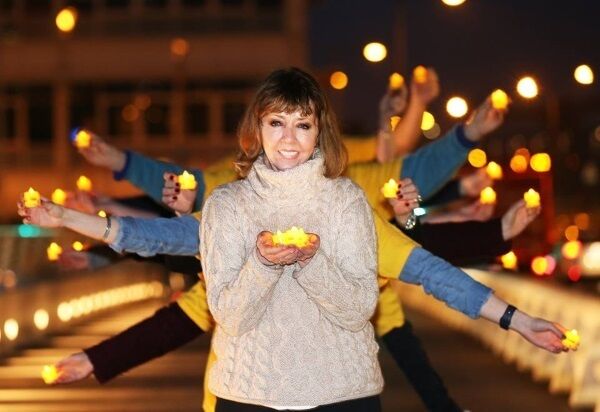
In cities across the world this weekend, from Taipei to Shanghai, from Dubai to Christchurch, people will set their alarm clocks for the small hours of Saturday morning. They will rise groggily from warm beds to gather at 4.15am at over 100 venues – the bulk of them in Ireland, 26 abroad.
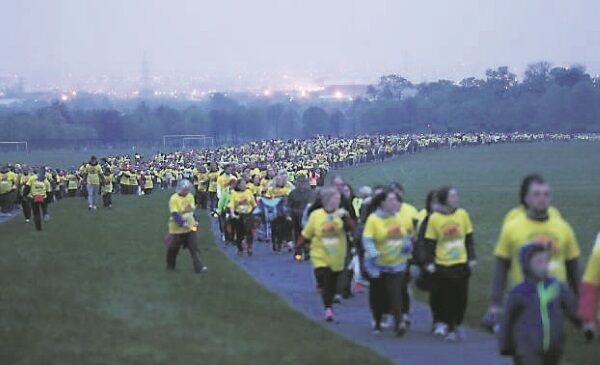
Upwards of 120,000 will participate in Darkness into Light, a poignant 45-minute walk that no matter what your time zone straddles the darkness and the dawn. The first walk will be in Amsterdam, the final one across San Francisco’s Golden Gate Bridge. Now in its eighth year, Darkness into Light is the annual fundraising and awareness event for Pieta House, the centre for the prevention of self-harm or suicide.
Pieta House founder Joan Freeman got the idea for Darkness into Light while chatting with a young woman who had done 12 marathons.
“Her favourite was in Boston, 17 miles through the night. I got the idea of doing something in Ireland, not at night-time but near the dawn. The hour before dawn really is the darkest in so many ways for people. It’s the hour before they come through with a decision to live or die.”
Four hundred people turned out for the first Darkness into Light in Phoenix Park. Joan was amazed.
“I nearly died!” Last year, 13,000 gathered there. “It has turned into an event for people, a really significant day in the Irish year. Groups of friends do it and go for breakfast after.”
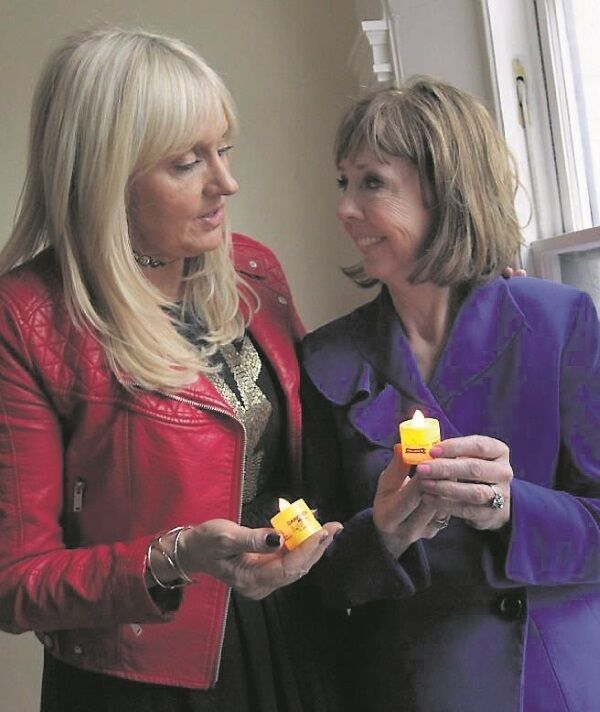
Pieta House began in Lucan, Co Dublin, 10 years ago. It will open its 10th centre in Waterford next month and set up as a pilot project in New York last October. It has helped over 20,000 people in suicidal distress or engaging in self-harm. Over 6,000 came through its doors in 2015.
“Four people went on to take their lives last year. One is too many. When this happens, it devastates us as an organisation,” she says.
Joan’s reasons for setting up Pieta House which is a free, one-to-one therapeutic service, were twofold. As a psychologist working in the clinical sector, she saw that people in crisis were hugely reluctant to go to A&E or their GP because of stigma and because they feared going into a psychiatric hospital.
READ NEXT: Ireland's cynical view of mental health slowly changing for better
“The medical model was the only way of helping people and I was very compliant with that. Then I experienced suicide on a personal level. The loss of a loved one. I saw suicide from the other side,” she says.
She did three years research to find the best way to help people in crisis. She discovered compassion and dignity had to be at the core of any service.
“We use a solution-focused, strengths-based approach. The purpose of the initial assessment is to see how high-risk the person is and to send them out with a piece of hope. When people are in crisis, they feel they’re of no use to society, that they’ve done nothing with their life, so they never see a future,” she says.
The first meeting is to help them identify why they want to die and then why they want to live.
“They come in thinking they want to die. They realise they don’t. They just want to stop the pain. If they see only one reason to live — their children or not wanting to hurt their mother — they go out with something they didn’t come in with.”
The Pieta House goal is to have a centre within 100km of every person in Ireland. “That’s 60 miles. It takes about an hour. It’s not too long a journey when you consider we had nothing before.”
In recent weeks, it emerged the Department of Health and the HSE had removed €12m from the State’s mental health budget for 2016. Last week, thousands took to Twitter to vent outrage at the low turnout of TDs for a Dáil debate on mental health. For years, Joan Freeman was indignant with the Government for providing such little funding to fight suicide.
However, her indignation has changed to realisation that a state of four and a half million people can’t fund everything. Taxes are limited, she says, and “have to be spread across major stuff like schools, hospitals and roads”.
She believes the Government has the intention to provide services, but can’t do the deed. Instead, individuals in the community respond to needs in society by setting up charities. “The charity [or NGO] takes up the role that the Government should be providing but can’t. Charities and NGOs are the third arm of this country, filling gaps the Government can’t. Without them, this country would be on its knees. Where would we be if we didn’t have the Society of St Vincent de Paul, Focus Ireland, Samaritans, Simon?”
However, she’s not letting the Government off the hook. She wants a public reframing of what charities are and what they do. And the Government should be first up in acknowledging its dependence on the sector, she says. In the 10 years since Pieta House was founded, she says it has gone from providing a service to being expected to provide a service.
And the real heroes, she says, are the public in communities across Ireland, and communities of Irish abroad, such as will gather for Darkness into Light this Saturday.
“When we were setting up Pieta House in New York, we saw everything was State-run. There’s no personal response like we have in Ireland. There’s a love of humanity among the Irish.
“I really believe our whole perception of charities needs to change. The word ‘charity’ conjures up something apologetic yet these are very well-run, professional services. The word ‘donate’ is wrong. Rather, people invest in services.”
Kathleen Lynch, acting Minister of State for Primary Care, Mental Health and Disability, says the Government has always accepted its reliance on NGOs to fill gaps.
“It’s very obvious the Government can’t be on every street corner. And a lot of people feel more comfortable going to a NGO than to a State- provided service. I also think we give unconsciously [to charity] to a great extent, but I don’t believe we do it without recognising that the service will be there if or when we need it.”
Suicide is a startling event, says Joan Freeman. “Most people assume someone who is suicidal has suffered from long-term mental health difficulties. But the reality of suicide is always so startling — people didn’t see it coming because the person didn’t have a history of mental ill-health. It can happen to anyone,” she says.
In seven or eight out of 10 cases, suicide is a reaction to a life event.
“People saw what we were talking about when suicide rates went up immediately the recession started.” Supporting the walk from Darkness into Light this weekend is an investment in all of us. nwww.darknessintolight.ie.
CONNECT WITH US TODAY



Be the first to know the latest news and updates

















