Joan Bergin on dressing the stars in some of the most famous TV shows and films
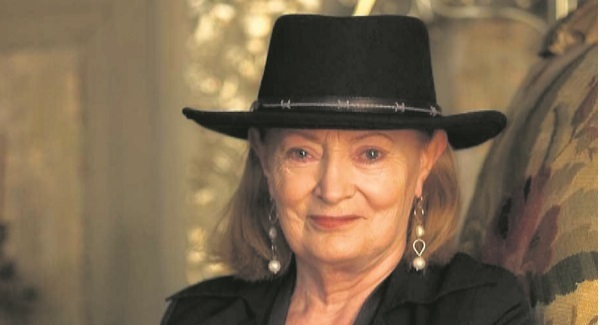
"I WAS giving a talk once and a girl asking me, âhave you spoken to Brad Pitt?â and I said, âNo, but Iâve stood in the door and thrown his costume at himâ.â A 30-year career as a costume designer in film and on stage has left Joan Bergin with some fantastic anecdotes to tell.
Berginâs working relationship with Jim Sheridan, three Emmy awards, six IFTAs and a list of credits as long and impressive as the sleeves on one of her Camelot gowns all originated in her own stage-acting career.
She studied at Focus Theatre, and still remembers the moment she realised that her talents would be put to better use backstage rather than in the limelight. âI was onstage playing the lead opposite Gabriel Byrne in A Month in the Country,â Bergin says.
âI had a reasonable talent but not a great talent. I suddenly felt I wouldnât make it as an actress. From that day on I didnât act; I thought Iâd much prefer to be the one behind the scenes so I started designing costumes,â she says.
Berginâs role is established early in the pre-production process with meetings with the director to discuss the overall vision for the project. âIn many ways you prepare the whole look and itâs quite a responsibility,â she says. âYou start work before the casting or any creative discussion involving the actors.â
A large part of her success has no doubt come from her innate curiosity and love of in-depth research, noticeable in her work on shows like Vikings and The Tudors. She is currently working on a pilot for director Robert Stromburg. Called Dawn, itâs set when Neanderthals roamed the earth with modern humans.
âIâm researching everything at the moment, When you look into the evidence you get surprises, I never knew for example that Neanderthals were pale skinned and some of them had red hair, while Homo sapiens were dusky-skinned, the opposite of what we are led to believe. Finding these things is what brings something unique to a project,â she says.
Bergin is aware of how important costume is for actors and seeing the first fitting is something she still finds rewarding. âIt never fails to please when you see someone beaming back at their reflection,â she says.
âOne of the great compliments of my working life was when Meryl Streep came in when we were doing Dancing at Lughnasa. She had asked to see everything her character would wear and I had it all laid out. She turned to me at the end and gave me a hug and said, âWeâre thereâ.â
There has been a recent emphasis on gender imbalance in employment in theatre and film, triggered in part by the #wakingthefeminists Abbey Theatre sit-in, but costume design is different. âIâve heard itâs around 30 women to every man, but there are lots of top male designers at the moment, often with a background in architecture,â Bergin says.
âHistorically, the evolution was from seamstress to wardrobe mistress to costume design. There were women like Edith Head, who worked with stars like Hedy Lamarr and Marlene Dietrich and might have her name on six films at a time.â
However, this yearâs Oscars controversy surrounding Mad Max costume designer Jenny Beavan, who Stephen Fry jokingly described as looking âlike a bag ladyâ when she went up to collect her award, is an indicator that things may not have changed all that much for women in film. âAt this stage in her career and with all sheâs achieved, the perception is still that anyone associated with Hollywood has to be madly glamorous ⊠and thin enough.â
âThatâs why I always wear black and a cowboy hat; I have done for years and years. I present myself in a very spare streamlined way partly so that I donât have to think about what to put on every morning. People say, âMy god, Joan, you never change,â and I say, âDo you mean I never change my clothes?ââ
- Joan Bergin will hold a costume workshop and display some of her costumes at Fastnet Short Film Festival in Schull, Co Cork. The festival runs from May 25-29. www.fastnetfilmfestival.comÂ
In The Name of the Father (1993)
Despite having worked on many big-budget, elaborate projects, Bergin describes Jim Sheridanâs big screen depiction of The Guildford Four story as the project of which she remains proudest to this day.
âWhen youâre working with Sheridan and Daniel Day Lewis, youâre really working with stars. That was a golden time for Irish film, when the business suddenly came of age and it was, âWow, my god, weâre making films that are going to the Oscars.ââ
Not only was it a magical era for Irish cinema, it was also a moving tale to tell, with visits from real-life surviving members of the Guildford Four to the set adding to the sense of purpose for cast and crew. âIt was an Irish story and we all felt very passionate about telling the injustice of that story,â she says.
âWe really created a moment of change for the characters through their clothes; Gerry Conlon goes to a squat and in the next scene, theyâre in the park dressed up in their hippy-dippy costumes. I may have done more wow-factor pieces in my career, but that was where I contributed the most.â
The Tudors (2007-2010)
Despite three Emmy awards for the four-season historical drama based on the court of Henry VIII, Bergin came under fire from historical costume experts for her take on Tudor style. Some criticised her use of fabrics that were unavailable at the time, low necklines on dresses and, not least, the casting choice of the sultry Jonathan Rhys Myers in the role of Henry.
âSometimes youâd be itching to take them on,â Bergin says of her more pedantic critics.
âTheyâre often coming from received wisdom and rely on a few paintings from Holbein, which showed high necklines.â
Berginâs research uncovered a letter from Henryâs Spanish ambassador describing a lady at court drunkenly leaning across the dinner table and commenting, âOne could see the rose surround of her nipple,â which certainly suggests a low neckline.
Bergin is also clear that her job isnât to recreate history; she must reinterpret for a modern audience, as must the casting director. âHenry was 6â3â, and blonde, with heaps of charisma; he was very beautiful for the period that he lived in. Johnny is the modern equivalent.â
The Field (1990)
Jim Sheridanâs adaptation of John B Keaneâs play starred Richard Harris in his Oscar-winning role as the Bull McCabe. Even in a film restricted by the visual palette presented by the play, Bergin took a uniquely imaginative approach to the individual characters: âFor John Hurt as Bird OâDonnell I had this motivation in my mind of the fallen priest; a strange, clerical touch. When he cycled his bike he wore a long navy raincoat with the sleeves cut out and another raincoat underneath, and the whole lot flapping, like a cross between a defrocked priest and a demented duck.
âHarris was this larger-than- life character and it was just amazing, you could nearly watch him grow when he got into character. I worked hard to evoke a part of the world I know quite well, Connemara. We had fabrics that looked woven from the mosses and the grasses on the banks. The project was wonderful, not least when we filmed in Leenane and it rained for 28 days and nights!â
The Prestige (2006)
Christopher Nolanâs tale of 19th century magicians featured Berginâs designs inspired by affluent European fashions of the era.
Her male characters wore long wool coats with Astrakhan collars, ornate waistcoats and pocket watches.
The project also brought memorable encounters with David Bowie, who played the part of Nikola Tesla in the film:
âHe walked into the first meeting in torn jeans and a backwards baseball cap, looking like a retired New York ballet dancer,â recalls Bergin.
Suddenly I thought, âMy god, thatâs David Bowie.â I got worried that my knees were going to shake so I asked if I could sit down.
Sometimes, on big projects, you are allowed to commission a top illustrator to draw the character in costume so I had these wonderful drawings with me to show him.
Weeks later, I was standing there on set with my nose all red with cold and he stepped out of a carriage and came over and grabbed the lapel of my jacket and said, âI love my clothes.â
That was the second time my knees went.â















