Let’s ensure we open the door to ballet for all
I WAS 12 when I saw my first ballet. It was a school tour and most of us viewed it as a chance to get out of lessons for a few hours. But as the music struck up and the ballerinas brought the story of a princess cursed to become a swan to life, I was hooked. The grace, beauty and strength of the dancers remained with me, and Tchaikovsky’s score was indelibly imprinted on my pre-teen brain.
Haven taken just one ballet lesson in my life — where, with one cutting glance, the teacher told me I would never have the makings of a ballerina — it is unlikely I would ever have seen a live ballet performance. Without that school tour, it is unlikely I would ever have been touched by the magic of Swan Lake or by the need to ensure such ancient expressive art forms are supported.
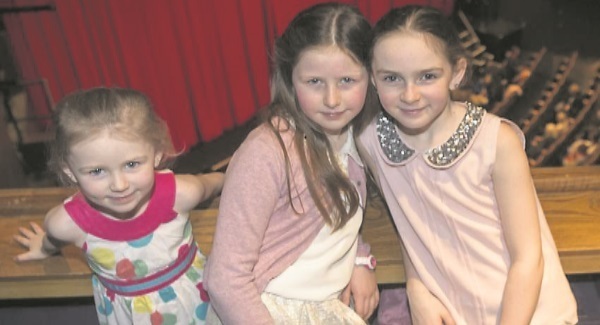
Throughout the years, Swan Lake has continued to hold a magical sway over me and I have even managed to bring a reluctant husband to a performance in Dublin by one of the Russian super-companies and he too was persuaded to its brilliance. So when the Royal Moscow Ballet brought Sleeping Beauty to the Cork Opera House, I knew it was time to try and pass on the ballet bug to my reluctant girls, aged 10, eight and four.
“But will there be any talking?” the 10-year-old, more used to overloaded sensory excitement, asked continuously, despite my assurances she would be able to follow the story.
At the Opera House, it was the excited chatter more usually associated with the panto as a near full house of children, young teens and a distinctly younger profile reassured me that a future for the art form devoid of words was safe, and would survive in a world of ceaseless chatter.
We watched as the ballerinas once again told a story with every sinew in their bodies. Brightly-coloured tutus in green, red, yellow and blue pirouetted into the children’s consciousness. A good fairy in purple and an evil Maleficent in black told a story as old as time. And it was obvious Tchaikovsky’s magical notes could still cast a spell over a generation more accustomed to pop than piccolos.
The fact the audience was packed with youthful faces is a testament to the work done every year by the Cork City Ballet company who manage to bring so many of the top Russian companies over to perform and to the sheer number of ballet schools in Cork. There are even adult beginner lessons available — for those who want to show just how wrong early assessments by fearsome ballet teachers can be — for €15 per class.
Following on from the firm foundations set down by Joan Denise Moriarty who founded her school in 1940, earlier this month, the newly-established Youth Ballet Company had its inaugural performance at the Firkin Crane. The Youth Company brings young dancers from disparate dance schools together to work as a company and train with internationally recognised teachers and choreographers.
While there are literally thousands of aspiring ballerinas out there who will be there to support the ballet in years to come, my fear is that, without special deals to encourage schools to bring classes to see the ballet, there is very little chance of catching the imagination of girls or boys who, like me, would never have been brought to the ballet. I would have lost out on the magic of Swan Lake if my class teacher had not brought us along.
Top-class ballet productions are expensive to put on, and sometimes don’t even break even, but with family tickets to the matinee costing €120, how many other children are losing out on the magical spell cast by men and women baring their souls in tights and tutus?
Much to my delight, my lot not only enjoyed the ballet but have agreed to come again.
I might even treat them to Swan Lake next time.















