Vintage view: Old ceramics
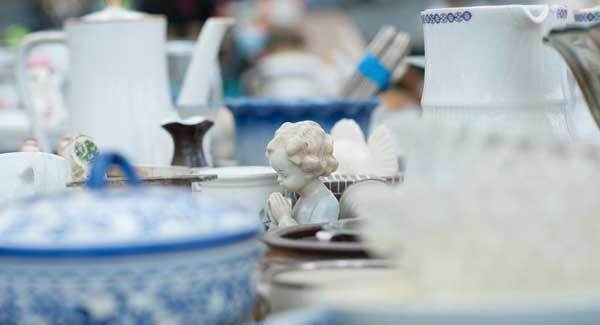
When we fall in love with some old thing, does it really matter how much we know about its origins, its fabrics, its makers?
For most appreciative collectors, accruing highly specific knowledge lets them experience a vivid very personal magic during a lifetime’s chase.
Imagine knowing what country, what factory, what workshop or studio, which technique and in some instances, the very hands that may have moulded, painted or carved a vintage item, the instant recognition of an antique and its special moment in the time from which it came?
For the amateur, with their heart in the game rather than any real prospect of profit, feeling part of an inner circle who know the difference, is very gratifying.
Learning more about an area like ceramics (even the word slides out, rarified and high-brow) may seem daunting.
Just start at the beginning — keep things general rather than knowing more and more about less and less with a specific single area like say Staffordshire flatbacks or first period Belleek.
This week we’ll look at the main types of body — the paste of which the piece is made before it’s glazed. The word ceramic, comes from the Greek word keramos, clay.
Ceramics all start the same way — with the addition of water to minerals mined from the earth, which are finished by hand moulding or wheel turning (often a combination of both) and then ‘fired’ to achieve strength, increased impermeability and in some cases waterproofing.
The clay is a paste, and it’s the paste, together with clues from the decorative glaze on the surfaces that often gives away what sort of ceramic you are holding.
Damaged pieces offer lots of clues buried under the glaze.
I’m an earthy sort of girl — prone to earthenware. It’s a hearty, ancient material and as useful today as it was in medieval times. You might refer to it as pottery — everyday robust pottery.
The most important thing to know about earthenware is that it is fired at low temperatures, and therefore porous.
Terracotta pots breathe beautifully because the materials allows them to leak and sweat out water unless they are glazed to the inside or out and then fired in the kiln again. Early earthenware was decorated with a thin ‘slip’ glaze trailed over the body of the piece.
A very well known example of earthenware would be tin-glazed delftware and you may have seen valuable pieces of salt glazed earthenware.
Salt glazes were produced by simply chucking handfuls of common salts and minerals by the handful directly into the kiln.
Early and provincial earthenware has a weight to it, it’s rounded at the edges, coarse and can be any colour from buff to red.
Later in the 18th century, creamware was produced by using more refined clay and calcined flint, and it did a pretty good job of aping porcelain, making it popular with the masses.
Earthenware was highly regarded by artisan makers as an honest material and was tough enough to be polished on a jeweller’s wheel. It was given genuine social credentials by factories including Whieldon and Wedgwood (in unglazed black, blue and green ‘basalt’ ware) and championed by 19th century art potters, including the wildly eccentric Martin Brothers in Middlesex.
Porcelain or china — the difference is subtle but important. Both contain finer China clay or kaolin.
China, arguable the lesser of the two materials, is often referred to a bone china (which automatically bespeaks some sort of posh Eastern thing).
Bone china was the western attempt to imitate the wonders of Chinese porcelain, imported during the 18th century for the lip-licking upper classes.
European attempts at porcelain (Germany was especially natty with porcelain) used kaolin clay and feldspar rather than the ancient Chinese recipe of glass or silica.
The English put ox bone into the kaolin clay, feldspar, and quartz mixture, making up 30% of their mixture with this phosphate rich material. Fine dinnerware was, and is often made in bone china which because of its cooler firing has a softer, less durable glaze.
Bone china is sometimes referred to as soft paste porcelain (it’s not technically porcelain at all) to distinguish it from the true, hard paste porcelain.
Real porcelain has glassiness to it, it’s ‘vitrified’. The temperature used to fire porcelain is so fierce (up to 1450c that the decorative glaze fuses with the body (clay mix) of the piece, rendering it very strong even in thin profiles.
To spot the difference between porcelain and bone china, look for a chipped area or turn the piece over and examine the foot. Porcelain will look very white, almost blue/white, whereas bone china will have a slightly creamy look.
If it’s a cup and you can see through it when you hold it to the light, chances are it’s a fine bone china, not the much harder true porcelain.
Sliding further down the pole we come to stoneware, which unlike porcelain and china is not vitrified by high firing (1200-1350c).
An earthenware with attitude, the paste often carries impurities and a duller grey look and rough texture if you can find a bitten or chipped area. Materials matter and not everything has a legible mark to tell us the what, where and when.
What are you holding? Is a piece of porcelain, china, a piece of pottery — could it be glass with an opaque coating? Test yourself the next time you’re out on the prowl.
Glazes.

CONNECT WITH US TODAY



Be the first to know the latest news and updates

















