Easter egg survey: Kids’ chocolate overdose a big concern for mums
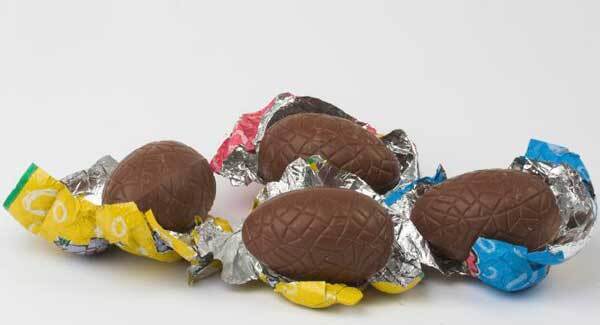
In our survey, well-meaning relatives are identified as the biggest offenders when it comes to giving kids Easter eggs. Clodagh Finn looks at the health implications.             

Easter egg survey: Kids’ chocolate overdose a big concern for mums

THIS Easter, Irish children will eat their way through more than 1.5 million chocolate eggs.

That’s a 168-tonne sugar rush — or enough calories to sustain an adult over 32,000 marathons.

Those kind of figures confirm what we have long suspected: Easter is now just like Christmas.

The weather may be brighter, but parents are under just as much pressure not to disappoint on the big day.

And that means buying lots of chocolate.

The vast majority of mums (87%) will do just that, but the real chocolate splurge is caused by relatives who are prolific egg-givers, according to a MummyPages.ie/Feelgood survey.

Grandparents are the worst offenders.

The Easter Egg Insights study found that more than eight in 10 will give their grandchildren an egg — and often an adult-sized confection.

Almost seven in 10 aunts and uncles and two in five godparents will also get in on the Easter egg act.

No wonder children end up with a stash of several eggs. Two in five children will get between three and five eggs at Easter; 23% of children will get between six and 10 eggs, while 12% will take proud delivery of a staggering 10 to 15 eggs.

It is surprising, then, to find that most mothers (73%) want manufacturers to cut sugar levels in children’s eggs.

The same percentage backs the introduction of a law obliging supermarkets to limit the display of Easter goodies to just one aisle.

If that is so, why do we feel the need to morph into the Easter bunny over the family holidays?

Dr Eva Orsmond (above) offers her own theory. When Easter arrives, there’s a sort of chocolate-egg buy-off between relatives.

“It’s almost like a competition between aunties: who has brought the biggest egg,” Dr Orsmond tells us.

That shows Irish people’s innate kindness, which is good, she says, but, unfortunately, even a single chocolate bunny (100g) has about 550 calories and it contains up to 55 grams of sugar, more than four times the recommended daily allowance for a child.

Earlier this year, the woman better known for putting the leaders through their paces on Operation Transformation spelled out just what it means to live in an obesogenic society — one in four Irish children starting school is now obese — in a one-hour TV documentary Sugar Crash.

She spoke of the dangers of hidden sugars — in soups, sauces, cereals, even bread.

Viewers were shocked at the toll seemingly innocuous fruit juice had taken on a four-year-old girl who had to have her rotting baby teeth surgically removed. She is one of 100 children who end up in Irish hospitals weekly because of the sugar damage done to their teeth.

Dr Orsmond suggests that parents buy smaller eggs and look at the sugar content on the labels.

Four grammes of sugar is the equivalent of one teaspoon of sugar. The recommended daily sugar allowance for children is three to four teaspoons.

Commenting on the Easter Egg Insights survey, she said she was delighted to hear that 51% of people thought parents should be consulted before giving a child a gift of an Easter egg.

“I totally agree with that. It is a great idea to check in with the parent first to ask if chocolate is a suitable gift.

"I mean you wouldn’t give food to a pet because you know that they follow a specific diet,” she says.

However, and here’s the rub, she does appreciate that asking relatives not to give chocolate or asking neighbours if it’s okay to give their children a chocolate present can be socially awkward.

It’s worth doing, though, because the health risks are enormous: obesity, Type 2 diabetes, heart disease, high cholesterol, dental issues, she says.

Dr Orsmond, who runs weight-management clinics in Dublin, Galway and Kilkenny, says she would love to see a nationwide survey on the weight gained by children over Easter.

“That is weight that doesn’t come off easily,” she says.

But Easter isn’t all about rules either. Confessing to being a total chocoholic herself, she says: “It’s all about getting the balance right.”

Dr Cliodhna Foley-Nolan, Director, Human Health and Nutrition with safefood, agrees, saying nobody wants a ‘bah humbug’ approach to Easter, but it has become a time of “temptation overload”.

It doesn’t help that eggs are now very cheap — it’s easy to find deals where three medium-sized eggs cost as little as €5.

“If someone is going to buy three eggs for a fiver, it’s unlikely they will ask the shopkeeper to take two back, but those three eggs contain about 72 teaspoons of sugar.

"What started out as a treat is ending up being at ridiculous proportions,” she said.

Safefood, the health watchdog, has produced an infographic on the sugar content in eggs to help busy parents — and indeed relatives — make informed choices when buying presents.

Dr Foley-Nolan says that boring little word ‘moderation’ had to come into it and she advises parents to look at the nutritional information on eggs.

She says it’s also worth considering alternative gifts too. Laura Haugh, mum-in-residence at MummyPages.ie, reiterates that point.

“Showing our ‘love’ by giving chocolate will hurt those you care about the most. Ireland is on track to become Europe’s fattest nation by 2030 and all of our Easter chocolate will certainly not help this fact.”

She, too, highlights the dangers of cheap chocolate. Research by the parenting website has found that special offers — ‘buy one, get one free’/‘get three for the price of two’ — have prompted parents to stockpile even more eggs than in previous years.

And worse, they feel under increased pressure to give chocolate to an extended family network that includes neighbours’ children and teachers.

Meanwhile, the retailers are cashing in on the splurge with a sharp jump in sales. Last year, Easter egg sales topped €36m and business was up by 11% in some supermarkets.

And while children will still eat far too much chocolate than is good for them, the news is not all bad.

Laura Haugh said parents are now much more mindful of the health effects of eating too much sugar and they are more likely to consider alternatives to chocolate Easter eggs when giving gifts to children.

MummyPages has also launched a campaign to have the amount of sugar in food labelled in numbers of teaspoons.

“While we all know that chocolate is a treat that should be enjoyed in moderation, this kind of labelling would help parents choose an appropriate size egg for the children in their life.”

The chocolate splurge got out of hand

The Easter Bunny still comes to Fiona Finn’s six children, but, these days, he’s one of the few who brings chocolate to the Co Clare household.

Fiona Finn with her children Deirbhile (13), Ríoghnaigh (5), Sadhbh (12), Iarfhlaith and Tadhgh, in the grounds of Ballyhannon House, Quin, Co Clare.

The focus at Easter has moved away from chocolate and the family has found other ways to celebrate.

When Fiona’s first child, Alannah, was born 18 years ago, she was showered with gifts of magnificent eggs at Easter.

“She was the first grandchild, so we were inundated. The chocolate splurge got out of hand, so I made a request to grandparents to stop giving eggs,” Fiona Finn tells Feelgood.

However, asking a relative not to give chocolate can be tricky. Fiona found there was resistance, at first, but she says the message got through.

“It has worked for the other children. We just have a different way of doing it — it could mean Easter books, clothes, or outings.

“The Easter Bunny would come, too, but things have been scaled back,” she says.

She says she might have an Easter egg hunt with her children — Alannah (18), Deirbhile (13), Sadhbh (12), Tadhgh (nine), Iarfhlaith (seven), and Ríoghnaigh (five) — but with smaller Easter eggs.

The combination of the smaller quantities of chocolate and exercise means that the effect is not quite so pronounced.

But the mother-of-six appreciates that it is not always easy for parents.

As a former scout leader, she is aware of the issues parents face. For instance, it’s not always easy to say ‘no’ to children, or those all too eager to give big Easter eggs.

She agrees with mothers who have called for a law to limit chocolate displays in supermarkets.

“It’s very hard. You say no the whole way round the supermarket, and then you are confronted with bunnies and chocolate at the till, too,” she says.

Having said that, she loves Cadbury’s herself — and will enjoy a little of what she fancies come Easter Sunday.

How to reduce the chocolate mountain:

Easter doesn’t have to mean chocolate. There are lots of sugar-free ways to celebrate the holiday.

Two in three parents said that giving a gift of a book was a great alternative to splurging on chocolate.

Nearly half said they thought having a special family day out was a good way to spend Easter, while 39% suggested marking it by giving new clothes, toys (33%), or gift vouchers (32%).

Making home-baked goodies (29%) and homemade gifts (16%) were also popular ways to distract children from the pull of sugar.

Laugh Haugh said: “Our MummyPages community research clearly indicates there is a new trend developing to give chocolate alternatives this Easter, with toys and family excursions popular substitutes to the traditional chocolate egg.”

She said mums were also making sure to get rid of excess chocolate once Easter Monday came: “Savvy mums — 52% of those questioned — will use leftover chocolate in fun baking activities with their children, which will come in useful to keep little hands occupied over the Easter school holidays.”

Others will throw it away (8%); freeze it (7%); give it away (6%), or give in to temptation and scoff it themselves (27%).

Calories in Easter eggs:

A Cadbury’s crème egg has 117 calories and 20 grams (five teaspoons) of sugarl it will take 20 minutes of skipping to burn off.

A Lindt chocolate bunny (100g) has 545 calories and 55 grams (14 teaspoons) of sugar. The recommended daily intake for a child is three to four teaspoons.

A Cadbury’s Buttons egg (162g) has 858 calories and 91 grams (22 teaspoons) of sugar.

A Green and Black’s dark chocolate egg (165g) has 960 calories and 47 grams (10 teaspoons) of sugar.

A Kinder Surprise Egg (20g) has 110 calories and 10 grams (2½ teaspoons) of sugar.

Our findings

The vast majority of mums (91%) will ration their children’s chocolate intake.

Two in five children will take more than four weeks to chomp their way through their Easter egg stash.

A total of 9% of mothers will spend more than €60 on Easter eggs.

More than 40% of mothers will look for Fair Trade ingredients when buying eggs.

Some 14% of mums will buy children’s character-branded eggs.

Nearly 20% of mothers think there should be an extra ‘sugar tax’ on Easter eggs.

x

More in this section

Cookie Policy Privacy Policy Brand Safety FAQ Help Contact Us Terms and Conditions

© Examiner Echo Group Limited













