Book review: Hitler’s First Victims: The Quest For Justice
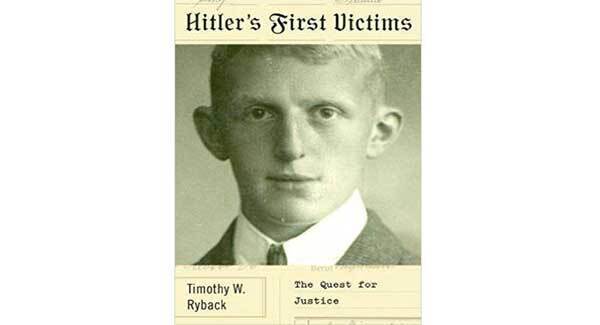
JOSEF HARTINGER won an Iron Cross while serving with the 10th Bavarian Field Artillery Regiment in the Great War. 

Book review: Hitler’s First Victims: The Quest For Justice

Timothy W Ryback

Vintage, €18;

Kindle, €7

He wore field grey again during the second global conflict that erupted in 1939 and yet his greatest service came in the inter-war years as a deputy prosecutor in Munich.

A devout Catholic from a military family, Hartinger was exactly the type most likely to be attracted to the banner of the nascent Nazi movement in the early fractious years of the Weimar Republic when Germany lurched from crisis to coup and back again.

Instead, he chose to study law at the loss of his commission and army pension and, once Adolf Hitler and the National Socialists came to power in 1933, Hartinger was one of the few Germans determined to stand up and counter the excesses of the new regime.

He was an unlikely hero.

“He was little more than a balding middle-aged civil servant,” Ryback writes, “with a wife and five-year-old daughter” and he would refuse any efforts to honour his actions after the Second World War ended.

Hitler had been chancellor only 10 weeks when Hartinger got a call to say that SS guards had shot four men who had been reportedly attempting escape from the new concentration camp for political detainees situated a 20-minute drive from Munich.

The camp was just east of a town called Dachau which, until then, had been known principally as a pretty hamlet of “cobblestone houses and cross-timber facades” and one of Germany’s most renowned artist’s colonies.

What Hartinger began to investigate was the beginning of Germany’s descent into hell.

Reports of Nazi atrocities were already beginning to circulate since Hitler’s ascension to power 10 weeks before and Dachau was at the forefront of the torture and murder that would soon be epidemic.

The first four victims, all of whom died, were Jews but Dachau catered for anyone with leanings to the left as well and the unfolding horror became more obvious every time Hartinger was called back to investigate another inmate’s suspicious death.

This was a delicate time. Democracy still held sway in Germany, but it was being chiselled away piece by piece by the Nazis who undermined it from within.

“The National Socialists were no longer intruders in the system, they were becoming the system.”

Ryback tells the story brilliantly, interweaving the micro that was the situation in Dachau with the macro that was the panorama of events in Germany at a time when it was by no means certain that the Nazis would tighten their grip as they did on the government and the people.

The author paints a vivid and horrifying picture of life inside the camp: how the SS brutalised themselves and the detainees. Perceived enemies were deemed sub-human from day one, it seems, and the downward spiral into depravity followed.

It is as important a story now, what with the encroaching successes of Far Right movements across Europe and Pegida marches, as it ever was and it shouldn’t trivialise it to say that the story of Hartinger’s search for justice reads almost like a thriller.

Ryback is a skilled narrator and it is to his credit that he has succeeded in shining new light on an aspect of the Nazi story, and all that surrounds it, which has received less attention than events during World War II.

Hartinger’s was among the first battles with the Nazis and the author is correct in pointing out that, while he couldn’t prevent the cataclysm that followed, his example tells us just how different history could have been if more of his countrymen had shared his courage and conviction.

A brilliant read and an important one, too.

More in this section

Cookie Policy Privacy Policy Brand Safety FAQ Help Contact Us Terms and Conditions

© Examiner Echo Group Limited













