International Women's Day should mark the end of the 'mean girl' facade
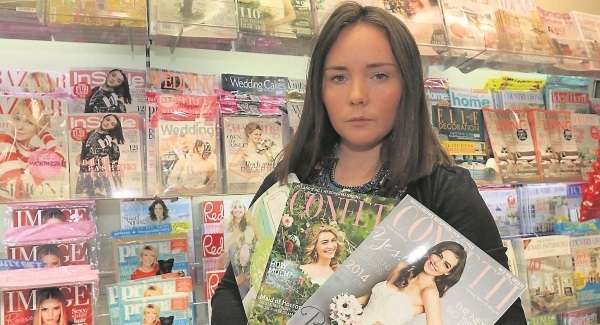
On International Women’s Day, Joyce Fegan a bride-to-be, has had it with a world where women relish sneering at other women because of their appearance.

International Women's Day should mark the end of the 'mean girl' facade

I’m getting married in November. Friends have gone before me, usually armed with a pre-wedding diet and an exercise regime — a modern-day rite of passage. Some hired personal trainers.

We live in a world where mothers of brides say things such as, “isn’t she great, she lost x amount of weight,” or “she went down a dress size.” And brides-to-be routinely acknowledge it’s the women in the congregation who will be eyeing them most intensely as they walk down the aisle.

Personally speaking, so far, I’ve had people suggest “magic knickers”, recommend “thigh exercises” and warn of the importance of regular facials in advance. Not men, most certainly not my fiancé, but other women.

Saoirse Ronan is like a child of Ireland, it’s like we all gave birth to her. We swelled with pride, when at 13 years of age she walked the red carpet at the Oscars, as a nominee for Best Supporting Actress in Atonement. So a week ago, when she walked that same carpet, we were all once again eager to see her, no longer a child but an adult. Our daughter had come of age.

I’m glad she’s not on social media as while some people just wanted to see her, see an Irish face on this international stage, others began to critique not her acting, but her body and her appearance.

Was she on the best-dressed or worst-dressed list? Some even proclaimed their delight that she’d swapped her conservative gown from eight years ago (she was 13) for a more revealing dress. What should she have worn back then?

All the commentators were women. Like the wedding-related remarks, the Saoirse remarks and the sniping people who uttered them really really angered me.

On International Women’s Day and in a supposed new wave of feminism, all I see is women pitted against other women. It made me want to write a scathing attack on my sisters — how hypocritical.

But Emer O’Toole changed my mind. Emer’s book, Girls Will Be Girls, challenges gender stereotypes. She’s both accessibly academic and funny about it. She’s compassionate too.

When I said I wanted to call out other women, she showed me the error of my ways.

“I don’t think mean girls rhetoric is helpful here. I don’t think it’s useful or fair to blame women for the body- image issues that sadly plague so many of us, issues that, as Naomi Wolf points out in her excellent book The Beauty Myth, deplete us psychologically, dent our confidence, and stop us from fulfilling our potential.

“I think that instead, consciousness-raising amongst women is extraordinarily important. I think men and women can both critique and change the media we produce and consume and can endeavour to treat children equally,” she said.

There are a great many women who are ever-conscious and concerned about how their appearance is perceived by the world. In academia, it’s termed objectification theory. The women see themselves as always on display to the world, always looked at, so they keep an ever critical eye on themselves,.

So maybe it’s not women against women but us against ourselves?

“According to this theory, women exposed to objectifying social and cultural environments may internalise a third-person perspective of their bodiesand adopt a belief about their bodies as objects.

“Such individuals who internalise society’s values may be at risk for negative psychological consequences. These consequences include increased body shame, increased anxiety and insensitivity to internal body cues,” wrote Kelly Kessler in her University of North Texas thesis on body image.

So when I walk down the aisle next November will others really be scrutinising every inch of my torso or is it just me imagining it because of the society I live in?

Emer is a realist. She argues that we are all sexist: “Every one of us (is sexist) — men, women, children. There are countless studies showing that even the most lefty, feminist people have subconscious biases against women.

“It would be impossible not to be sexist in this society — we all grow up learning that women are valued on their looks and men on their achievements. As women, we learn to associate our social value with beauty, and because of this, beauty becomes of great concern for us, in a way that it doesn’t for men,” she says.

She is right. No-one has told my fiancé about “magic boxer shorts” or exercises for his legs. His married male friends didn’t employ personal trainers either. His job, next November, isn’t to look pretty. That’s mine.

Joanna Fortune works with our future. She’s a clinical psychotherapist and in her practice Solámh, she specialises in children and adolescents. Like me, she acknowledges the saddening culture where it is women, and not men, who pile pressure on women.

“There seems to be a culture amongst so many women where they criticise others when it comes to weight, appearance, beauty, style, how much they eat, how much they didn’t eat, how skinny they are, how fat they are, how quickly they can recover a pre-pregnancy body and what kind of mother they are.

“Women seem to be programmed to find the flaw in a woman who might otherwise have been seen, and even experienced, as a competitor. Whereas a beautiful woman might turn all the heads in a room, it is more likely to be another woman who, upon gazing at her, will state what awful shoes she is wearing or how she had lipstick on her teeth.

“I hate to say this of my gender, and I am not saying it is a universal truth, but it does exist as a cultural phenomenon ,” she says.

Back to that feminist theory. It says that when people are unable to reach the body ideals promulgated by magazines, newspapers, TV, film and social media, we begin to feel inadequate because we didn’t meet society’s expectations. But by extension, does this mean society as a whole can ridicule us when we don’t fit in?

We possibly saw this at play at this year’s Oscars, when the winner of the Best Costume Design Jenny Beavan, refused to meet social expectations.

A controversial video appeared of guests looking snide as the 65-year-old collected her award dressed in trousers and a leather jacket. Since then, videographers have been accused of selective editing but just weeks previously, Bafta Awards host Stephen Fry had found it acceptable to refer to her as a “bag lady”, later describing it as “joshing”.

Beavan has two Oscars in her awards cabinet and has been nominated a further eight times. These accolades didn’t get the headlines, her choice of dress did.

But appearance matters. We are hard-wired to register beauty. If I say otherwise I am lying, and will spend the rest of my life angry and fighting an unwinnable war.

But I can fight against a beauty fascism where a woman’s appearance is seen as her most important characteristic and where the mean girl (and, yes, mean boy) mentality is casually accepted. So I am choosing to opt out of the pre-wedding diet. I’ll stick to the breakfast, lunch and dinner plan instead — the one I’ve been on since I was weaned 30 odd years ago.

This is not to say, dear fiancé, I will meet you at the altar in a potato sack, with unkempt locks. In fact I have a dress, a very nice dress, and I’ll shower and get my hair and make-up done for the occasion too. But I’m not doing that for anyone other than me. .

On International Women’s Day, my wish is that others will follow suit, and that we’ll not only stop scrutinising others but also stop scrutinising ourselves. And that we’ll spend our days looking out at the world instead of wondering what we look like to the world.

Joanna Fortune gets the last word: “The greatest gift we can give the next generation of women is to encourage them to support each other, view each other with kindness, and step up to support each other. What a world that would be.”

x

More in this section

Cookie Policy Privacy Policy Brand Safety FAQ Help Contact Us Terms and Conditions

© Examiner Echo Group Limited













