Sexism is part of Hillary Clinton’s battle to become America's next president
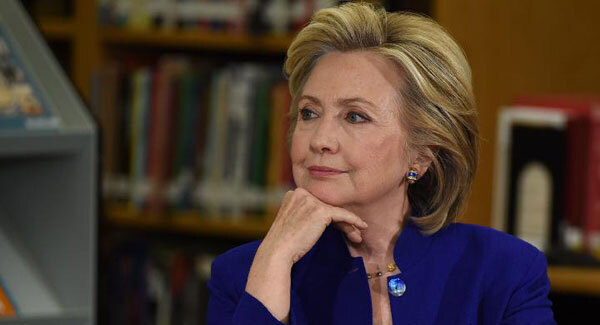
What’s a woman to do who wants to be America’s president?
If she raises her voice she’s too shrill. If she doesn’t, she’s too weak to be commander-in-chief.
Enter Hillary Clinton who wants the job that’s always been held by a man.
The man who has it now, Barack Obama, had to face down racism during his historic campaign as the first African-American president.
And for Hillary Clinton, her supporters say, sexism is part of the battle she must enjoin.
Sexism can never be equated with the menace of racism, of course, but it can have the capacity to crush the faint hearted.
Not that Hillary Clinton could ever be described as faint hearted.
Which is just as well, considering some of the comments that have come her way — not just in this campaign but also during much of her political career.
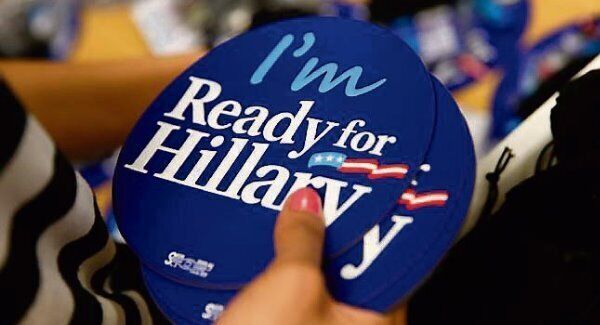
When she last ran for the presidency in 2008, there was the infamous incident when two male hecklers at a New Hampshire event chanted at her “iron my shirt”.
Clinton dealt with it, as women often do, by both confronting it and laughing it off.
“Ah, the remnants of sexism are alive and well,” she responded.
Later, during a question and answer session, she joked: “If there’s anyone left in the auditorium who wants to learn how to iron a shirt, I’ll talk about that.”
This time round, in her campaign for the Democratic nomination against Bernie Sanders, there has been the ugly “Bernie Bro” phenomenon, which Sanders has denounced.
It entails his backers harassing female Clinton supporters online, accusing them of “voting with their vagina” and calling them “bitches”.
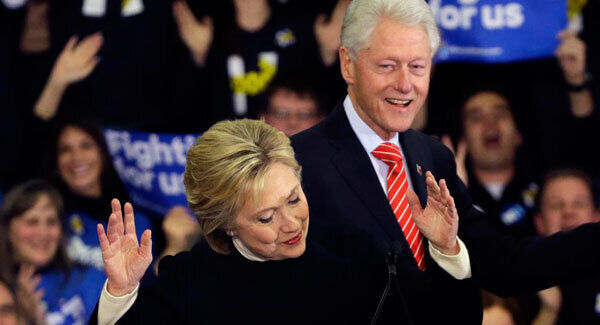
While such expletives are frequently used to denounce Clinton on social media, other sexist-driven terms are often more subtle.
For example, she might be described as “calculating” where her male rival is being “strategic”.
Or she might be “manipulative” where he is “persuasive”. Or she is “cold and distant” where he is simply “firm and assertive”.
“She’s often judged by a double standard,” said Democratic Senator Barbara Mikulski.
“What’s being said about Hillary is what women have heard for centuries. You’re too loud, you’re too aggressive, you’re too pushy.”
Former Vermont governor Madeline Kunin put it this way: “An angry female voice works against women, but is a plus for men. It demonstrates passion, outrage and power.”
Others say sexism has nothing to do with it.
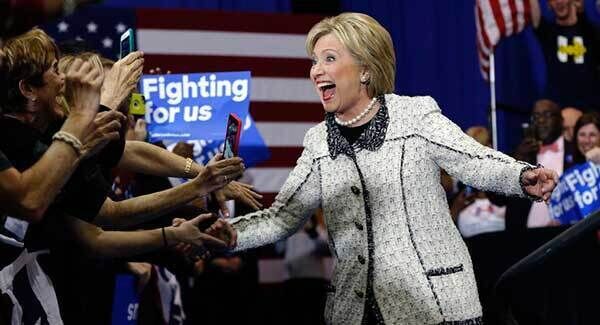
They contend that Hillary Clinton, by virtue of her politics and personality, has always been a polarising figure.
Yet some Republicans also see a double standard, though they argue it applies to women across the political spectrum.
“I think women just generally get greater criticism of their appearance and their style, their speaking style,” said Republican Senator Lisa Murkowski.
“This is a reality we face.”
Certainly, after nearly four decades in the public eye, Clinton is no stranger to the fixation by some on her appearance — something male politicians rarely face.
She once joked: “If I want to knock a story off the front page, I just change my hair style.”
Discussing the issue in Glamour magazine, she said: “I’ve often laughed with my male colleagues — What did you do? You took a shower, you combed your hair, you put your clothes on. I couldn’t do that.”

Unlike many women, most men aren’t concerned with perfection, she added.
“Most men never think like that. They’re just trying to figure out what’s the opening and how they can seize it. They’re not thinking about, ‘Oh my gosh, I’m not perfect, my hair’s not perfect today, I wore the wrong shoes.’”
Then again sexist comments have emerged before, sometimes even from powerful women themselves.
Back in 1984 when former first lady Barbara Bush was asked what she thought of Democrat Geraldine Ferraro, who was then running against Barbara’s husband, George H W Bush, in the vice presidential race, she opined: “I can’t say it, but it rhymes with witch.”
About 30 years ago when Pat Schroeder, a powerful congressional leader, was asked by a male colleague how she could handle being both a congresswoman and a mother, she responded: “I have a brain and a uterus, and I use both.”
Women now make up almost 51% of the US population, so the female vote is crucial in deciding who wins the White House.
More than half of all women in a Quinnipiac University poll had a favourable opinion of Clinton, compared with 36% of men.
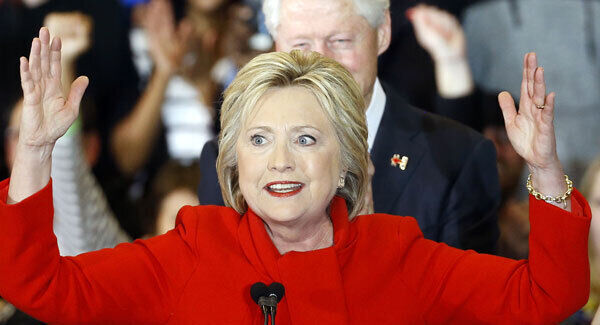
But she is encountering a generational divide among female voters. While older women are supporting her, she’s battling for the younger female vote.
In the New Hampshire primary contest between Sanders and Clinton, for example, polls showed that 64% of women younger than 45 backed Sanders, while just 35% supported Clinton.
More life experience should help there, it appears, but maybe not soon enough for Clinton to benefit.
“[Women’s] experience starts to change a few more years into the work force. By 35, those same college-educated women are making 15% less than their male peers.
"Women’s earnings peak between ages 35 and 44 and then plateau, while men’s continue to rise... More time in a sexist world, and particularly in the workplace, radicalises women,” says lawyer and journalist Jill Filipovic.
Women overall are paid 79 cents to every dollar paid to men. And women make up less than 19% of elected officials and hold less than 5% of top corporate jobs.
But when a previous female secretary of state Madeline Albright (79) told women at a campaign event for Clinton that there was a special place reserved in hell for women who don’t support each other, many women were outraged.
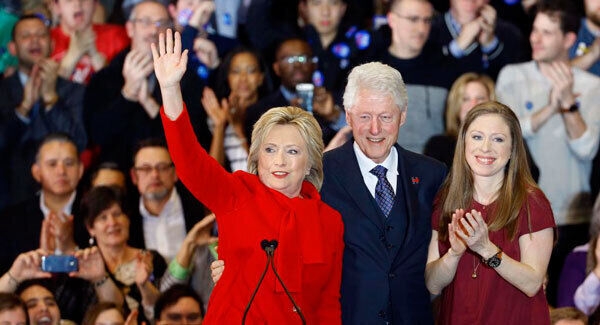
Albright subsequently had to row back on the comment, explaining in The New York Times she wasn’t saying women politicians deserved support merely because of their gender but because she believed in this case, Clinton’s credentials and experience as a senator and former secretary of state would be tools to improve the position of women.
“Despite decades of progress, women still make less money than men for equivalent work. Paid family leave remains an elusive dream. Sexual abuse against women continues to plague our communities,” Albright said.
When it comes to criticism, sexist or otherwise, Clinton herself likes to quote another first lady, Eleanor Roosevelt, who said back in the 1940s: “Every woman in public life needs to develop skin as tough as a rhinoceros hide.”
It seems Clinton may well find such an accessory useful in this White House race.

CONNECT WITH US TODAY



Be the first to know the latest news and updates









