Dierks Bentley is looking forward to playing Dublin's Olympia
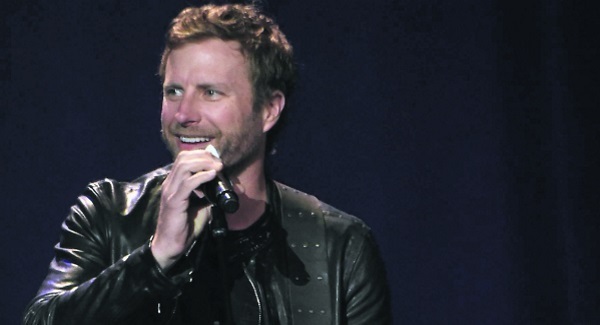
Dierks Bentley loves to see the whites of an audiencesâ eyes. Which is why the Nashville megastar gets a particular kick out of performing in Ireland. He appreciates the passion and the intimacy that comes with playing smaller venues packed with enthusiastic crowds.
âIn America, we do lots of big arenas,â he says âWe might perform to 20,000 people a night. Donât get me wrong. I love being up there. I worked hard to make it to this point in my career. At the same time, I get the biggest thrill out of playing the smaller rooms, where people are crammed real close. Thereâs a real joy and excitement.â
Unless youâre a country diehard, itâs possible youâve never heard of Bentley. Back home, though, the 40- year-old is a bona fide icon. Heâs had 13 number one singles in the US country charts while his most recent LP, Riser, debuted at number six on the Billboard 200. Heâs Nashville royalty, widely regarded as spiritual successor to his idol Garth Brooks. When he walks down the street in Tennessee, fans descend seeking selfies and autographs.
âThe last record had a lot of critical acclaim,â he nods, voice low and modest. âWe had three big hits off it the States. Also the song âRiserâ itself received a very powerful response. Now, it wasnât actually a big hit. But it seemed to mean a lot to people. It definitely touched a chord.â
This surprised him. The track is stripped down and brimming with pain. Bentley wrote it after his father had passed away. His dad had been with him from the start of his career. To lose him just as he was fulfilling his potential was an enormous blow. He sat down with his guitar, numb with grief, and let his pain take him where it would. To his shock, he ended up with a song.
âI wasnât even really trying to come up with a coherent piece of music,â says Bentley. âI was thinking about my dad and about why I am the way I am. About the role my dad played in my life. I remember standing outside my house looking at his truck â the truck we drove across the country together in, in 1994. I still use that truck today even though I could afford a new one. Thatâs how âThe Riserâ came about. It was just something I needed to express. It didnât occur to me that others would respond to it in the way they did.â
Country rock is an insular genre with its success largely confined to the US. Break-out artists such as Shania Twain or the Dixie Chicks remain very much the exception. But recently there have been signs of outreach, with events such as next weekendâs Country To Country festival at Dublinâs 3Arena testament to its rising popularity.
âIâve always been very clear about wanting to play Ireland,â says Bentley. âThe first time I came was 2004 and we did small clubs. It wasnât until the last tour that we actually started making money from [overseas touring]. Of course, that wasnât why we do it. Itâs not all about the bottom line â itâs about building your audience and sharing your stories with people. To think that I would end up one day playing in Dublin, Ireland, is amazing to me.â
He headlined Country To Country in 2014 (alongside Dixie Chicks, Brad Paisley, and others) and was struck by the response. The gig came close to selling out and the enthusiasm on the night was palpable. âWe went to Dublin and performed to something like 17,000 people. It was amazing. I felt a true connection. At the same time, there were a lot of artists on that bill. I wanted to come back and see what the reaction would be like with just us on the ticket. Iâm eager to find out where we stand with our Irish country fans.â
Bentley was born in Phoenix, Arizona, the son of a bank manager and a stay-at-home mother. He grew up adoring country music. Garth Brooks was a personal hero. His friends in Phoenix didnât always understand the appeal. Still, Bentley was smitten and was soon writing country songs of his own. Even as a kid, he knew this would be his life.
It was this passion for country that led him to attend college in Nashville, after which he worked at a local TV station, where he would compile footage of old country concerts. All the while he was toiling on songs and, in 2003, released an eponymous debut album.
It proved a modest success, as did the 2005 follow-up, Modern Day Drifter. He arrived in earnest when he was named best new artist at the prestigious CMA Awards in Nashville. He got to perform at the iconic Grand Ole Opry and quickly built a reputation as a newcomer to watch.
His visit to Dublinâs Olympia Theatre next month will come ahead of the release of eagerly-anticipated ninth album, Black. The record has been a work in progress for the past 18 months. However, Bentley thinks he can finally see light at the end of the tunnel.
âItâs done and dusted pretty much,â he nods. âOf course, it wonât truly be finished until the record label pulls it out of my hand. I feel really good about it. I feel like I can stand behind it.â
As with its predecessor, the record is highly personal. Bentley is a storyteller. Yet much of what he sings about it springs directly from personal experience.
âItâs the tenth anniversary of my marriage. Iâm examining my relationship, trying to look back on it from an honest perspective. To reflect on the good but also the bad. I always attempt to be truthful.â
That, he believes, is country musicâs raison dâĂȘtre â to articulate the joy but also the pain of the human condition. âItâs our job as country songwriters. You write about the good times â and about the bad times too.â















