Baz Ashmawy is out to find his lost Muslim
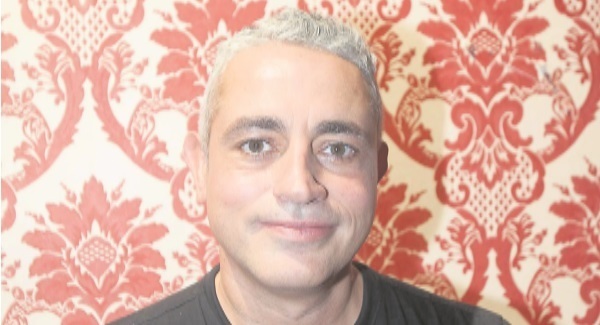
AZ Ashmawy had some reservations about the outpouring of horror and empathy that followed the November 13 terrorist attacks in Paris — until he visited the city and witnessed its grief first hand.
“What happened in Paris was absolutely atrocious,” says the presenter. “At the same time, the day before in Lebanon, 65 people were killed. If you look at the list of countries that are being terrorised at the moment, France isn’t even in the top 30. Iraq and Nigeria are number one and two and nobody gives a s**t.”
Yet, Ashmawy’s scepticism wilted when he went to Paris for his new, two-part RTÉ series, Baz: The Lost Muslim — a heartfelt investigation of the Irish-Egyptian presenter’s Islamic heritage which, by necessity, touches on the deepening radicalisation of young Muslims in the West.
“You go to Paris, to the Bataclan [the music venue targeted by Islamic State], and it hits you to the core. I felt really bad that I had been in any way desensitised. You look at the paper and read 132 killed and think ‘Yeah, that’s a lot of people’. But to go there and see the faces of 132 people on the monuments… it made me feel bad and sad and awful.”
Ashmawy had set out to craft a deeply personal documentary — an exploration of his struggles to come to terms with his Egyptian heritage. But he started filming the day extremists shot dead 38 tourists — including three Irish citizens — on a beach in Tunisia and suddenly found himself making a very different show from the one originally envisaged.
“I never intended doing a documentary on radicalisation,” he says. “I wanted to go on a simple personal journey — me getting in touch with Islam, to see if it connected. People were saying things about Islam that didn’t add up to me.”
The demonisation of Islam in the media as dominated by violent extremists did not chime with his experience, he explains. His Egyptian family is not repressed or hidebound by archaic beliefs. They are modern people, living in the modern world — who see no contradiction between this and their belief system.
“My dad is Muslim, my family in Egypt is Muslim. I know what they are like. People were saying things about Islam I didn’t relate to. If you ask Muslims, they feel they have to defend being Muslim at the moment.

“I felt I had to explain how and why radicalisation is happening. The terrorists have hijacked a huge religion and are using it as a wedge between Muslims in the West... and the West. They WANT us to bomb Syria, they want those foreign policies. The more that happens, the more misguided Muslims will be groomed.”
Culturally, Ashmawy grew up torn between his Irish and Egyptian heritage. “I was born Muslim. I had the Muslim equivalent of baptism. My dad brought me up Muslim until my parents separated. I attended mosque in Dublin. Then, my mum had me baptised. Eventually, I fell out of love with Catholicism , as a lot of people do.”
Only as he got older and had children did he begin to reconsider his relationship with religion. Oddly, this sense of waywardness was heightened after the success of his Sky 1 series 50 Ways To Kill Your Mammy, which last month won the best non-scripted entertainment award at the International Emmys.
“There’s a void when it comes to spirituality,” he says. “What do you tell your kids? Ours is the generation of the faithless. At least, we had our parents telling us to go to Mass — and then you’d bunk off going to Mass. But it was something. What have our kids got?”
The documentary follows Ashmawy as he tries to live according to Islamic tenets — giving up alcohol and going to Ballyhaunis, Co. Mayo, the town with the highest Muslim population per capita in Ireland, to study with a mentor.
“I wanted to research it for the same reason I might read a self-development book. I want to be the best version of me I can. The religion I remember as Islam, is very spiritual, very self-connected.”
He does not recognise the cliché of Islam as misogynist and medieval. Certainly that is not how his family in Egypt lives.
“You have to remember only 15% of the world’s 1.5 billion Muslims are Arab. Of those, 90 million are Egyptian. The Gulf State idea of Islam that everyone knows about — women can’t do this or that — I never grew up around that. My family in Egypt is run by women, as are most families all over the world.
“My aunties and uncles are in the professions. They aren’t forbidden from working or driving. You don’t read about that — what you read about is the archaic Sharia law you have in places like Saudi Arabia. That makes better headlines than the easy-going Egyptians.”
Irish society, he believes, must work harder at making Muslims feel comfortable. One roadblock is the primacy of “pub culture” — by its nature exclusionary to a religion that prohibits alcohol.
“This is a great country. Nonetheless, a lot of things revolve socially around the pub. Muslims don’t drink and they’re not supposed to really hang out in pubs. Unless you know a Muslim how can you comment on what Muslims are like? A lot of the misconceptions we have are passed-down conversation, often originating with people who don’t know what they’re on about.”
Having grown up in Dublin as the child of two cultures can Ashmawy empathise with disenfranchised Muslim youths in Britain and France?
“That is a big leap for me to make,” he says, pointing out that he has always felt comfortable and accepted in both Ireland and Egypt (“When I’m in Egypt I don’t drink and will go to the coffee shop with my family; in Ireland I’ll go to the pub with my mates”).
“I can appreciate, however, that if you’re from Luton and you live in a housing estate, the baddest thing you can be is Islamic State now. It’s like a mirror of when I was a kid and you’d say about somebody, ‘Oh your man is IRA… I wouldn’t mess with him’. It’s a gang affiliation. The baddest thing you can do is put on your desert boots, dress like you’re coming through the Sahara and walk down Shoreditch with a long beard. It’s a bling , bling culture. That’s how they are grooming these kids.”















