Three great books looking at flowers, colour and landscape
There were several railway lines in Cork city and county when we gained our independence.
Unfortunately during the 1930s most of these were closed and the lines taken up so the steel could be sold for scrap. And we are lucky that we have a fabulous resource in Cork in the now derelict railway line running between Blackrock and Rochestown. Locally known as ‘the line’.
It has become a hugely popular spot for walking, running cycling and other healthy pursuits.
I would personally love to see this beautiful walkway further developed as an area of horticultural importance, more of a public parkway so to speak. I don’t mean necessarily a manicured garden — but more a space where different gardening features and practices could be illustrated and used as an educational resource, as well as a walkway.

It wouldn’t be the first disused railway to be developed as such. The High Line was an elevated railway line built in 1934 on the west side of Manhattan to service the manufacturing industries in the area. As a result of more dependence on motor transport and the relocation of many of these manufacturers, the last train ran in 1980.
The line was to be demolished but in 1999 two local residents set up the Friends of the High Line to fight to preserve this derelict structure and to develop it into a walkway and public park for the people of New York.
In what can be held up as an example worldwide of what a small group of well-meaning and driven individuals can achieve — the High Line has been developed into a public park and open space in the centre of one of the most famous urban centres in the world.
The proposed demolition was halted by community pressure and in 2003 a competition was held for designers to express their vision for the development of the line.
As you can imagine, this amazing project developed so many stories and offshoots, such as the extraordinary activism of the Friends of the High Line and the economic and cultural influence of this project from the broader context, not just for New York, but for all urban centres throughout the world.
All of these stories have now been captured in the book — The High Line, Foreseen, Unforeseen. Narrated from the perspective of the activists and designers, this book tells the story of the design, development and construction of New York’s Park in the Sky as experienced by those responsible for it.
Very much image driven, this is ultimately a scrapbook of the project containing relevant archive memorobilia, the transcript of a conversation between the parties involved after the completion of the project, designs, concepts, photos and afterthoughts. A great book for anyone with more than a passing interest in gardening, public parks and urban architecture. Who knows maybe Cork someday will be able to offer our Park by the Sea?
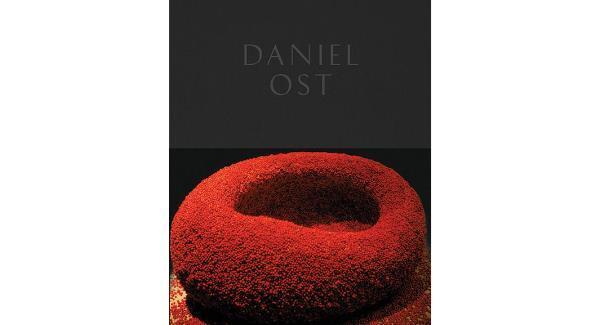
Daniel Ost is a trendsetter. This is a term that is much over used but in this instance it’s used correctly as the artist pushes boundaries, always looking for new and innovative concepts from which to develop his art.
As he says himself — “I begin where others stop”. His artform is more difficult to define. Floral art? Yes, but so much more than that, sculpture? The word cannot describe the energy in his creations. In the end the author, Paul Geerts uses the Greek word ‘techne’ to describe what Daniel Ost does.
The word embraces all of Ost’s creations: craftsmanship, clever handiwork, art, system, method, and technique.

This book is just beautiful. Each page and each image more breathtaking than the last. Like the master in any field — some of his creations are so ‘out there’ as to be not to everyones taste but you can’t fail but admire the imagination and artistry that goes into each piece.
Ost’s work is broken down into different areas for this book: Natural Mystery, The Art of Integration and Metamorphoses. There are further chapters then, covering his work in Exhibitions, Celebrations and Events and Atmosphere and Decorations.
Being an ardent admirer of floral art but with very little knowledge of the techniques and skills I expected this to be simply a beautiful coffee table book and it is all that, simply stunning in production quality, but it is much more than that. If you never read a word and just admired the pictures you could see how his creations fit the different headings.
Born in Belgium, where he still lives with his wife and two children, he developed his innate love of plants and flowers by his grandfather’s side and often recounts the time that he fell, as a small child into a manure pile while trying to pluck a specific rose bloom.
When he was dragged out of the pile — unconscious — the rose bloom was still in his grasp.
He first visited Japan in 1983 and began a love affair with that country and the far east in general — and this can be seen in the work. Regarded as the international star of floral decoration, this book and Daniel’s story will leave the reader feeling inspired, amazed and perhaps even looking at the world in a different way.
A garden needs form, texture, structure and balance and while all are important —for me, garden needs colour. Colour is what brings vibrancy, energy and change to the garden and this book is all about just that, colour.

Written by Nick Bailey, who is head gardener at Chelsea Physic Garden, the book wanders through the seasons in a very easy to follow format outlining good plants for colour in different parts of the garden during different times of the year.
It also has a concise yet informative section on dealing with pests and plant maintenance including different plant feeds and when to feed guides.











